Thursday, August 28, 2008

Food for Thought-The Ubiquitous Turnover


The thing I enjoy most about learning about different cultures is the food. I believe you can really learn a lot about a different culture by consuming their cuisine. And of course, being the multiculti maven that I am, I constantly search for connections between one country's culinary fare and another.

Here's my favorite, the turnover. I'm talking about a scrap of pastry stuffed with some sort of savory filling. Almost every culture has a version of this dish. Why? Because almost every culture makes dough. And everyone who makes dough knows that there's always some leftover scraps. What do you do with those scraps? You fill them with last night's dinner and tah-dah, a new taste sensation.

So here Meltingpot Readers, "the turnover," translated:

The turnover in:

Jamaica is a beef patty (Tumeric colored dough stuffed with spicy beef)

Spain is an empanada (Favorite fillings include tuna and chorizo. Not to be confused with the empanada from Argentina which uses a different dough and has more variations of fillings)

Puerto Rico is a pastel (So delicious because they are usually deep fried)

Now here's where I'm extrapolating, but tell me if I'm not making real connections...

The turnover in:

China is a dumpling

Poland is a pierogi

In India is a samosa

Where does your favorite turnover come from and what is it stuffed with?

Peace.

Monday, August 25, 2008

Unitarians. The Best Kept Secret?


I had the pleasure of attending a Unitarian church service in my neighborhood yesterday and it was lovely. On October 5, I will be leading a writing workshop on race and identity at the All Souls Unitarian Church in Washington DC. And my husband and I were actually married in a Unitarian church in Milwaukee ( to the great shame and horror of some of my husband's Catholic friends, but that's another story). And yet, I don't know very much about the Unitarian Faith/Religion.

What I do know is that Unitarian Churches are open to people of all religions, races and sexual orientations; they are very active in causes of social justice and peace the world over; and they've been around for a very long time. So I'm just wondering why they don't get more attention for having diverse congregations and likewise why more Black folks don't get with the Unitarian cause.

I spoke with a very wise African-American Unitarian on Sunday and he too seemed baffled by the low numbers of Black (and by extension other people of color) people attracted to the Unitarian church, especially considering how much work they have done and continue to do on behalf of civil rights. It was this man, whom I'll dub "The Professor" (b/c he really was a professor of philosophy), who said, "Yeah I call the Unitarians the best kept secret because I can't figure out why more Black people aren't attracted to this church."

The two of us stood in the garden behind the church and laughed about it, came up with some ideas but I'm still confused. So many people, especially us 20-40-something colored folks, who may or may not be connected to someone of a different color, seem to be searching for a religious home that respects and honors our cultural heritage yet isn't so foreign that we feel like we have to study up before we can commune with the divine. Is the Unitarian church the way to go?

Dear Meltingpot readers, anyone out there a Unitarian and want to explain why Unitarians churches aren't the rainbow congregations they should be by now?

I am intrigued.

Peace.

Monday, August 18, 2008

Finding Names in a Flavorful Family


I went to a baby shower recently for my friend who is Japanese and Irish-American. My friend's mother and mother-in-law were both in attendance so I started chatting with them. I was just making small talk and without thinking of the implications, asked if they were going to allow their new grandchild to call them "Grandma" or would they pick some other, less age-defining name...like Nana or Big Mama (just kidding!).

"Actually," my friend's mother replied, "I will be Obaachan, which is Japanese for grandmother. The only problem is since my husband is White we don't know if he should be Grandpa or Ojiisan?"

I understood her dilemma.

Then the mother-in-law piped in. "Well technically I would be Bubbe because I'm Jewish," she said. But since she's not a very observant Jew and her husband is a gentile, she wasn't even sure if Bubbe was right for her, yet "grandmother" felt wrong. It didn't fit.

In my family, my sons refer to their Spanish grandparents as Abuela y Abuelo. My parents are Nana and Grandpa so there's never any confusion. But now I see, when the hubby and I reach that age, will I be an Abuela or a Nana? Will my Spanish husband morph into a granddaddy or will he hang on to Abuelo?

These are the issues that creep into multicultural, multilingual family life. Finding names that respect a person's culture without denying the Other is fraught with challenges and possible unintended hurt feelings. Not to mention, it can just get downright confusing. But on the other hand, it can also be fun to play around with names, to combine and blend languages and cultures to create something new.

How do people in your meltingpot families deal with these issues?

Peace.

(p.s. I'm not sure if I've spelled the Japanese words for grandmother and grandfather correctly. I apologize for any mistakes.)

Friday, August 15, 2008

A Bangladeshi Color Purple


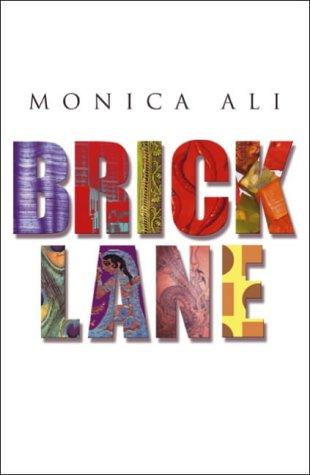
I just finished reading Monica Ali's award-winning book, Brick Lane. It is the story of a Bangladeshi woman, Nazneen, who is married off to a man twice her age and sent to live with him in his new home in London. Nazneen is 18 when she arrives in England to be the wife of a stranger and is in her mid 30s by book's end. The story is a classic immigrant assimilation tale, but it also breaks new ground in that Nazneen does not remain oppressed by her fate as a female, as an immigrant, or as a Muslim woman, but rather, over the years she discovers her own power and ability to chart her own course in life.

It's a really great story, full of suspense, romance, food and cultural collisions all around. I learned a lot about Bangladeshi culture because not only is the story about Nazneen and her struggle to adapt to English life, but there is a parallel story told about her sister Hasina who stays in Bangladesh on a quest for "romantic love." In the book, Hasina's story is mainly told through letters to Nazneen.

Now I'm not taking anything away from Monica Ali when I say this, but midway through the book, I'm thinking something about this story feels hauntingly familiar. Girl married off to older, unpleasant man. She looses touch with her beloved sister. They find each other again and get reaquainted through letters. Slowly but surely Nazneen finds her own inner strength and sexuality...Yes, I'm going to say it. Brick Lane reads like a Bangladeshi Color Purple. Anybody else out there agree? Please note, I'm not saying this to suggest Ali copied Alice Walker's seminal text, but rather to highlight the similarities in life experiences between a Black girl from the American south and a Bangladeshi bride transported to the projects of London, England. It just shows how similar and connected our human stories are in this great, big, juicy Meltingpot.

Peace.

p.s. Reviews for the movie of Brick Lane, not so good. So do yourself a favor and read the book. And then book a trip to London and visit the real Brick Lane. It's now on my list of must-sees.

Wednesday, August 13, 2008

Oops... They Did it Again (in Spain)


Boy do those Spaniards make it hard for a politically correct, socially conscious, Black girl to love them (except my hubby of course.).

In the latest offensive, racist act committed in the name of good fun in the sports arena, Spain's national basketball team posed for an advertisement while making "Asian eyes." (Please note, I don't know what the correct, non-offensive term for this gesture is, but it's when you pull on the corner of your eyes to make them look "Asian.") The ad was for a Spanish courier company and featured the entire team on the way to the Olympics in China, thus the great idea to mock the Chinese (I'm guessing.)

And wouldn't you know, the ad appeared several times in Spain without making the slightest stir. It wasn't until an English reporter saw it and wrote about it in the Guardian newspaper that all hell broke loose. And now, are the Spaniards contrite, embarrassed, or sorry? No, they don't understand what the big deal is!

“We did it because we thought it was going to be something nice, something with no problem. But somebody wants to talk about it. It is too much of a big deal with you guys (the media) and everybody talking about that.” This from Jose Calderon, a member of the Spanish team who plays for the Toronto Raptors.

As woman of color who has lived in Spain, married a Spaniard and continues to spend extended periods of time there, I wish I could offer more insight into this behavior besides, "They just don't get it." But I can't. I can only hope that with the rest of the world shaking a shaming finger at Spain as they continue to make themselves look woefully ignorant on an international stage, they might just begin to understand.

In Peace and Hope.

Monday, August 11, 2008

The Black Man in the Pool


Now I know I should be the last person to be jumping up and down pointing at the TV screen yelling, "There's a black man on the team!" when the Americans won the 4X100 freestyle relay this past weekend in Beijing. But there I was. A former competitive swimmer myself who always hated it when all those folks in Wisconsin would watch my swim races in shock and awe.

Maybe it's because I grew up as one of a scant few colored swimmers in Milwaukee with even fewer professional swimmers to emulate, but I am thrilled for Cullen Jones and his superfast self! But more importantly, I'm giving thanks for the next generation of Black, brown and "Other" swimmers who have somebody who looks like them, going for gold in the water. Not that I have anything against Michael Phelps, but come on, how about some love for brother man.

Peace.

Thursday, August 07, 2008

A List of Colorful Memoirs

So, I was googling Kinky Gazpacho the other day, which I admit to doing every now and again, when I came upon this fabulous list of memoirs compiled by Kate Ward for Entertainment Weekly.com. The title of the article is "So You Want to Write a Memoir" and is a kind of tongue in cheek warning that since every conceivable life story has already been written about, you might want to reconsider putting pen to paper with yours.

To prove her point, Ward then lists over 100 memoirs, by category. I liked the "Racial Identity Category (where Kinky Gazpacho does appear) and thought I'd share it with you my Meltingpot Readers.

Racial identity
Described...
Life as a biracial child: The Color of Water, by James McBride (1996)
Racism abroad: Kinky Gazpacho, by Lori L. Tharps (2008)
Her rigid Chinese family values in suburban New York: Daughter of Heaven, by Leslie Li (2005)
Fighting for Latino civil rights: Memoir of a Visionary, by Antonia Pantoja (2002)
Overcoming racism as the daughter of a Panamanian mother: Mama's Girl, by Veronica Chambers (1996)
Life as a black man in a 99.9% white, racist town: Not a Genuine Black Man, by Brian Copeland (2006)
Racism directed toward her adoptive African-American brother in rural Indiana:Jesus Land, by Julia Scheeres (2005)
Being an African-American who passed as a white woman: The Black Notebooks, by Toi Derricotte (1997)
Being a white man who worked for African-American journalism outlets: Nitty Gritty, by Ben Burns (1996)
Racism in a German orphanage: Invisible Woman, by Ika Hügel-Marshall (2001)
Being biracial in WWII-era China: Things That Must Not Be Forgotten, by Michael David Kwan (2001)
Being gay in Mexican culture: Butterfly Boy, by Rigoberto González (2006)
Rejecting his peers' prejudices as a child to play jazz with veteran black musicians in New Orleans: Song for My Fathers, by Tom Sancton (2006)
Being the only African-American commercial deep-sea diver working in Southeast Asia, the Middle East, and Africa: Black Man Under the Deep Blue Sea, by Tony Wells (2007)


It's not an exhaustive list obviously, but there are some books here I've never heard of and definitely would want to read. What memoirs would you add on to this list? To read the entire article click here.

Peace!

Tuesday, August 05, 2008

One to Watch!


Hello Meltingpot Readers,

You know we slipped into August and I didn't even notice I'd made it to the end of my Blog-o-rama. Minus my sick days I managed to blog Monday - Friday for a month. I have to admit, it wasn't easy and I don't think I'll maintain the pace, but I did enjoy the challenge. I'll def. try to post more regularly now, but I am going to take a wee break here in August as I try to figure out how I want to revamp my site a bit. No major face lift or Botox injections, just some link updates and technological advances (I still don't know what RSS feed means or how to make it happen. But as cyberGod is my witness, I will figure it out).

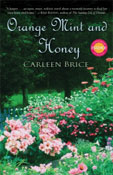
In the meantime, as summer is coming to a close I am trying to enjoy every last minute of it, now that I can finally draw a breath without collapsing into a coughing fit. I went to the bookstore the other day and bought Carleen Brice's debut novel Orange Mint and Honey. For me buying a novel just for the heck of it is what summer is all about. Orange Mint and Honey is a delicious little novel about a mother and daughter who are trying to repair their very damaged relationship. It's about forgiveness and love and all of that other good stuff that makes us human. The book is really well written and the story is so fresh, but what I really appreciated the most about the book is that the characters, most of them African-American, were unique individuals not stereotypes. The fact that they were Black seemed incidental to the story. Instead of making the book about Black people and their problems, Brice crafted a compelling story about the human condition.

In addition, the Meltingpot in me loved the story because it was set in Colorado, a state I never considered relevant for colored people. Yet Brice makes Denver sound like it has its own meltingpot situation going on full force. Now I want to go check it out. The things you learn.

Brice's next book, due out in July 2009, is about two sisters, one biracial, the other White who were separated by adoption and meet up again in adulthood. You know we can't wait to get our hands on that one. So keep your eyes on Carleen Brice. She's one to watch!

Peace!

Friday, August 01, 2008

Hollywood's Meltingpot Hearts Barack

In a beautiful show of multi-culti solidarity and support for Barack Obama, a bunch of Hollywood A-listers is throwing an invitation-only fund raiser in Beverly Hills.

Variety reports:

"The event, called the Black & White Gala for Barack Obama, is being designed to "celebrate America's landscape of diversity and its many cultures," with an honorary board that includes Shohreh Aghdashloo, Jessica Alba, Don Cheadle, Khaled Hosseini, Ashley Judd and Lucy Liu. Invitation-only tickets are $1,000 for the general reception and $2,300 for VIP ducats."

Don't you want to know how to get on that invite list? (Hat Tip to Stereohyped)

*****************************************

And just a Kinky Gazpacho Update...

Remember a few days back I wrote about the new cover for the paperback version of my book Kinky Gazpacho? The plan was to "mainstream" the cover by replacing the Black woman on the cover with a beautiful photograph of the Spanish countryside. Well, hold on to your hats people, because the Black girl is back! The publisher vetoed sales and marketing's plan and decided to keep the original cover with the Black woman on the front. The photo of Spain will go on the back. Yeah! The revolution is at the front door!

Peace and Enjoy the Weekend.