Wednesday, April 30, 2008

Do White People...?


Here's a question that's been vexing me and I'd like to hear from the masses.

Let's say there's a White teenager who only hangs around Black people, speaks fluent Ebonics/urban slang and perhaps only reads XXL, Vibe and Essence magazines. Do other more "mainstream" White teens accuse him of acting Black? Does the White teen feel ostracized and alienated from the White community because he/she feels more comfortable with Black people? Or on the contrary, does he earn cool points for being edgy?

What I'm trying to figure out is if White kids are ever accused of adopting someone else's ethnic identity in a pejorative way by other White people? Black kids who are "articulate," grow up in the suburbs and perhaps prefer James Blunt over Jay-Z are accused of selling-out, talking White, acting White and being an Oreo. Is there a similar response from some in the White community? What does it sound like? And likewise, we know there are a lot of Asian kids with kind of Negro tendencies. Do they get a verbal lashing from others in their communities for acting Black? And do they get beat down for acting White too?

At the end of the day, I'm thinking there's no limit to how many people play musical identities, whether by choice or circumstance. But what I want to know is how many people outside of the Black community feel offended when their "own kind" steps to the other side? Do White people have the choice to pick and chose their identities and Black (and Asian and Latinos) people are supposed to fit in the same box?

Thoughts? Enlighten me please.

Peace.

Friday, April 25, 2008

Is Gypsy a racist word?


I was just accused of being racist. That hurts. A lot. Here's the deal. In a radio interview on The Brian Lehrer Show I was talking about racism in Spain and made a comment about gypsies being at the receiving end of some of the worst racist treatment in Spain.

I used the term gypsy more than once during the interview. Well, according to one of the listeners on the show who wrote in a comment, gypsy is a racist word and as a Black woman talking about racism I ought to know better than to use the term gypsy instead of the correct term, Roma people. I am paraphrasing but that was the gist of the complaint.

I have two things to say. First, I admit it hands down that I did not know, had no idea really that gypsy was considered a racist term. So I say thank you to the listener for educating me. Incidentally, my treatment towards the "Roma" people I have met has never been racist, which should be the real litmus test of deciding whether I am a racist. My sister-in-law in Spain is practically engaged to a member of the Roma people so I have had the benefit of learning a lot about their culture first-hand. As always I love learning about the people in Spain who slip under the radar of the Spanish image sold here Stateside.

Interestingly, in a random internet search I could not find much that declared gypsy to in fact be a racist word. Indeed, organizations which work to fight racism around the world like Human Rights Watch, use the term gypsy in their literature. As do other organizations like Workers'Liberty who wrote this article examining the racist treatment "gypsies" receive in England. All this to say, while "Gypsy" is clearly considered a racist word by some, it  hasn't become common knowledge to the masses. Now that I know better I will try to erase it from my vocabulary and spread the word.

And questions for you: Did you know gypsy was a racist term? Does anyone know the origin of the term? And are all "gypsies" really Roma people?

Thanks for the input people.

Happy Friday.


Tuesday, April 15, 2008

Colored People


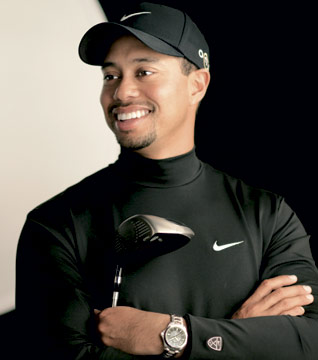
The other day my friend mentioned that she'd read an article by an "angry" Asian man who wanted to know why Tiger Woods is heralded as the "first African-American golfer who"...when Tiger is technically more Asian than he is Black. My first response to this "Tiger is more Asian than Black" theory (and I apologize Earl Woods, may your spirit rest in Peace) was to say that Earl Woods might have exaggerated his Asian heritage because Black people of a certain age like to claim some "Indian" blood to boost their self-worth. And while I found plenty of articles that try to quantify Tiger's racial lineage, it seems only clear that his mother is half-Thai and half-Chinese with some Dutch ancestors lurking in the mix. And his father was the product of two "Officially" Black parents, but his mother had a light complexion and rumor had it that she had a Chinese ancestor in her past.

So after my rigorous research, I can only conclude that Tiger is pretty much Black AND Asian. Which means that Angry Asian man is completely justified in asking why he is celebrated as the first African-American golfer to break all these records. Why is he always erroneously labeled by the media? Why all the Fried Chicken and lynching comments? Why does Black America claim him as their own (although somewhat grudgingly considering he refers to himself as a Cablasian.)?

I'll tell you why. BECAUSE HE LOOKS BLACK! It is really that simple. People see his dark skin. People saw his Black father constantly by his side and put two and two together and came up with, Black. But that doesn't mean it is right or fair. It also doesn't help society see beyond Black and White. Every little Asian (Thai, Chinese or other), biracial, or mixed child should also feel like they too can claim Tiger out in public and not simply behind closed doors.

So I have a solution. Rather than fighting for the right to label Tiger as Black or Asian and getting into a Tiger Turf war, I propose we reinstate the word Colored to the American lexicon. Yes it has a negative history but it perfectly describes Tiger Woods and every other person of color. We are colored. I am colored. Tiger, perhaps would be Multi-Colored. I think it works and nobody has to feel excluded. Pretty much anyone with a little bit of extra melanin can join this group.

Imagine a world where Colored people stopped trying to separate themselves and instead embraced their commonalities. I'm not saying we should all forget our unique cultures, not even. It's just that when we spend all this time trying to decide where a person belongs and who has rights to claim him it leads to tension and strife and generally there is no correct answer. So all I'm saying is go with Colored. It's easy.

Peace.

Monday, April 07, 2008

Obama-land in Deutschland!


Hello Meltingpot readers. Today we have a guest blogger reporting for us all the way from Germany.

My friend, Rose-Anne is a journalist living with her German husband and three little boys in Berlin. A Haitian-American raised in New York and Columbia, Maryland, she's always tuned in to Meltingpot issues. When she told me that Germans love Barack Obama, I asked her to tell me more. And this is what she wrote.


If the German vote counted, Barack Obama would very likely be the next US president. A recent poll here showed that 74% of Germans would vote for him over Hilary Clinton as a presidential candidate. And it’s no wonder, because the German media has done everything but officially endorse Obama.

Obama has been likened to John F. Kennedy, which, even over forty years after Kennedy’s “Ich bin ein Berliner” speech, is a rare honor. Kennedy still has Beatles-like status here. There have also been comparisons to Martin Luther King’s charisma, eloquence and vision. King is not only an American icon— I’ve met 12 year-olds here who know who MLK is.

German Financial Times columnist, Peter Ehrlich, has credited Obama for
“bringing passion back into US politics." A Social Democrat (one of Germany’s ruling coalition parties), Karsten Voigt, said “Germany is definitely Obama-Land. He’s young, dynamic and perceived as more of a candidate for a movement than a political party, a movement for change.”

Obama’s popularity here confirms what I’ve slowly started to understand as an American who once always had race on the mind—that it’s not all about race here. Don’t get me wrong, Germany certainly has its share of problems with integration and those pesky neo-Nazis that the government has tried (as much as the constitution here allows) to thwart. But for Germans, the differences in culture and class—or maybe I should say, the similarities in culture in class— stand out far more than those of color. As a Black, Haitian-American in Germany, I might very well have it easier than a blond, blue-eyed Turk. And I can no longer count how many times I’ve said hello or nodded to an African brother or sister on the street, only to be ignored or looked back at in bewilderment. Here, connecting to people sometimes goes way deeper than skin color.

What it is all about in German politics, is cojones(regardless of sex) and credibility. German voters can quickly spot “squeaky-clean” hypocrites who stand behind a façade of piety and conventionalism. That’s why few politicians here even try to play conventional morality games. Berlin’s mayor, for example, grew more popular when he came out right away and said, “I’m gay. That’s a good thing.”

Germans also don’t believe religion belongs in politics. You’ll never hear Chancellor Angela Merkel say “God bless Germany,” because she doesn’t need to. Germans are not God-fearing in their politics. Here, Obama’s association with Reverend Wright wouldn’t be as much as a scandal as would the attempt to demonize him based on the beliefs of someone he knows. I don’t even know if the chancellor goes to church, to be quite honest. Good Lord, she might even be an atheist!

The lack of a religious/moral backdrop in German politics is one of the reasons you’ll find virtually no sex scandals here. Bill Clinton’s impeachment for his extracurricular activities with Monica Lewinsky was widely met with comments like, “This is a political issue? A president can be impeached for this?” The Spitzer scandal would also have been a bust—prostitution here is legal. In fact, pervasive German stereotypes of Americans are that we’re prudish; hypocritically moral (read one Republican sex scandal after the next) and that we don’t respect public figures’ privacy.

But for all their progressivism, Germans are notoriously resistant to change; which, is why Obama’s popularity here is a phenomenon. Obama’s fame signals that Germans, deep down, want charismatic personalities to convince them that change is good and that it shouldn’t cause people to fear looking forward (although any future without Bush seems to be a welcome one for Europeans as a whole). Obama’s brilliant speech, “A More Perfect Union,” is not only a speech for America. A call for universality, for change and common dreams of all people, is exactly what has made Obama a hero abroad.

Thank you to Rose-Anne Clermont for contributing to the Meltingpot and for giving us a peek into another part of the world. To read more fascinating stories written by Rose-Anne, visit The WIP.