Hello Meltingpot Readers,
I am having a great time compiling my list of White People Who Tell Black Stories for Black History Month. Thanks to all of your thoughtful comments, I'm really thinking about things differently, asking myself questions I hadn't before. Most importantly, I'm wondering, does it really matter who is telling these stories? Isn't it more important that the stories are being told? Today's author is a great example.
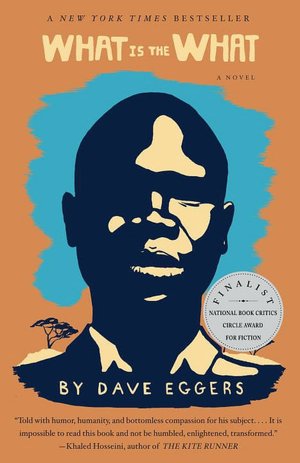
Meet Dave Eggers. Famously known for his 2000 memoir, A Heartbreaking Work of Staggering Genius, the literary magazine, McSweeneys and other things literary and liberal, his career took a different turn in 2006 when he wrote, What is the What.
What is the What is a fictionalized autobiography of Valentino Achak Deng, one of the Lost Boys of Sudan. Eggers spent years interviewing Deng, originally intending to help him write his own life story, but the two soon agreed that Eggers would write the book. Eggers decided to call the book fiction to give himself the freedom to fill in the gaps that Deng could not remember of his harrowing journey from Sudan to the United States. The book received excellent reviews and was overwhelmingly praised.
"What Is the What” is an extraordinary work of witness, and of art." The New York Times
"Hands down, Dave Eggers’ What Is the What stands as the single most thought-provoking, unusual and moving book I have read all year." USA TODAY
" With its perfect blend of epic sweep and small, intimate moments, it stands worthily alongside the best work of Chinua Achebe, Amos Tutuola and Ben Okri." Seattle Times
THE SUCESS: A New York Times Bestseller, What is the What also won the Prix Médicis in France. It has been selected as the summer reading book for incoming Freshman at universities across the country including this year's incoming class at Duke University. But here's the catch. All of the proceeds for the book went to support the Valentino Achak Deng Foundation.
GIVING BACK: Let's review. So Dave Eggers, a White man, who garnered much literary praise and success for his book about a Black man's life, made sure to compensate that Black man for sharing his life story. I don't know how "proceeds" were defined between Eggers, Deng and the publisher, but I also don't really care, because the proof is the continued success of the VAD foundation. Check out their website to see how much has been done and continues to be done. If Eggers hadn't lent his considerable talents and established name to getting Deng's story out there, would the Marial Bai Secondary School even exist? Would Americans be as aware of the struggles of the people in Sudan? Would they have a real face to put on a Lost Boy's story?
Is there a difference between collaboration and appropriation and just plain stealing? Who knows the rules?
I'm listening.
Peace!
Keeping Track of Where Cultures Collide, Co-Mingle and Cozy-Up From My Little Slice of the World
Showing posts with label Authors. Show all posts
Wednesday, February 08, 2012
Wednesday, February 01, 2012
In Honor of Black History Month: White People Who Write About Black People
Hi Meltingpot Readers,
You know I'm not a huge fan of Black history month. For all the standard reasons; Black history shouldn't be segregated, Black people's contributions to this country require more than 29 days to discuss, blah blah blah. But since the month exists, despite my and other people's exasperation, we might as well use the opportunity for good not evil. Right?
So in my infinite wisdom and since this is my blog and since I'm all about culture clashes, I thought I'd do something a little different this year for Black History Month. I'm going to use my posts for the month of February to highlight all of the White people who've gotten famous, made a name for themselves or otherwise have benefited by telling Black people's stories. In some ways this may sound jaded or even a little snarky. It is! A little. In light of the recent success of The Help, as well as the drama surrounding getting Red Tails on the screen, I figure, let's take a really good look at the White folks who tell Black folks' stories. Why do they do it? What is the public's response? How come some meet with success and other's meet with scathing criticism? Does their literary and/or cinematic output help or hinder the mainstreaming of the Black experience?
Please note, my goal is not to court controversy. I'm really hoping to highlight an interesting pop culture trend (a trend that pretty much began in the 15th century when this country was first integrated). Will I ruffle some feathers? Probably. But that's okay. If you have some suggestions as to whom I should profile during the month of February, let me know. I'm listening.
Peace!
Friday, December 02, 2011
Her Words as Witness: Women Writers of the African Diaspora
Hi Meltingpot Readers,
If anyone is in the New York City area and wants to go see a truly unique exhibit, they should check out photographer, Laylah Amatullah Barrayn's latest solo show, Her Words as Witness: Women Writers of the African Diaspora at Restoration Plaza's Skylight Gallery in Brooklyn.
It just opened and I haven't been yet, but just the idea of a visual exhibit honoring 35 contemporary Black female writers from around the world-- many of whom are friends and muses of mine -- makes me want to hop the next train back to Brooklyn.
Some of the writers featured include, Edwidge Danticat, Sonia Sanchez, Bernice McFadden and Elizabeth Alexander. The exhibit runs through March 31, 2012. For more information and an inspiring taste from the opening reception, check out the slide show on Patch.com.
Enjoy the weekend.
Peace!
Labels:
Authors,
Black Art,
Black Authors,
Black Beauty,
Black Books,
Black Culture,
Brooklyn
Friday, September 30, 2011
What I'm Reading Now: Stories in Living Color
Hi Meltingpot Readers,
You all know I regularly post book reviews here on the Meltingpot, but the truth of the matter is, I read far more than I have time to review. In fact, I read so much, I consider myself a book addict. When I finish one book, if I don't have a new book to dive into, I'm like a crackhead and start to get the shakes. Sometimes I can stave off withdrawal symptoms with a good magazine article, but that will only hold me for a short period of time.
Because I know many of you appreciate recommendations for good books, I thought I'd share with you what books I've gobbled up...I mean, read lately. And these aren't just good books, these are Meltingpot books. In other words, I'm not really interested in reading a book about White people and their lives in a White world. Not that I don't find White people fascinating, but it seems their stories are everywhere. I want to use my reading time to find out how other people live. Even if it's fiction, I want to immerse myself in another culture, or see my own culture reflected in some way. I want to see different cultures engaging with one another. I want to see cultures colliding and coming together. Don't get me wrong, I don't discriminate in my literary choices. I think of it more like affirmative action. If I can find a book with at least one colored character, I'm choosing that one over the book with just White folks. But at the end of the day, a good book is a good book. I'll read anything by Ann Patchett, for example, whether she adds people of color in her books or not (interestingly she usually does but not always.)
So, without further ado, here's what I've read in the last two months, in addition to Conquistadora and The Taste of Salt, which I reviewed here on the site.
1. You Are Free: Stories by Danzy Senna. I generally shy away from short stories, but I'd read a grocery list if Danzy Senna wrote it. She is one of my favorite authors who always tackles mixed-race identity in all of her work. You Are Free is no exception. The stories aren't explicitly about race, but almost every story in the collection features a mixed-race character grappling with an issue that seems to stem from their racial blend. It's deep stuff and kind of depressing. By the end of the book, I desperately wanted to know if Senna was intentionally playing with the 'tragic mulatto' stereotype or if she truly 'knew' these characters she had invented. I'd love to hear other people's reactions to You Are Free.
2. Shanghai Girls by Lisa See. Lisa See has been in my literary rear view mirror for awhile. My mother's book club was reading one of her books. One of her books is now showing at a theater near me. The local Barnes & Noble had a display of her books on the front table. But I just wasn't that interested. But when my local Borders went out of business, I scooped up Shanghai Girls because it was on deep discount and I decided to finally find out what Lisa See could deliver. This book is about two young sisters who are living the high life in Shanghai right before the Japanese invasion. Their privileged world falls apart however, when their father admits he's gambled away their fortune. To save himself, he essentially sells his daughters to get out of debt. The two sisters, May and Pearl, are now wives to two awkward brothers who live in the United States and they go from upper-class Chinese, to downtrodden immigrant workers in California.
I can't say I loved this book, but it was definitely a page-turner that kept me entertained. I also learned a lot about Chinese culture and the Chinese immigrant experience in America. For that reason, I would recommend the book to every American because you will never eat at a Chinese restaurant or stroll through your local Chinatown with the same innocent eyes.
Now I'm reading a new memoir by the award-winning author and poet, Jackie Kay. Kay was adopted as an infant in her native Scotland. Her birth mother was Scottish, her father an academic from Nigeria. The book, Red Dust Road, is her story of tracking down her birth parents and examining her life growing up with her communist parents. Despite the seriousness of her endeavor, this book is hilarious. Considering Kay finds out her birth mother became a Mormon and her birth father became a Christian zealot, if she couldn't find the humor in her origins, she probably wouldn't be in such a positive place in her life today. I had the pleasure of meeting Kay a few years ago at a literary festival and she is a beautiful human being and full of laughter. When I finish the book, I'll give you a complete review. But if you want to beat me to it, order if for yourselves. The only thing is, my friend sent it to me from England where it was published. I'm not sure if it's available through US book stores yet.
So, what are you reading these days? I'm going to need my next fix soon.
I'm listening.
Peace!
You all know I regularly post book reviews here on the Meltingpot, but the truth of the matter is, I read far more than I have time to review. In fact, I read so much, I consider myself a book addict. When I finish one book, if I don't have a new book to dive into, I'm like a crackhead and start to get the shakes. Sometimes I can stave off withdrawal symptoms with a good magazine article, but that will only hold me for a short period of time.
Because I know many of you appreciate recommendations for good books, I thought I'd share with you what books I've gobbled up...I mean, read lately. And these aren't just good books, these are Meltingpot books. In other words, I'm not really interested in reading a book about White people and their lives in a White world. Not that I don't find White people fascinating, but it seems their stories are everywhere. I want to use my reading time to find out how other people live. Even if it's fiction, I want to immerse myself in another culture, or see my own culture reflected in some way. I want to see different cultures engaging with one another. I want to see cultures colliding and coming together. Don't get me wrong, I don't discriminate in my literary choices. I think of it more like affirmative action. If I can find a book with at least one colored character, I'm choosing that one over the book with just White folks. But at the end of the day, a good book is a good book. I'll read anything by Ann Patchett, for example, whether she adds people of color in her books or not (interestingly she usually does but not always.)
So, without further ado, here's what I've read in the last two months, in addition to Conquistadora and The Taste of Salt, which I reviewed here on the site.
1. You Are Free: Stories by Danzy Senna. I generally shy away from short stories, but I'd read a grocery list if Danzy Senna wrote it. She is one of my favorite authors who always tackles mixed-race identity in all of her work. You Are Free is no exception. The stories aren't explicitly about race, but almost every story in the collection features a mixed-race character grappling with an issue that seems to stem from their racial blend. It's deep stuff and kind of depressing. By the end of the book, I desperately wanted to know if Senna was intentionally playing with the 'tragic mulatto' stereotype or if she truly 'knew' these characters she had invented. I'd love to hear other people's reactions to You Are Free.
I can't say I loved this book, but it was definitely a page-turner that kept me entertained. I also learned a lot about Chinese culture and the Chinese immigrant experience in America. For that reason, I would recommend the book to every American because you will never eat at a Chinese restaurant or stroll through your local Chinatown with the same innocent eyes.
Now I'm reading a new memoir by the award-winning author and poet, Jackie Kay. Kay was adopted as an infant in her native Scotland. Her birth mother was Scottish, her father an academic from Nigeria. The book, Red Dust Road, is her story of tracking down her birth parents and examining her life growing up with her communist parents. Despite the seriousness of her endeavor, this book is hilarious. Considering Kay finds out her birth mother became a Mormon and her birth father became a Christian zealot, if she couldn't find the humor in her origins, she probably wouldn't be in such a positive place in her life today. I had the pleasure of meeting Kay a few years ago at a literary festival and she is a beautiful human being and full of laughter. When I finish the book, I'll give you a complete review. But if you want to beat me to it, order if for yourselves. The only thing is, my friend sent it to me from England where it was published. I'm not sure if it's available through US book stores yet.
So, what are you reading these days? I'm going to need my next fix soon.
I'm listening.
Peace!
Monday, November 22, 2010
In Honor of National Adoption Awareness Month
Hey Meltingpot Readers,
I'm sure some of you know that November is National Adoption Awareness month and maybe some of your don't. Some of you I know are adoptive parents and some of you may think you have no connection to the world of adoption at all. And I guess that's why this month was created, to make people aware that adoption exists, that it works for building families and probably to help remove the secrecy that formerly surrounded the practice. Or at least that's my take on it. By no means is the month supposed to make people run out to their nearest adoption agency and "place and order."
So to help those of you who might think they don't anyone who was/is adopted, I've decided to compile my own list of "famous" people who were adopted, paying particular attention to those in multicultural families. So in no particular order, these are the 'famous' folks that I know who were adopted and are leading or have led incredible lives.
1. Truman Capote The famous author of In Cold Blood was adopted by his Cuban stepfather. That's how got that lyrical last name. Sadly his macho Cuban stepfather never approved of Capote's somewhat feminine habits which made their relationship strained.)
2. Marcus Sammuelsson. The wildly successful Ethiopian born chef was adopted and raised in Sweeden. Samuelsson originally made his mark as a Swedish chef, but his sense "rediscovered his roots" and now stakes his claim on world cuisine. His newest restaurant venture is in Harlem and is called the Red Rooster
3. Mae Walker. The granddaughter and heiress to hair care entrepreneur and millionaire Madam CJ Walker was adopted at age thirteen.
4. Victoria Rowell. The now tripple threat Rowell is best known as a soap opera actress, but she's also now an author, documenting her childhood in a book called, The Women Who Raised Me.
5. Kim Sunee. The journalist and author of the delicious memoir, Trail of Crumbs.
Okay those are five off the top of my head. These are the people whose life stories inspire their extraordinary lives so I remember the adoption part of it. And so in a way, their adoptions touch my life. Who can you add to the list?
Peace.
Wednesday, August 11, 2010
Adoption is Complicated, Even in Fiction

Meltingpot Readers,
For the last couple of years I've been obsessively reading anything and everything I could get my hands on that dealt with adoption. I have a gazillion adoption blogs bookmarked, I have a subscription to Adoptive Families magazine and I've read a lot of 'What to Expect When You're Adopting' books and memoirs by adoptees. I even read one really great novel, The English American which features an adult adoptee protagonist searching for her birth parents.
But I just finished reading a new book, Chosen by first-time novelist Chandra Hoffman that gave me completely new -- and often uncomfortable -- insights on the complicated world of adoption. From the adoption agencies to the adoptive parents, Chosen examines the perspectives of everyone involved in an adoption plan. Now a full-time writer and mother of three, Hoffman worked in an orphanage in Romania and as the director of a domestic adoption program in the United States, so the story she tells in Chosen feels very real.
The story is really about a young case worker named Chloe Pinter who takes a job at the Chosen Adoption Agency because she thinks bringing families together is a noble cause. In alternating chapters we hear from a set of birth parents who life has kicked around a few times too many, the adoptive parents who have an excess of money but lack a certain warmth, and another couple who struggled with infertility but eventually get pregnant, but they still maintain a connection with the Agency.
I'd label the book an adoption thriller because there is definitely a plot twist that will have you turning pages faster than you can read them. But also, just the very nature of domestic adoption where one never knows if birth mother will place, if adoptive parents will be picked, if the child will be happy... it all feels like a roller coaster of emotions anyway. I was tense while reading the whole book. But I'm glad I read it because I really feel like I learned a lot more about the business of adoption, how agencies work and some crucial insights into why a woman might choose adoption for her child. I cried a few times while reading.
The book comes out on the same day as Substitute Me, August 24, 2010.
Peace!
Wednesday, July 21, 2010
Gobbling Up Summer Fiction
People, can I just say I am gobbling up novels these days like nobody's business. I am averaging almost two books a week. It's crazy and I love it. It's summer time and even though I'm supposed to be revising my own YA novel right now, I am allowing myself to gorge on good fiction.
So far I've read, Neesha Meminger's, Shine Coconut Moon, which is a YA racial coming-of-age tale about a young Indian teen living in post 9/11 New Jersey. Very good. And I devoured Zetta Elliott's A Wish After Midnight, the book about a 15-year old African-American girl who gets transported from modern-day Brooklyn, to Civil-War era Brooklyn. That book was very well done and the characters were so real.
I can't lie though. Hands down my favorite summer read so far has been, Ernessa T. Carter's 32 Candles. That book had me reading into the wee hours of the night and playing hooky from work to finish. I ignored my kids and let them watch TV in the middle of the day, just so I could finish this wholly unique, funny and absolutely fabulous novel that "redefines girl gets boy." I will be writing more about this book in the coming days. In fact, I'm on my way to New York City today so I can meet the author at a book party in her honor. I can't wait because seriously, when I read a book like this, a book that is so quirky, fun, and well-written, I get totally star struck. I will probably ask Ms. Carter to sign my book and my chest! Hold me back!
While you're waiting for my report, I suggest you pick up a copy of 32 Candles and read it. I guarantee you won't be disappointed. And then watch this pro-library video that spoofs the Old Spice commercial and get your laugh on. Don't you love reading? What are you reading this summer?
Peace!
Labels:
Authors,
Black Books,
Book Reviews,
Meltingpot Books
Friday, May 07, 2010
What Are You Doing for Mother's Day?
Hi Meltingpot Readers,
It's a mad rush today so pardon this short little entry. Believe it or not I'm going to meet a fellow writer in Center City today to talk about his new book. My mission? To help him understand Black people.
Seriously. He's a well-meaning White guy who voted for Obama, like most of his well-meaning White-guy friends and then post election realized he didn't know any Black people. And he wondered why. So he's spent the last year traveling around the United States trying to find out why in 2010 most White people still don't know any Black people...besides President Obama.
Intriguing right? You can read more about the author, Tanner Colby here.
So, I gotta run. I am looking forward to the Mother's Day weeekend, though. I think we're going to see the movie Babies and then out to dinner. Unless the boys have planned a surprise. Which I doubt. What about you, my other mother readers. What happens in your house for mother's day? I asked el esposo for a new pink bicycle with a wide seat and big fat tires for cruising. I saw one on sale at Target. I haven't seen any large boxes hidden in the basement so I'm not holding my breath. Ya veremos.
Happy Weekend!
Peace.
Labels:
Authors,
Black Culture,
books,
Lori L. Tharps
Friday, April 02, 2010
The Meltingpot Interview (And a Giveaway Too!) -- Kathleen Grissom

Meltingpot readers, I've already written here about the new novel, The Kitchen House by Kathleen Grissom. This is the fascinating book I discovered at The Virginia Festival of the Book about a Irish girl's life as an indentured servant on a southern plantation in antebellum America. Well, Kathleen Grissom has been kind enough to sit for an interview to tell us some more about this book and herself.
What's more, she's provided one autographed copy of her book to be given away to a Meltingpot reader. If you'd like to be entered into the drawing, leave your name in the comments section before 9pm on Monday April 5.
And now, on to the interview:
The Meltingpot: Let's start by telling everyone what your novel, The Kitchen House is about?
Kathleen Grissom: The Kitchen House is a story that takes place in 1790, when a young Irish orphan is brought to a tobacco plantation in south-side Virginia. There she is put to work as an indentured servant and placed in the kitchen house to be raised and to work alongside the African slaves. Though she becomes deeply bonded to her new family, Lavinia is also slowly accepted into the world of the big house, where the master is absent and the mistress battles opium addiction. As time passes she finds herself straddling two very different worlds and when loyalties are brought into question, dangerous truths are exposed and lives are at risk.
MP: Now, you were born and raised in Saskatchewan, Canada. What made you want to write a story about this very dark part of American history? And also, did you feel any kind of anxiety tackling what was technically a "foreign" subject?
KG: I didn’t set out to write this story. My husband and I were renovating an old tavern in rural Virginia when we were shown an old map of the region. There we located our house, but also on that map we saw a notation that read “Negro Hill.” There was something about that notation that grabbed me and would not let go. I asked local historians about its meaning, but there was no collective answer. They did agree, though, that it likely represented a tragedy. Then one morning, while sitting to do my daily journaling, in my mind’s eye a movie began to play out and I began to write what I saw. A terrified white woman was racing up a hill. At the top, to her horror, she found a black woman hanging from a tree.
I was appalled at what I had written and I wanted no part of it. But day after day, the story kept coming. It was painful and horrifying, yet inspiring and tender. The interesting thing is that the material itself did not feel foreign. As each character presented himself/herself I knew them as completely as I know myself.
MP: Do people talk about slavery in Canada? And if so, what are those conversations like? Do Canadians think slavery was an American thing?
KG: I have lived in the U.S. since 1970. When I was raised in Saskatchewan, those many years ago, I don’t remember being taught anything about slavery, nor do I remember discussions about slavery.
Today, it is different. I have a sister-in-law who teaches in Alberta, Canada, and she told me that now there is a new curriculum where, with the study of slavery, students are taught that there were Canadians who were also slave owners.
MP: What was the hardest part of writing this book? Both as a writer and just as a human being, because there is a lot of pain and heartache in these pages.
KG: All of my life I have hated violence, so much so that I refused to read books or to see movies with violence in them. Opening myself up to read about the atrocities done to slaves was extremely difficult, but I knew that to understand, I had no choice.
Then, while writing the story, I could often sense when a difficult scene was coming. I would pace, sit, pace again, then finally I would sit with reluctance and sob as I wrote.
MP: How did writing this book change you? I can only imagine after writing a book like The Kitchen House that something within you has to shift. Or not.
KG: I worked on this book for over five years. Because of some personal tragedies in my own life, I would say that I went into this book with little belief in the goodness of man. However, on the completion of this story, my focus shifted from the atrocities committed by man to the inspirational strength and courage of the survivors. Incredibly, I was given hope again.
MP: Now I have to ask, as a White author who does write in Black period vernacular in some chapters, have you received any criticism for going there? And if so, how do you respond? I know Kathryn Stockett, who wrote The Help, has been criticized for just that.
KG: To date, I have not received criticism for it. After I read Bullwhip Days and Weevils in the Wheat, two books of slave narratives, I could hear the characters speak and I wrote their speech the way I heard it. The original draft had a much heavier dialect, but it was suggested from a number of respected sources that I soften it to make it easier for the reader. I took their advice, yet tried to stay true to the original voice.
MP: I love how you have introduced the American reading public to a different character in the slave narratives, that of an Irish servant. What do you know about the life of Irish indentured servants in the American south?
KG: My research mainly focused on African American slavery. But, I was shocked to learn of the numbers of indentured Irish, and of the terrible conditions so many of them also suffered.
MP: And finally, I know The Kitchen House has just been released, but are you working on anything else? Can you tell us about it?
KG: I have begun research for Crow Mary. It is based on the true-life story of a young Crow Native woman who, in 1872, at the age of sixteen, was married to a well-known fur trader, Abe Farwell. Her life is another incredible story of bravery and courage, and there is documentation to support this. However, it is rumored that she murdered her husband…
MP: Now if that's not a cliff hanger. Way to leave us hanging. Thank you for answering our questions and good luck with The Kitchen House. I really enjoyed the book.
Peace.
Monday, March 22, 2010
White Girl in the Big House

Have I told you that my new area of obsession is Black and Irish relations in the early days of our nation's history? I recently wrote about the influence of Black music on Irish musicians here on the Meltingpot, and that's what got me back on this issue.
Believe it or not, I was once commissioned to write a play about a Black tap dancer who travels to Ireland to discover his roots. Needless to say, the play was never produced, but I have the early drafts somewhere. Anywho, since then, I've always been curious about the shared history of American Blacks and the Irish. Other people are interested too, like the Yale research project on the subject known as Tangled Roots, which seeks to explore the shared history of Africans and Irish in early American history.
So, you can imagine my utter delight this weekend, while sitting in on a panel at the Virginia Festival of the Book to hear about a new book called, The Kitchen House by Kathleen Grissom. The book is about race, and family and love, and betrayal, but it is mostly told from the perspective of an orphaned Irish child who is made to work in the "big house" with the slaves of the family. Very quickly the little girl becomes part of the Black family who works in the big house and as you can imagine, drama ensues. From the website:
"In 1790, Lavinia, a seven-year-old Irish orphan with no memory of her past, arrives on a tobacco plantation where she is put to work as an indentured servant with the kitchen house slaves. Though she becomes deeply bonded to her new family, Lavinia is also slowly accepted into the world of the big house, where the master is absent and the mistress battles opium addiction. As time passes she finds herself perilously straddling two very different worlds and when loyalties are brought into question, dangerous truths are laid bare and lives are at risk. The Kitchen House is a tragic story of page-turning suspense, exploring the meaning of family, where love and loyalty prevail."
I started the book on the train yesterday and haven't been able to put it down. I am thrilled to hear a story such as this, which offers yet another perspective on slavery and the relationships between White and Black before words like racism and civil rights and prejudice where part of the lexicon.
Did you know that poor Irish indentured servants worked alongside Black slaves? Did you know before they were slaves, Africans too were indentured servants? Not slaves. Of course most of you knew that, but a lot of Americans don't. Do you think it would change things if more people knew our true racial history in this country? Did you know that many White women, upon winning their freedom from servitude, which included being awarded a parcel of land to farm, would marry Black men because Black men were forbidden from owning land, which meant the women maintained ownership of her property? If she married a White man, he automatically took ownership of the land. Fascinating isn't it?
I'll let you know how the book turns out. Or maybe you might want to go out and buy a copy for yourself. If so, try buying from an indie bookstore in your neighborhood.
Let me know what you decide.
Peace.
Labels:
Authors,
Black and White relations,
books,
Meltingpot Books
Wednesday, November 19, 2008
So There's This Black Woman, Cuban Guy and a Chinese Woman...
I'm back from Miami and oh boy do I miss that nice warm weather. Eighty degrees in November? I loved my little sojourn south. But even better than the weather was the company I kept.
The fantastic organizers of the Miami Book Fair paired me with two wonderful authors on a panel entitled, Family Stories. The other two authors were Helen Tse and Carlos Frias.
Helen Tse calls herself the accidental author but I believe she is too modest. She penned the memoir, Sweet Mandarin which tells the story of five generations of the women in her extraordinary family. Starting life as soybean farmers, the Tse family went from rags to riches and back again so many times, I lost count as she summarized her fascinating story during our discussion. What I couldn't believe is that Helen is the first British-born Chinese author to ever document her story. She's become the overnight Amy Tan sensation in the UK. The book came out in 2007 in the UK and this year in the United States. Stay tuned to the Meltingpot for a review and interview with Helen Tse.
Carlos Frias was the Cuban guy on the panel. His memoir, Take Me With You, was just released and tells the tale of his return to Cuba after only hearing about the country of his ancestors in family stories and secret conversations. A reporter for the Palm Beach Post, Frias was given 12 days to go to Cuba and dig up his own family history. Originally slated to be a feature story in the paper, it developed into this heart-warming and engaging book.
And then I talked about living la vida Kinky. It was great. The three of us made for a really global perspective on family, culture and fitting in in foreign places. I, for one, can't wait to read Sweet Mandarin and Take Me With You over the Christmas break when I have an eight-hour transatlantic flight to look forward to.
What are you going to read this Christmas?
Peace!
Subscribe to:
Posts (Atom)