Showing posts with label Meltingpot Movies. Show all posts
Showing posts with label Meltingpot Movies. Show all posts
Friday, July 13, 2012
Abraham Lincoln, Harriet Tubman & Vampires
Hello Meltingpot Readers,
Am I the only one who just heard about the film, Abraham Lincoln: Vampire Hunter? People, I just saw the book in the bookstore the other day and then, come to find out that the Tim Burton produced film hit movie theaters last month!
Where have I been?
Okay, maybe I did hear about it, but promptly shelved it with the 'ridiculous things that I don't understand' section of nonsense in my brain.
But then a couple of days ago, I noticed an ongoing conversation in the Black Twitterverse about a bi-racial actress named Jaqueline Fleming, playing Harriet Tubman in the film. So, I felt compelled to investigate.
Let me begin by saying that once I got the gist of the book's (and movie's ) premise -- slave owners in the United States were really vampires and our muscular 16th president was uniquely qualified to annihilate them -- I was intrigued. To me it sounded like the type of bloody, violent, revenge fantasy story for Black people that Inglorious Basterds was for Jewish people. Here's an article from the Daily Beast that explores the positive of the book's conceit.
But, of course the movie couldn't measure up to the book's aspirations. In fact, the film apparently was pretty tepid and the filmmakers shied away from any kind of potentially powerful message. But don't take my word for it, since I didn't even see the film. Read what Entertainment Weekly film critic, Lisa Schwarzbaum had to say.
So, from here, do we really care that Harriet Tubman, who appears in only a couple of scenes in this reportedly lackluster production, has literally been whitewashed? Some people really do. Over on Madam Noire they explain why.
In my opinion, the very idea that Harriet Tubman be cast as bi-racial with light skin and European features is more preposterous than portraying Abraham Lincoln as a vampire slayer. I mean, Harriet Tubman was Harriet Tubman because she was dark and African looking. Her color and her looks informed her destiny in life. That's not true for all people. Some people's destiny is forged, despite their looks. But for Tubamn, that wasn't the case. Colorism or a system of pigmentocracy was very much in place in antebellum America. And though often unspoken, still is today.
So, do we protest the film? Do we rally the troops? I'm going to pass. Why? Because this film is clearly so bad, nobody is going to watch it anyway. And Harriet Tubman is hardly in it. Why bring more press to a bad film? In the meantime, I'd rather work on my next book which is going to explore these issue of color and colorism in a way that hopefully will bring more attention -- and hopefully healing -- to the topic than a vampire slaying president ever could.
Just wondering. Have any of you seen the film or read the book? What did you think?
Peace!


Wednesday, May 30, 2012
Ballet Documentary is a Meltingpot Must-See!
Hi Meltingpot Readers,
How many of you ever dreamed of being a ballerina? Even if it was just for a minute. I had that one-minute dream, but it was quickly squashed by my ballet teacher who informed my mother that I just didn't have a dancer's body... at age five! Luckily, I found gymnastics to be more my style and then I was on to swimming and ice skating and... well, you get the idea. Clearly, I didn't even have the mental fortitude to be a ballerina. But I still get shivers of excitement when I watch other young people dance.
So, you can imagine my delight when I heard about a new documentary, called First Position that follows six young people in their quest for a prestigious ballet scholarship. I originally heard about the film because of the young Black girl profiled. Her name is Michaela DePrince and she was orphaned in her native Sierra Leone, adopted by a White American family and triumphs in the film. I was hooked just hearing that nugget. But the film follows five other great kids, with diverse backgrounds, boys and girls. I am excited to see this movie because if finally shows other faces of ballet besides young White girls.
But rather than me trying to get you all excited, why don't you just watch the trailer and decide for yourself. Let the shivers commence.
Peace!
Friday, May 11, 2012
Mixed Roots Film and Literary Festival
Hi Meltingpot Readers,
If you live in the Los Angeles area or can get there without a lot of trouble, then you simple must make it to this year's Mixed Roots Film and Literary Festival, June 15- 17, 2012. The films, readings and family activities are going to be awesome. Some of my favorite writers, Mat Johnson and Faith Adiele, are going to be there. And the Hi-larious comics Key & Peele will be performing. But don't take my word for it. Check out the schedule and try not to drool over the fabulous offerings. And yes, it's all free!
I'd love to be there, but won't be able to make it this year. Somebody, please tell me you're going.
 Peace!
If you live in the Los Angeles area or can get there without a lot of trouble, then you simple must make it to this year's Mixed Roots Film and Literary Festival, June 15- 17, 2012. The films, readings and family activities are going to be awesome. Some of my favorite writers, Mat Johnson and Faith Adiele, are going to be there. And the Hi-larious comics Key & Peele will be performing. But don't take my word for it. Check out the schedule and try not to drool over the fabulous offerings. And yes, it's all free!
I'd love to be there, but won't be able to make it this year. Somebody, please tell me you're going.
Monday, March 19, 2012
Can You Say Salsa in Hebrew?
Hello Meltingpot Readers,
Here's another reason why I love the NPR show, Tell Me More. Today while listening, I heard about the Israel Film Festival, happening now in Los Angeles. Normally, I probably wouldn't have bothered to investigate further. I'm not that into Israeli films. Let's be honest, I just don't know enough about Israeli films to be into them. Well, I might now.
Peep this trailer for a film called Salsa Tel Aviv. It's about a Mexican salsa dance instructor who goes to Israel to teach salsa dancing. She decides to enter the country disguised as a nun in order to sneak through customs. Hilarity ensues, as does a little romance. It sounds like the perfect Meltingpot mash-up. Check it out.
So, people, what do you think? Do you want to see it? Do you have any other Israeli films you think we should talk about here on the Meltingpot?
I'm listening.
Shalom!
Monday, March 12, 2012
Memoirs to Movies: The Eat, Pray, Love Effect

Hi Meltingpot Readers,
Happy Monday. I know I'm only a year late on this one, but you all know that I watch movies when the DVD makes it to my local library. So, when I saw Eat, Pray, Love in the New Additions box last week, I snatched it up.
So, here's the deal. I had no real interest in seeing Eat, Pray, Love in the theater because, while I enjoyed the book immensely, I didn't see it translating to the big screen in any sort of powerful way. Plus the reviews were brutal. I mean, the story is all pretty much internal, so how do you show that? I plucked it up from the library because I wanted to see the gorgeous locals mentioned in the book.
As I suspected, that actual plot of the movie, pretty much follows the "plot" of the book. That is to say, a deeply unhappy woman who has made several mistakes in her personal life, decides to live in Italy, India and Bali to try to find "balance." Like I said, as a book, where we can read the internal dialogue of the author, Elizabeth Gilbert, the story is both inspiring and enlightening. As a movie, can you say snore? I could have put the movie on mute and just oogled the beautiful scenery. And, yes I count Javier Bardem as part of the beautiful scenery!
I loved the addition of Viola Davis as Gilbert's sister-in-law. Way to go color-blind casting! But of course, without altering the story tremendously, they couldn't have her in the film too much. I thought it was a mistake to ignore the fact that Gilbert was traveling in order to write a book. It made it seem that Gilbert just had oodles of money and free time to follow her bliss, which wasn't the point. That was a distraction for me.
I think a better idea for turning this book into a movie would have been a documentary travel special, visiting the locations in the book. Then we could have more insight and information about the ashram in India, the restaurants in Rome and the temples and beaches in Bali. My take away from the film as it was, was, 'when can I book a trip to Bali?' It looked so beautiful and peaceful.
So, dear readers, I was left with the depressing conclusion that memoirs make boring movies. Why is this depressing? Because the film rights to my memoir, Kinky Gazpacho, have been optioned and it looks like the film will soon be in the works. I was excited, but now I'm a little worried about the Eat, Pray, Love effect.
Can you put my mind at ease? Can you think of any memoirs turned movie that you really enjoyed? Please share. I'm totally listening.
Peace!
Monday, February 27, 2012
White People, Black Stories Goes To The Movies

Hello Meltingpot Readers,
In honor of the 84th Annual Academy Awards shown last night, I decided for my second to last post for Black History month, we'd head to the movies. So for today, let's talk about some of our favorite Black stories told by White people on the silver screen.
As I mentioned in my introductory post for this series, the film Red Tails was one of the reasons I was inspired to create this list. Red Tails executive producer, George Lucas hit the same brick wall many Black filmmakers do when trying to get their films out to the world. Because Red Tails, a film about the Tuskegee Airmen, basically had no White people in it, Lucas had many doors slammed in his face when he tried to get the film picked up by a major studio. Eventually he had to pony up his own money and resources to get the job done. Needless to say, the script for Red Tails was written by a Black man, the film was directed by a Black man and along with Lucas, included other Black producers. So, Red Tails clearly wouldn't have made it to the silver screen without Lucas, but I'd consider him the godfather of the project but not the storyteller. Let's look at some other examples:
The Color Purple: Alice Walker's award-winning novel about African-American life in the early 20th century, comes to the big screen in 1985 under the direction of Steven Spielberg. The film brought Whoopi Goldberg and Oprah Winfrey a whole new level of status, including Oscar nominations for them both. The film was well received by audiences both Black and White, but there was controversy over Spielberg, as a White man, being the one to direct such an important work in the cannon of African-American literature. What's more, many people believed racism was a factor in the film not being awarded an Oscar for best picture. Overall the film was nominated for 11 Academy Awards and won none of them.
And Speaking of Oprah Winfrey in the movies, we should do a brief mention of Beloved. Like Red Tails, it's not exactly a black and white issue. Beloved was written by Toni Morrison. She's Black. The film rights were acquired by Winfrey, she's Black. But the movie was directed by Jonathan Demme, he's White. So, this one kind of counts. Sadly, the film didn't do so well at the box office, in my opinion, because this book should never have been turned into a movie due to it's complex and somewhat disturbing storyline. Most American movie goers don't want to think that much while they're munching on their popcorn nor do they want to walk out of the cinema sobbing and depressed.
And not to beat a dead horse, but The Help, the movie, should make it on this list, as the book, screenplay director and producer are all White. And I think we can all agree that the film is about Black people. And maybe you think, duh, of course the book would be ushered on to the big screen by White people, but remember The Secret Life of Bees, a book written by a White person, was directed by a Black director and produced by Will Smith and Jada Pinkett-Smith. So, the same could have happened with The Help. But it didn't.
And finally, the 2006 movie version of Dreamgirls, staring Beyonce, Jennifer Hudson, Jamie Foxx and Eddie Murphy was clearly a Black story, but was directed by Bill Condon. Condon also wrote the screenplay for this version of the film. Condon's other credits include Chicago (the movie) and the Twilight movies. So, he's not exactly plugged into the world of Black people, but he obviously knows a good musical when he sees one.
Okay, Meltingpot readers. What have I missed? Clearly this is just the tip of the iceberg, but what films would you have included? I also thought about movies like Gone With the Wind, The Imitation of Life or even Guess Who's Coming to Dinner? Not exactly Black stories, but you kind of have to wonder how they would have been told differently had a Black person been behind the camera.
So what films would you add to my list?
I'm listening.
Peace!
Monday, January 30, 2012
Three Burning Questions About Red Tails...And Yes I Loved the Movie

Hi Meltingpot Readers,
So, I took my kids to see Red Tails this weekend and I'm glad I did. I thought the movie was a wonderful vehicle to introduce young and old to the heroics of the Tuskegee Airmen. Yes, it was a little cheesy and some of the lines were corny but it was a war film. I expected nothing less. I cheered and cried at all the right places. Most importantly though, I loved seeing a movie with a bunch of Black men being heroes. All of them. Heroes in uniform, fighting for their country. That I could take my sons to see that on the big screen was priceless.
So, please, go see the film. Support George Lucas's passion project. Show Hollywood that a film that features an all-Black cast (that isn't made by Tyler Perry) can make money.
Now, here are some random facts about me and the Red Tails experience that perhaps will entice you to see the film if the whole George Lucas using his own money thing isn't grabbing you.
1. Did you know that Red Tails producer, Geroge Lucas is married to a Black woman, the beautiful and whip-smart economist Mellody Hobson? I kinda forgot about that until el esposo reminded me. And even though this movie has been in the works longer than their relationship, I'm wondering if being attached to Ms. Hobson, in any way influenced his desire/passion to get this done? What do you think? It couldn't hurt right?
2. For those of you who have seen the film and noticed the off-handed insult about my hometown of Milwaukee, did you think that was random? Probably not as I just found out that the co-writer of Red Tails, John Ridley, is from Milwaukee and apparently we didn't live very far apart. Small world, right?
3. Are you surprised that the Saturday afternoon showing of Red Tails that I took my kids to see was packed? There wasn't an empty seat in the house. Are you surprised that everyone single seat was filled by Black people, save four older White people who I know from the Unitarian Church by my house? Love those Unitarians! Do you think a movie about the Tuskegee Airmen isn't relevant to White audiences?
I'm listening for your answers.
Peace!
Monday, January 23, 2012
The Culture of Resistance: Be Inspired
Hi Meltingpot Readers,
You know when you're feeling frustrated at your life circumstances or perhaps you're allowing yourself to indulge a bit into self-pity because sometimes things just seem to be going wrong? Not to negate the possibility of your own real-life drama, but after watching a film like, Cultures of Resistance, I dare say you will find yourselves inspired.
"CULTURES OF RESISTANCE explores how art and creativity can be ammunition in the battle for peace and justice.
I've only seen the trailer for the film and read everything I can get my hands on about it, but there is going to be a screening and discussion in Philadelphia next month that I hope to be able to attend. Truth be told, I was first attracted to the film, only because I read that the director was a Brazilian woman of Korean heritage and that intrigued me. I'm glad I investigated further because the subject matter of the film, is fascinating. Wouldn't you agree?
Cultures of Resistance: The Official Trailer from Cultures of Resistance on Vimeo.
Have any of you, dear readers, seen Cultures of Resistance? Were you inspired? Be the change you want to be!
Peace!
You know when you're feeling frustrated at your life circumstances or perhaps you're allowing yourself to indulge a bit into self-pity because sometimes things just seem to be going wrong? Not to negate the possibility of your own real-life drama, but after watching a film like, Cultures of Resistance, I dare say you will find yourselves inspired.
"CULTURES OF RESISTANCE explores how art and creativity can be ammunition in the battle for peace and justice.
Featuring: Medellín poets for peace, Capoeira masters from Brazil, Niger Delta militants, Iranian graffiti artists, women’s movement leaders in Rwanda, Lebanon’s refugee filmmakers, U.S. political pranksters, indigenous Kayapó activists from the Xingu River, Israeli dissidents, hip-hop artists from Palestine, and many more. "
I've only seen the trailer for the film and read everything I can get my hands on about it, but there is going to be a screening and discussion in Philadelphia next month that I hope to be able to attend. Truth be told, I was first attracted to the film, only because I read that the director was a Brazilian woman of Korean heritage and that intrigued me. I'm glad I investigated further because the subject matter of the film, is fascinating. Wouldn't you agree?
Cultures of Resistance: The Official Trailer from Cultures of Resistance on Vimeo.
Have any of you, dear readers, seen Cultures of Resistance? Were you inspired? Be the change you want to be!
Peace!
Friday, December 16, 2011
Small Island: The Movie
Hello Meltingpot Readers,
Happy Friday.
As you know, I am a devoted Grey's Anatomy fan. Well, Grey's is on hiatus until 2012 so my Thursday nights have felt empty of late. So, I decided to find a movie to watch that would take my mind off the shenanigans of the doctor's at Seattle Grace. Of course, I went to my local library and scoured the DVD shelves for something delicious and I found it. A three-hour long BBC adaptation of Andrea Levy's award-winning novel, Small Island! I loved that book. As you faithful readers will recall, Levy was the one who started my serious love affair with Jamaican authors.
Small Island is about a lot of things; love, broken dreams, race, war, and the resilience of the human spirit to name a few. But if you want a basic plot description, it's about two couples, one White and one Black, one English and one Jamaican, and how their lives crash, collide and co-mingle during and just after WWII in London. I don't think I've ever said this before, but I loved the film as much as I loved the book. As I think back on it, I can't say the scenery was all that spectacular and they obviously had to cut much of the book out of the film, and yet I still found myself enraptured for the entire three hours because the actors were just that good. Really. They were all quite spellbinding. They truly brought Levy's characters to life. When it was over I cried, because it has kind of a sad ending, but also because I wanted to keep watching. Seriously, I already miss Gilbert, Hortense, Queenie and Bernard.
Lucky for me, the BBC is my kind of network. On the webpage for the film, there are plenty of links to follow for more information about the actors, the characters they play in the film and, best of all, first-person profiles of real Jamaicans who came to England post WWII, like the fictitious Hortense and Gilbert Joseph.
If you can find a copy of this film at your local library or perhaps you can order it online, it's worth it. At the very least, pick up the book if you haven't already.
So, does anyone have any other recommendations for BBC programs I should watch? I'm thinking about trying to find Zadie Smith's White Teeth? What do you think?
I'm listening.
Peace!
Monday, November 21, 2011
Meltingpot Movie Review: Desert Flower
Hi Meltingpot Readers,
How many of you know the name Waris Dirie? Do you know why she is famous? Admittedly, I didn't either until watching the movie, Desert Flower which is based on her life story.
To some, Dirie is the famous Somali supermodel, discovered mopping floors at a McDonald's in London, but her fame and influence go much deeper than that. While her rags to riches story from child of a nomadic clan in eastern Somalia to world-famous supermodel and actress is fascinating to behold, it's what she does with her fame and influence that is truly inspiring.
As a 'victim' of female genital circumcision, Dirie was plagued with illness and pain her entire life. (Dear Lord, I'm making it sound like she's dead. She's not. She's very much alive.) After achieving a level of fame and fortune in Europe and the United States, she used her platform to speak out against the practice and to bring worldwide attention to the plight of so many women around the world who suffer and die because of the belief that a woman is unclean with her lady parts intact. Dirie eventually became a UN Special Ambassador for the Elimination of Female Genital Mutilation and set up her own foundation, the Desert Flower Foundation.
Which brings me back to the movie, Desert Flower. Of course, I picked up the DVD at my local library, but the film had already been on my radar. It wasn't just the pretty yellow cover that caught my eye. Now that you know Dirie's story, you're probably intrigued about the film, but is it worth watching, you wonder? Yes! Waris is played by Ethiopian supermodel, Liya Kebede and she brings such an innocence and physical beauty to the role, I was enraptured at first sight of her on the screen.
Actually, the whole film is beautiful, from the first shots in "Somalia" (I'm not sure if they were actually filming in Somalia) to the brief glimpses of haute couture on the catwalk. And while you already know the "ending," there's still enough suspense and cliff hangers to keep this from being just another movie of the week. What's more, Dirie's 'happy ending' story is simply a wonderful catalyst to open the discussion about the role of women and their perpetual subjugation the world over.
All told, I really enjoyed the film and recommend it as both entertainment and education. If you want to know more about Dirie's life and work, visit her foundation website, Desert Flower and this website which details the many subsequent books, films and projects Dirie has been involved in over the years. It is impressive. For now, check out the trailer.
Peace.
Monday, August 22, 2011
The Not So "Biutiful" Side of Barcelona -- A Meltingpot Movie Review

Hi Meltingpot Readers,
I found it quite perfect that just when I'd convinced myself that Barcelona was calling my name, I decided to watch the movie Biutiful, starring Javier Bardem. I was desperate and in a rush when I selected the film from the video store, but I love Javier and I knew the movie took place in Barcelona, so I rented it.
I made el esposo watch it with me because I figured if Barcelona was going to be our new "home" we should both see what we were in for. Ha! My bad. If you ever want to convince someone to steer clear of Barcelona, then this is the movie to watch.
In a nutshell, the film presents the underground struggle for survival by Barcelona's (illegal) immigrant communities. Javier Bardem plays the down-on-his-luck Spaniard with a heart who nonetheless makes a living by brokering crappy work situations for the illegals. And there is a bit of the paranormal involved in the film as well. I am totally simplifying the plot because I don't want to give anything away, but I will say bring your tissues and a strong stomach to the film.
I walked away from the movie even more impressed by Bardem's acting abilities but with a more realistic vision of Barcelona. It's a city, like any other big city, with big city problems. I don't know why I forgot this when fantasizing about a move there. So, I have to thank the filmmakers for that, as well as for the nightmares I've had for the last two days!
El esposo still hasn't forgiven me for making him watch the movie. But a wise woman once told me that it is the purpose of good art to make us uncomfortable. So using that as my guide, Biutiful was an excellent piece of art. And I have to say, from a Meltingpot perspective, it was great to see a movie that takes place in Spain but featured Black and Asian characters.
I am happy I watched it, but I can't say I enjoyed it. Did anyone else see Biutiful? What did you think?
I'm listening.
Peace.
P.S. A note about comments: Dear readers, I am reading every single one of your comments and enjoying them immensely. But these days with babygirl, it is so hard to get even a minute to write so I'm not responding as I'd like to. But please know I read every single comment and do respond...in my head :) Keep 'em coming please and I'll slowly swing back to answering back. Thank you!!!
Friday, June 17, 2011
Kung Fu Panda 2 -- An Adoption Tale?

Hi Meltingpot Readers,
My kids and I saw Kung-Fu Panda 2 today. I didn't expect to love it, but I am a sucker for any martial arts drama, even cartoons. Well, we weren't even twenty minutes into the film when I realized I was going to enjoy this Kung-Fu tale for more reasons than one.
On the surface, this sequel to the original film, where a schlubby panda learns the art of Kung Fu and becomes a local hero, pretty much takes up where the other left off. Po the Panda and the furious five warriors protect China from evil bandits with their Kung-Fu talents. Things heat up when a really bad guy (a very nasty peacock by the name of Shen) decides to take over all of China by destroying his opponents with his new weapon (a cannon) that is stronger than even the mightiest Kung-Fu warrior. But really the movie is about Po discovering that his father (who happens to be a goose) isn't his real father. There's a line where the goose says something like, "I didn't want to have to tell you this, but you're adopted!" The audience is supposed to giggle at this, because well, gee, dad's a goose and he's a Panda, duh.
But the references to adoption and the enormous effect it has on a person's psyche run throughout the film. In fact, while Po is supposed to be saving Kung Fu, he admits that this quest is really about "finding out who he really is." He is adamant, in fact, that he must find his "real parents."
I was truly amazed at how deeply into the psyche of the adopted child the filmmakers went, discussing themes of abandonment, the lifelong scars that cannot be healed from a parent's presumed abandonment, not knowing who you really are until you know where you come from. I'd even say there was a nod to transracial, er rather, trans-species adoption in there too. It was quite profound. At the end, the panda bear decides that even though the beginning of his story was tragic, he had the power to define himself now and not fall prey to his original circumstances. I was quite impressed, although I'm not sure I agree with Po's assessment of how easy it is to redefine oneself. Also, at the very end, we're given a sneak peek at what will obviously be the set-up for Kung Fu Panda 3, which will clearly continue Po's journey to discover who he really is. I don't want to ruin the whole film for those of you who will be forced to watch it with your kids, but Dreamworks obviously wanted to go deep with this movie and elevate it beyond elementary material.
So, all of my adoption advocates and fellow Meltingpot Readers, have you seen Kung-Fu Panda 2? Do you think it does a good job presenting adoption in a positive light? In an honest light? I'd love to hear other people's opinions.
I'm listening.
Peace!
Friday, May 27, 2011
The Color Complex - Is it Just for Black Girls?
Happy Friday Meltingpot Readers,
I don't want to ruin everybody's holiday weekend with more 'bad news' but I feel compelled to share the preview for this new movie called Dark Girls. The documentary, which will be released this fall explores "the deep-seated biases and attitudes about skin color---particularly dark skinned women, outside of and within the Black American culture."
Here's a sneak peek.
Now, this preview seems to only feature the issues of skin color within the Black community, but I am intrigued to see how the 'color complex' manifests in other cultures. I mean clearly it's not just a 'Black thing.' Can anyone else say Sammy Sosa? Do we not read the papers and know that bleaching creams are still big business in India and Jamaica? My Korean friend once told me that her mother would yell at her for getting a tan during her childhood in SoCal because then she'd look like a peasant. So, let's see if we can get the conversation going here before the film comes out.
Besides the Black community, where does the color complex reign supreme? Do you think if more people outside of the Black community discussed this issue openly it would diminish the importance of lightness? I'd like to hear from people on this. I'm so listening.
Peace!
I don't want to ruin everybody's holiday weekend with more 'bad news' but I feel compelled to share the preview for this new movie called Dark Girls. The documentary, which will be released this fall explores "the deep-seated biases and attitudes about skin color---particularly dark skinned women, outside of and within the Black American culture."
Here's a sneak peek.
Dark Girls: Preview from Bradinn French on Vimeo.
Now, this preview seems to only feature the issues of skin color within the Black community, but I am intrigued to see how the 'color complex' manifests in other cultures. I mean clearly it's not just a 'Black thing.' Can anyone else say Sammy Sosa? Do we not read the papers and know that bleaching creams are still big business in India and Jamaica? My Korean friend once told me that her mother would yell at her for getting a tan during her childhood in SoCal because then she'd look like a peasant. So, let's see if we can get the conversation going here before the film comes out.
Besides the Black community, where does the color complex reign supreme? Do you think if more people outside of the Black community discussed this issue openly it would diminish the importance of lightness? I'd like to hear from people on this. I'm so listening.
Peace!
Monday, April 25, 2011
The "Skin" We're In
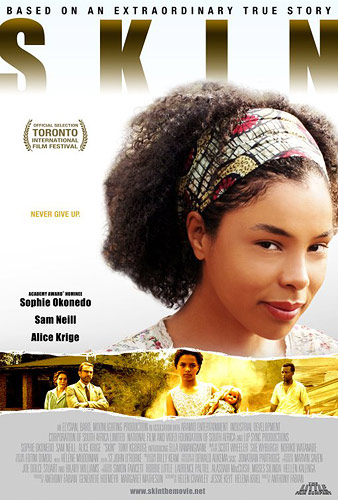
Hi Meltingpot Readers,
I hope everyone had a delightful holiday weekend. My Easter celebration became quite the multicultural experience as we ended up hosting three additional guests from Mexico. The language of the evening became a wonderful blend of Spanish and English, depending on the topic at hand. And the food was delicious.
At some point during the night we started talking about race and ethnicity in Mexico because one of our guests is often mistaken for anything but Mexican. It's because he has long, thick, unruly red hair, very pale skin with ruddy cheeks and he happens to wear a beard. As a joke, he often tells people he's Irish -- despite his strong Mexican accent -- and of course people believe him. We are so accustomed to assessing a person's ethnic/racial heritage on looks alone and yet this is such a fallible system.
It reminds me of the South African film Skin. I finally watched the film a few nights ago and was moved to tears several times throughout. The movie tells the true-life story of Sandra Laing, a South African woman who was born "looking Black" to White parents in apartheid-era South Africa. The film really explores the meaning of race as it was defined in South Africa. Before Sandra Laing, race was in fact, determined by looks. Sandra's parents wanted their daughter to attend a Whites-only school, but the school faculty deemed the little girl to be Black. With the government's help they proved she was Black by measuring her forehead, how far her buttocks stood out, and by far the most demeaning, with the official pencil test. That meant they stuck a pencil in the girl's curly hair and told her to shake her head. Because the pencil didn't fall out, she was officially declared Black.
A South African colleague of mine verified for me that the pencil test was used by all manner of official government institutions to determine a person's racial classification. Among other visual clues. Anyway, the entire film of Skin tells of Laing's tumultuous journey crossing over racial lines on paper, but never finding a place where she truly fit in. She was too Black to be White and too White to be Black. To see the real Sandra Laing in an interview with the film's director please check out the following link.
After our dinner conversation last night, watching Skin, as well as watching the Black in Latin America PBS series, I feel like I am constantly being reminded that race is such an ephemeral and useless concept. The definition of race cannot hold up to the complexity of the human experience on any continent. Every day I am more convinced that in the very near future race will cease to exist as a category of human classification. Sadly, I don't think racism will disappear with it, but it will be a start to admit that the paradigm just doesn't work. What do you think?
Will we ever see the day when we stop using race to categorize people? What do you think we'll use instead?
I'm listening.
Peace.
Wednesday, April 20, 2011
Interracial "Loving" on the Big Screen
Hi Meltingpot Readers,
Amidst the horrifying sound bites and statistics that (Republican) folks in Mississippi still believe that interracial marriage should be against the law, it's refreshing to hear that a film documenting the historic court case of the Lovings vs the Supreme Court of the United States will soon be seen on the big screen.
A new documentary, The Loving Story is about to premier at the Tribeca Film Festivalin New York City. From the Film Festival website:
" Through stunning archival footage of the Lovings, the film revisits this public battle through the eyes of a private couple who simply wanted to have the right to get married and live in the place they called home.
Director Nancy Buirski reacquaints us with this famous couple with the same grace and elegance of the soft-spoken but driven Mildred Loving herself, and subsequently breathes vibrant new life into history. Beyond the trials and legal battles, Buirski delicately anchors this inspiring film in an engaging human love story with a timely message of marriage equality, echoing the words of Mildred on the 40th anniversary of the Supreme Court decision: "I support the freedom to marry for all. That's what Loving, and loving, are all about."
The first showing in New York City is tomorrow, April 21. Anybody in the area, please go see it and tell us how it is. Hopefully the film will generate enough interest and be shown across the country. I know I'll do my part to bring it to Philly.
Do you want to see it? Tell me why?
I'm listening.
Peace.
p.s. I hope everyone caught the first episode of Black in Latin America last night. If not, tune in next Tuesday when they discuss Cuba.
Friday, February 18, 2011
Back to Babies, The Movie

Happy Friday, Meltingpot Readers,
I finally saw the documentary film Babies last weekend. I actually bought a copy of the DVD at a toy story that was going out of business. My sons and I watched it and it was wonderful. For those of you unfamiliar with the film, it's pretty basic. The director decided to follow four children in four different parts of the world -- Namibia, Tokyo, San Franscisco and a small village in Mongolia -- for one year. Or as they say in the film, from their first breath to their first steps.
Their is no dialogue in the film, really, the only sound is the gurgling, cooing, and crying of the babies as they develop. The parents and other adult voices really become inconsequential background noise. I thought my boys -- ages six and nine -- might be bored with the 90-minute film, but they remained as delighted and entranced as I, as we watched the various ways these babies made sense of their world.
I believe the filmmakers purpose in making this film was simply to show how universal parenting is, despite the vastly different methods and materials used. In addition, I felt it was a bit of a wake-up call to some of us Western parents who get caught up with all the baby stuff we're encouraged to buy to keep our babies happy/satisfied/stimulated/on the right track/quiet/healthy. There is this one scene where we see the Japanese baby surrounded by her toys. She gets so frustrated with one particular toy because she can't make it do what it is supposed to do that she just throws herself on the ground flailing in agony. This scene is immediately contrasted with a shot of the Mongolian baby playing in his house, tied to the bed so he doesn't get into mischief and amusing himself with a roll of toilet paper. He is so happy with that toilet paper. We still laugh about the toilet paper scene.
All in all, this is a great film for a Sunday afternoon with or without your kids. There's a lot to learn about these four different cultures and lessons in child-rearing abound. Like, if your child eats dirt, she probably won't die. I have to remember that, being the germ freak that I am.
Has anybody else seen Babies? What did you think? I just read that the director is planning a follow up film when the babies enter school. That's going to be good!
Peace.
Friday, January 21, 2011
Little Orphan Annie...in Color
Happy Friday Meltingpot Readers,
Have you heard the news? Apparently Willow Smith -- daughter of mega-stars Will and Jada Pinkett-Smith -- will be following up her smash pop hit Whip My Hair with the starring role in a remake of Annie. Reportedly, the new colored version will star Willow, be produced by Will Smith and the new music for the movie will be produced by none other than Jay-Z. For the skinny on the rumors, follow this link.
Of course this announcement got me thinking of all the classic films I"d like to see remade with a more colorful cast. Top of my list would be The Sound of Music with a Black family. And I'd like Elton John and Jaz-Z to collaborate on the music. Next what I'd like to see is a movie version of the Bionic Woman and the Six Million Dollar Man, where Jamie Summers is Black and Steve Austin is Asian. And then I'd like to see West Side Story with real Latinos in the lead roles.
What about you dear readers. Any remakes you'd like to see in color?
I'm listening.
Peace!
Monday, December 13, 2010
Meltingpot Movie Review -- Amreeka
Hi Meltingpot Readers,
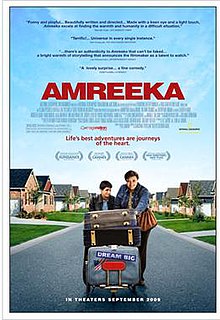
So last night, I was folding laundry and since it's now official that I can't fold without watching TV, I decided to pop in a movie I pulled off the shelf at the library last week. Since my other selection was Avatar, I figured I ought to get at least something slightly more intellectual, so I got a foreign film. I figure even if it blows chunks, with a foreign film, at least I'm being exposed to a new language.
Well, I picked a winner in Amreeka, a lovely indie film by first-time director Cherien Dabis. The story is pretty simple. A single mother of a teenage son, leaves her home country to move to America for a better life. That home country in this story is the West Bank. The part of America they arrive to is small-town Illinois, and as you can imagine, there is no happily ever after.
What made this movie so compelling was that we got to see the mother and her son in Israel/the West Bank before they came to America, giving the audience a chance to see what they left behind wasn't horrible, but freedom in America still sounded better. Also, the characters were Arab and Christian, making them minorities and misunderstood in both Israel and the United States.
The story took place just as the United States was about to invade Iraq, so hearing about the politics of that time period from an Arab-immigrant perspective was quite enlightening as well as harrowing and sad. Can you say UGLY AMERICAN?
I really enjoyed this movie despite the depressing overtones of the film, because it was laced with gentle humor and optimism. The actors all gave really fine, genuine performances and the food, yes the food, played a yummy role. If you can find a copy of Amreeka, definitely pick it up. You won't be disappointed.
Friday, December 10, 2010
About Avatar

Hi Meltingpot Readers,
So, I finally watched Avatar the other night. Yes, I got a copy from the library, so, no I didn't pay for it. For some reason, I'm proud of not being part of the hype. That being said, because I had very low expectations for the movie (I mean no 3-D glasses and watching on my non HDTV. ), I was pleasantly surprised. I didn't love the film, but I was thoroughly entertained throughout the entire 180-minute spectacle. First, I can pretty much watch Sigourney Weaver read a grocery list and be enthralled, and the inner-geek in me loved the other worldliness of the planet Pandora and the faux science behind becoming one with one's avatar. That was pretty cool.
But what I enjoyed even more was trying to figure out why everyone kept saying the Na'vi people were obviously stand-ins for Native Americans, when all I saw were Africans painted blue? From the braided hairstyles (with beads no less) to the Masaai like costumes worn by many of the higher ranking Na'vi (see photo above), not to mention the long limbs and facial features of some of the actors, I kept getting a very East African vibe from the Na'vi. Many critics and commentators suggested that the Na'vi's connection to the earth is very Native American, but it's also very African. Isn't it? Many, if not most African cultures have deep spiritual connections to nature and the earth. Maybe it's because the Na'vi shot arrows and that's why people assumed they must be Native Americans? Do I have to point out that many Africans do too?
Of course it doesn't matter who the Na'vi were really patterned after. I have read that director James Cameron just wanted them to look "ethnic." And I guess if you're a White male, anybody with color is ethnic. The point wasn't to make the Na'vi one specific culture, it was to create a noble savage that we could all cheer for. And I'm glad the White guy decided to cross over permanently and live with the natives, but I wonder, if he hadn't been a paraplegic as a human, would he have embraced the Na'vi lifestyle and chosen to stay? That's the question I'm asking. Meaning, was being blue and able to walk better than being White and confined to a wheelchair? I'm just saying.
Here's a clever critique of the whole film.
I'm curious what you all thought of Avatar? Sorry this is so late, maybe you don't remember. But if you do, tell me your thoughts.
Peace.
Wednesday, September 08, 2010
White Mommies, Black Girl, Riveting Film

Last night I watched the second film of a three-part documentary series on PBS about adoption. The movie was called Off and Running and tackled the issue of transracial adoption. On the surface, Off and Running followed the journey of a young African-American teen -- Avery Klein-Cloud, adopted by White lesbian mothers, who was searching for her birth mother. But Avery's real quest was to find herself.
Like most documentaries, this film did an excellent job allowing the main subject, Avery, to tell her own story simply by watching her carry-on in her everyday life. When the film opens, Avery is sending off the first letter to her birth mom, asking for answers about her origins and her birth family. It's only after the birth mother stops responding to Avery's request for contact, that things start spiraling out of control in the Klein-Cloud household.
I don't want to give away too much of what happens, but it's not like this is a movie of the week. In fact, if you'd like to stop reading here, and go watch the film on the POV website, then please do... but then come back. The point I'm trying to make is that what happens to Avery as she struggles with trying to discover what it means to be Black, was quite predictable. At least to me it was. It was sad to watch, and yet nothing surprised me. The more Avery felt rejected by her birthmother, the more she rebelled against her White mothers, and the more she sought out the company of other Black people to, "teach her how to be more African-American." The choices she made, the people she started hanging out with, the predicament she found herself in, and yes, even the way she started wearing her hair (can you say weave?) all come straight from the 'how to be Black in America' handbook. I should know, because even though I was raised by my Black parents, I was always surrounded by White people and felt woefully underprepared to be an authentic Black girl in America.
That being said, what was brilliant about the film is that Avery also had two adopted brothers. Her older brother is Black and Puerto Rican, and her younger brother is Korean. And whereas Avery struggled so profoundly with her racial identity, her older brother did not. Or at least, from what we saw in the film, he did not. So his presence in the film forced me and any other person watching to acknowledge that while Avery's journey may feel familiar, it isn't necessarily the norm. Every child who is transracially adopted will have their own journey and their own struggles. And hopefully, their parents will have the confidence and grace to help them get through it.
I can't say I loved the film, because in some ways it was painful to watch. Many times I wanted to jump into the TV and shake little Avery and tell her that the way she was trying to reconcile her past with her present was just making things worse. And other times I wanted to shake her parents and tell them that they were doing things all wrong. But I think at the end of the day, that's what good documentaries are supposed to make you do. Shake your fist at injustice and then get off your ass and do something about it.
Did anyone else watch the movie? What did you think?
I'm listening.
Peace!
Subscribe to:
Posts (Atom)