Hello Meltingpot Readers,
So, today is the last day of February, the last day of Black History Month and the last day of my ambitious project to bring attention to White people who tell Black stories. At the back of my mind, when conceiving this list, I was feeling kind of peeved about the fact that White authors can tell Black stories and become wildly successful doing so, yet Black authors telling the same stories are continuously marginalized. I also wanted to demonstrate, in this month dedicated to celebrating the contributions Black people have made to this country, that clearly Black achievement, Black history, Black culture and Black heroes and heroines don't belong to a collective Black community. They belong to everyone and anyone who wants to tell a good story. Unfortunately, these same heroes and heroines celebrated in the stories of White authors (and their White audiences), aren't so widely embraced off the page.
Of course, there's always a lesson to be learned when trying something new. While I'm still kind of peeved by the inherent inequality of praise given to White people telling Black stories compared to their Black counterparts, I also feel that in many cases, we should feel honored and thankful that any author feels so moved by the lives of Black people that they want to tell their stories. And as many of you dear readers pointed out, isn't it better that at least these stories are being told? If the author does their research and tells the story with respect and aims for authenticity, isn't that enough? In many cases, I say yes.If I love a story, I can't hate on the storyteller simply because she doesn't share the same racial background as her characters. That would be borderline racist and just plain dumb. And it would limit me from enjoying some really great books. As an example, today's offering, Run by Ann Patchett.
I reviewed Run on the Meltingpot a while back. You can read that review here. A story about a White father with two adopted African-American sons, Run is a true rumination on race, family and identity. It is extremely well written and after reading it, I was convinced Patchett must be married to a Black man or have some of her own Black kids. Something that would have given such incredible insight into these issues. But no, she's just a really good writer who likes to tell good stories and isn't afraid to tackle characters who have nothing to do with her own life. Needless to say, I was impressed by Run, as was the New York Times Bestsellers list.
So, dear readers, the month ends with lessons learned, new books discovered and old favorites remembered. I hope you enjoyed the ride. But before we go, what books do you think should have made my list? White People Telling Black Stories? Let's hear them.
I'm still listening.
Peace!
Showing posts with label White Authors. Show all posts
Showing posts with label White Authors. Show all posts
Wednesday, February 29, 2012


Friday, February 17, 2012
White People, Black Stories: James Patterson Channels a Black Detective

Hi Meltingpot Readers,
I have to admit, I've never, ever read anything written by the prolific, James Patterson. Not because I have anything against him or his work, he just doesn't write in a genre that I'm terribly interested in. But I have a lot of respect for him as an author who single handedly keeps the publishing industry afloat.
I do have a James Patterson story though. I remember being in the library a few years ago, and seeing an "Alex Cross" novel prominently displayed on the shelf. Because I am a voracious reader, as well as a book reviewer, I knew about Alex Cross. I knew he was a Black detective and the basis for a widely popular series, one that began with the book, Along Came a Spider. I picked up the book, thinking maybe I'd give it a try. Up until then, yes, I admit it, I assumed the author of Along Came A Spider, the creator of Alex Cross, HAD to be Black. Imagine my shock and surprise when I discovered James Patterson was White. I actually got into a fight with the librarian when she corrected my assumption. Okay it wasn't a fight, it was mostly me just going, 'No way! Are you sure?'
But, yes indeed, James Patterson is very White and very Rich. And not just because of Alex Cross. He's written so much more than that one series, but Alex Cross was crucial in building that fortune. In fact, the Alex Cross series has been tagged as the best-selling detective series in the United States in the last ten years. Not bad Mr. Patterson. Going Black obviously has its priveledges.
So, I'm of course wondering, what drove Patterson to create a Black main character? I'm curious what his connection to the Black community is, if at all.
Here's how Patterson answered that question from a reader in 2010:
"My grandparents had a small restaurant when I was a little kid, and there was an African-American woman who was a cook there. I spent tons of time with her and her family. I always kept them in the back of my head, and the aura of that household is part of what drove me to create the Cross family. So it's not just Alex."
Like I said, I've never read a James Patterson novel, so I cannot comment on how authentic his Black characters are, but this comment makes me a wee bit wary. Your grandparents' cook is your connection to the Black community? Really? But again, these books are a huge hit, so he's obviously doing something really well and race probably has nothing to do with it. I know plenty of Black people who are big fans of Patterson's and love the fact that Alex Cross is Black. It doesn't matter one bit that his creator is White.
So, I'm just curious. Did anybody else out there at one time think James Patterson was Black because of his Alex Cross series? Does anybody else think it's kind of weird that Tyler Perry has been cast to play the celebrated detective in the next Alex Cross movie? Yeah, me too.
Peace!
Wednesday, February 15, 2012
Back to White People Telling African Stories: Chris Cleave and Little Bee
Hi Meltingpot Readers,
I hesitated before adding Chris Cleave to my White People Who Tell Black Stories list for Black History Month. After all, his critically acclaimed novel, Little Bee, isn't only about the Nigerian orphan who calls herself Little Bee. It's also about a White British couple who 'meet up' with Little Bee. But then I figured, since my book Substitute Me features two White main characters and only one main Black character and it was routinely classified and categorized as an "African-American title," then Little Bee can join the Black book bandwagon.
About the Book: Little Bee debuted in 2009. It was one of those quiet sleeper hits. Without giving away too much of the kind of 'twist at the end' plot, Little Bee is about the ravages of war and immigration. It's also about Africa and post-colonial, White British guilt. It's about reparations in a way, and it's about doing the right thing, even if the right thing comes at a great personal sacrifice. And even though all of those issues sound dark and heavy and probably the last thing anyone would want to read outside of a college classroom, Cleave did an amazing job creating a immensely readable, touching, tender and yes, sometimes horrifying story that gives readers something to really think about.
About the Author: Let's just get it out there. Chris Cleave is White. He is not affiliated or connected to Black Nigerians in any way. He did however spend the early years of his childhood, living in Cameroon. When asked why he wrote this story about an African assylum seeker he said he was inspired by his brief stint working in a detention center in England. He called it a "prison ...full of people who haven't committed a crime." He said the conditions were "distressing," and he just knew he had to write about this "dirty little secret."
The Success: First released in the UK under the title, The Other Hand, the novel was snapped up by Nicole Kidman for film adaption. In the United States the book was New York Times Bestseller and made several Best Of lists.
I enjoyed Little Bee but only discovered it by accident. I thought it was very interesting that the book was marketed in the United States with very little mention of its African protagonist. I wonder why? Thoughts?
I'm listening.
Peace!
Wednesday, February 08, 2012
And Speaking of White People Telling African Stories: Dave Eggers
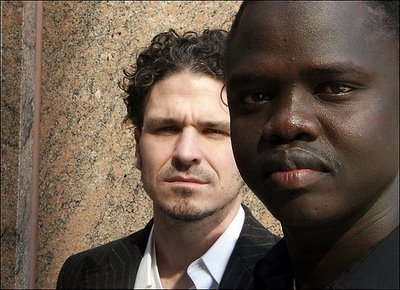
I am having a great time compiling my list of White People Who Tell Black Stories for Black History Month. Thanks to all of your thoughtful comments, I'm really thinking about things differently, asking myself questions I hadn't before. Most importantly, I'm wondering, does it really matter who is telling these stories? Isn't it more important that the stories are being told? Today's author is a great example.
Meet Dave Eggers. Famously known for his 2000 memoir, A Heartbreaking Work of Staggering Genius, the literary magazine, McSweeneys and other things literary and liberal, his career took a different turn in 2006 when he wrote, What is the What.
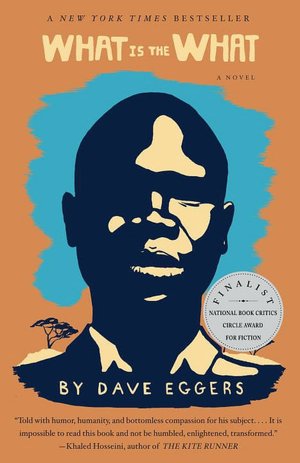
"What Is the What” is an extraordinary work of witness, and of art." The New York Times
"Hands down, Dave Eggers’ What Is the What stands as the single most thought-provoking, unusual and moving book I have read all year." USA TODAY
" With its perfect blend of epic sweep and small, intimate moments, it stands worthily alongside the best work of Chinua Achebe, Amos Tutuola and Ben Okri." Seattle Times
THE SUCESS: A New York Times Bestseller, What is the What also won the Prix Médicis in France. It has been selected as the summer reading book for incoming Freshman at universities across the country including this year's incoming class at Duke University. But here's the catch. All of the proceeds for the book went to support the Valentino Achak Deng Foundation.
GIVING BACK: Let's review. So Dave Eggers, a White man, who garnered much literary praise and success for his book about a Black man's life, made sure to compensate that Black man for sharing his life story. I don't know how "proceeds" were defined between Eggers, Deng and the publisher, but I also don't really care, because the proof is the continued success of the VAD foundation. Check out their website to see how much has been done and continues to be done. If Eggers hadn't lent his considerable talents and established name to getting Deng's story out there, would the Marial Bai Secondary School even exist? Would Americans be as aware of the struggles of the people in Sudan? Would they have a real face to put on a Lost Boy's story?
Is there a difference between collaboration and appropriation and just plain stealing? Who knows the rules?
I'm listening.
Peace!
Monday, February 06, 2012
White People, Black History: Naomi Benaron Revisits Rwanda's Genocide

Hi Meltingpot Readers,
I hope you know that every person who makes my special White People Telling Black History List isn't automatically suspect. Making the list doesn't make you a bad guy in my book. In fact, today's author, Naomi Benaron, gets my full respect. So without further ado, meet Naomi Benaron.
Naomi Benaron's debut novel, Running the Rift was just released last month by Algonquin Books. The book tells the harrowing story of young Tutsi boy in Rwanda who comes of age just as the rising tensions leading up to the 1994 genocide are ripping his country apart. Jean Patrick is a gifted runner with dreams of making the Olympics. He is also smart, wants to go to college, hang out with his friends and fall in love, but the cruel politics of being a Tutsi in Rwanda keep getting in the way of his dreams of a peaceful life.
Admittedly, when I got my hands on this book, I didn't want to read it. I just wasn't in the mood for a story about genocide. I mean, when are we ever in the mood to read about the senseless, violent deaths of an entire people? Still, I picked it up and started to read and immediately found myself drawn in to the story of Jean Patrick and his quest to be an Olympic runner, while watching his country fall apart around him. And that's what makes this book so wonderful. Benaron is able to tell the story of Rwanda's genocide through the eyes of a genuine, relateable character who, like us, just cannot believe things could really descend into the madness that eventually takes over that country. So, instead of reading a story about genocide, you're reading a lyrically-written, entirely engrossing story about a young man with hopes and dreams and family and friends, who is in this impossible situation but somehow manages to survive. The ancillary characters that are part of the story -- Jean Patrick's politically minded love interest, his hardened track coach, the somewhat clueless White American professor -- are equally well-developed and add depth and interesting plot twists to the novel. I thoroughly enjoyed this powerful and nuanced debut and recommend it to anyone who, like me, wants to understand what's going on in the world but doesn't always want to hear it through the evening news cycle.
Benaron's Success: First off, Benaron's book was published because it won the Bellwether Prize for Fiction, which is an award created by Barbara Kingsolver for unpublished novels that address issues of social justice. The prize comes with a cash award and a book contract. It's too early to know sales figures for the book, but it did receive starred reviews from all of the major book industry publications.
On Being a White Woman Writing about Black Africa: Benaron didn't grow up in Africa. She grew up in Boston. She's not married to a Rwandan, nor is she now living in Africa. Her connection to Rwanda comes from meeting Rwandan refugees in the United States, then traveling to Rwanda a few times, including a trip just for research for the book. She is very much aware of the paradox of her telling this story. And she responded this way when asked about it by Publisher's Weekly:
" It takes audacity for a writer to assume the perspective of another culture. Were you concerned about your role as an outsider?
Every day. There’s a wonderful tongue-in-cheek piece, Binyavanga Wainaina’s “How to Write about Africa,” about white people writing about Africa. I’ve kept that in the back of my mind as pitfalls to avoid. What has been important to me has been to present the culture with as much understanding, respect, and love as I could. My sister spent a year in Malawi. I started with a love of the continent from her."
So there you have it. Do you think Benaron has the "right" to tell this story? Is there a Black and/or African writer who has told this story already? I'm listening.
Peace!
Subscribe to:
Posts (Atom)