Hello Meltingpot Readers,
I'm posting bright and early this Thursday morning to announce the winners of the free tickets to see Fela! on Broadway, next Tuesday night at 8 pm. So without further ado, the winners are:
1. Jackikay
2. Ms. "Unknown" Commenter #2 on Monday's post.
3. Hadiyyah
4. The Golden Papaya
5. Sharontina
Congratulations to you all! I hope you love the show. Now, here's what you have to do to get your two free tickets. Send me an email at myamericanmeltingpot@gmail.com with your real name and an email address where your tickets can be sent. You will be able to print out your tickets and take them to the show for entry on Tuesday. But you must send me your emails by end of day today or else I will pass the tickets on to someone else. And people, if you know you can't make it to Tuesday's show, please let me know so I can give those tickets to another reader. Thank you all and congrats again.
Peace!
Showing posts with label Africa. Show all posts
Showing posts with label Africa. Show all posts
Thursday, July 12, 2012


Wednesday, July 11, 2012
Fela! on Broadway: Vibrant and Thrilling

Hi Meltingpot Readers,
I know you're dying to know. How was Fela! on Broadway? People, it was AMAZING. I laughed. I cried. I danced. I fell in love with the music.
Even if you don't win a free pair of tickets from me, I encourage everyone to go see Fela! on Broadway before it closes on August 4, 2012.
The reviewers haven't lied. The show is vibrant and thrilling. At one point, before the second act even, the entire audience was on their feet, dancing and singing with the actors on stage. If you love world music, a good story, and fabulous dancing, Fela! will satisfy.
But here's why I LOVED the show so much. Fela Kuti has a truly fascinating and important life story. His contribution to music, politics, civil rights and the Black aesthetic is so huge, I can't believe more people, myself included, don't include him in the same conversations with Malcolm X, Gandhi and Martin Luther King, Jr. He used his art as protest. But make no mistake, he was an innovative and groundbreaking musician first. Clearly the show on Broadway didn't get into all of the controversy of Fela Kuti's life, after all, it's about entertainment first, but nonetheless, they give you enough information to make you want to know more. To come home and find out for yourself who the man behind the music really was.
The other reason I loved the show was that there were just so many beautiful Black people on the stage. The African aesthetic was on full display, from the brilliant costumes, to the set design, to the AWESOME hairstyles. Afros, dreds, braids, oh my! It made my heart sing.
So, dear readers, you have until midnight tonight to leave a comment on Monday's post to be entered in the drawing. Five lucky readers will win a pair of tickets for next Tuesday's show.
Good Luck!
Peace!
Monday, July 09, 2012
FELA! Back on Broadway: Free Tickets for Meltingpot Readers!
Hi Meltingpot Readers,
Today is your lucky day and mine. First, let's get it straight that Ms. Meltingpot loves a good Broadway show. After all, she named babygirl after her favorite character from the great White Way and though I've never really talked about it here, briefly entertained the idea of a career as a great stage performer. Musical comedy was going to be my thing. But, alas, Ms. Meltingpot cannot sing worth a lick.
So, instead, I just enjoy as many shows as I can...and pray one of my children will have a voice that can take him all the way to Broadway. I'm kidding. Sort of. But I'm getting so far away from the point. And the point is, tonight I'm going to see FELA! on Broadway! Yes, I mean the 2010 Tony-award winning show about the Nigerian musical genius and political activist, Fela Kuti. Yes, the one produced by Jay-Z, Will and Jada Pinket-Smith, and Ahmir 'Questlove' Thompson from the Roots. Yes, the one that is back on Broadway for only six-weeks. Yours truly is going tonight.
And here's the thing. While I can enjoy most any good song and dance, coupled with an overly dramatic story line, I obviously have a soft spot for a show with a Meltingpot sensibility. Check out the following description of Fela! from Down Beat magazine and tell me this doesn't have Meltingpot written all over it.
" In addition to being visually and musically explosive, “Fela!” elucidates Kuti's politics and run-ins with the law. It contextualizes his convictions in relation to U.S. civil rights activism and illuminates African religion and culture. It also demonstrates how African rhythms, calypso, James Brown, John Coltrane, Chano Pozo and Martin Luther King Jr. all informed both his music and political stance."
I am so excited. And the thrill isn't only mine. I have five pairs of tickets for the 8pm evening show on July 17 to give away to you, my dear readers! If you want to see Fela! on Broadway for free, all you have to do is leave a comment here and tell me why you want to see the show. I will randomly draw five names on Wednesday (July 11) night at midnight. Winners will be posted on Thursday (July 12) morning. So check back on Thursday to see if you won and to collect your tix.
Here's a preview of Fela!
Be inspired.
Peace!
Today is your lucky day and mine. First, let's get it straight that Ms. Meltingpot loves a good Broadway show. After all, she named babygirl after her favorite character from the great White Way and though I've never really talked about it here, briefly entertained the idea of a career as a great stage performer. Musical comedy was going to be my thing. But, alas, Ms. Meltingpot cannot sing worth a lick.
So, instead, I just enjoy as many shows as I can...and pray one of my children will have a voice that can take him all the way to Broadway. I'm kidding. Sort of. But I'm getting so far away from the point. And the point is, tonight I'm going to see FELA! on Broadway! Yes, I mean the 2010 Tony-award winning show about the Nigerian musical genius and political activist, Fela Kuti. Yes, the one produced by Jay-Z, Will and Jada Pinket-Smith, and Ahmir 'Questlove' Thompson from the Roots. Yes, the one that is back on Broadway for only six-weeks. Yours truly is going tonight.
And here's the thing. While I can enjoy most any good song and dance, coupled with an overly dramatic story line, I obviously have a soft spot for a show with a Meltingpot sensibility. Check out the following description of Fela! from Down Beat magazine and tell me this doesn't have Meltingpot written all over it.
" In addition to being visually and musically explosive, “Fela!” elucidates Kuti's politics and run-ins with the law. It contextualizes his convictions in relation to U.S. civil rights activism and illuminates African religion and culture. It also demonstrates how African rhythms, calypso, James Brown, John Coltrane, Chano Pozo and Martin Luther King Jr. all informed both his music and political stance."
I am so excited. And the thrill isn't only mine. I have five pairs of tickets for the 8pm evening show on July 17 to give away to you, my dear readers! If you want to see Fela! on Broadway for free, all you have to do is leave a comment here and tell me why you want to see the show. I will randomly draw five names on Wednesday (July 11) night at midnight. Winners will be posted on Thursday (July 12) morning. So check back on Thursday to see if you won and to collect your tix.
Here's a preview of Fela!
Be inspired.
Peace!
Wednesday, June 06, 2012
Meet Bino and Fino: They're Cute, They're Animated, They're African
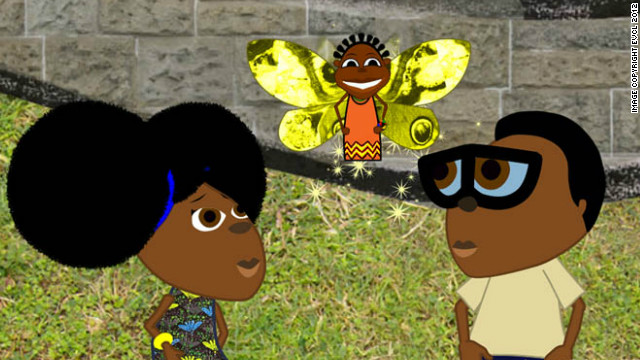
Hello Meltingpot Readers,
I think you'll recall that a while back I wrote about this great new global African style and culture magazine called Arise. I just picked up the latest issue and read a small article about a new African cartoon series called Bino and Fino.
I admit, I was drawn into the story because of the picture of the adorable Black girl butterfly character, but after doing some more digging about the series, I got even more excited about the show. Bino and Fino is the creation of Nigerian architect turned animator, Adamu Waziri who lamented the fact that African youth don't have cartoons that feature modern African children in positive settings. He said in an interview that when Disney 'does Africa' they show lions and talking animals in the jungle. You never see people in a modern urban setting. And so the show -- targeted to three to five year olds -- Bino and Fino was born. The show is now being seen in the UK and in various countries in Africa. Three cheers to Waziri for making a difference.
Here's a clip of Waziri talking about the origins of the show and why it's so important for Bino and Fino to exist. And not for nothing, don't you just love Fino's Afro puffs?
Enjoy.
Peace!
Monday, June 04, 2012
Music Monday: Zap Mama
Hi Meltingpot Readers,
Do you know Zap Mama? If you don't, you should get acquainted. Here's one of my favorite songs, called Damn Your Eyes. Enjoy.
For all of you fans, what's your favorite Zap Mama song? I'm listening.
Peace!
Do you know Zap Mama? If you don't, you should get acquainted. Here's one of my favorite songs, called Damn Your Eyes. Enjoy.
For all of you fans, what's your favorite Zap Mama song? I'm listening.
Peace!
Wednesday, May 30, 2012
Ballet Documentary is a Meltingpot Must-See!
Hi Meltingpot Readers,
How many of you ever dreamed of being a ballerina? Even if it was just for a minute. I had that one-minute dream, but it was quickly squashed by my ballet teacher who informed my mother that I just didn't have a dancer's body... at age five! Luckily, I found gymnastics to be more my style and then I was on to swimming and ice skating and... well, you get the idea. Clearly, I didn't even have the mental fortitude to be a ballerina. But I still get shivers of excitement when I watch other young people dance.
So, you can imagine my delight when I heard about a new documentary, called First Position that follows six young people in their quest for a prestigious ballet scholarship. I originally heard about the film because of the young Black girl profiled. Her name is Michaela DePrince and she was orphaned in her native Sierra Leone, adopted by a White American family and triumphs in the film. I was hooked just hearing that nugget. But the film follows five other great kids, with diverse backgrounds, boys and girls. I am excited to see this movie because if finally shows other faces of ballet besides young White girls.
But rather than me trying to get you all excited, why don't you just watch the trailer and decide for yourself. Let the shivers commence.
Peace!
How many of you ever dreamed of being a ballerina? Even if it was just for a minute. I had that one-minute dream, but it was quickly squashed by my ballet teacher who informed my mother that I just didn't have a dancer's body... at age five! Luckily, I found gymnastics to be more my style and then I was on to swimming and ice skating and... well, you get the idea. Clearly, I didn't even have the mental fortitude to be a ballerina. But I still get shivers of excitement when I watch other young people dance.
So, you can imagine my delight when I heard about a new documentary, called First Position that follows six young people in their quest for a prestigious ballet scholarship. I originally heard about the film because of the young Black girl profiled. Her name is Michaela DePrince and she was orphaned in her native Sierra Leone, adopted by a White American family and triumphs in the film. I was hooked just hearing that nugget. But the film follows five other great kids, with diverse backgrounds, boys and girls. I am excited to see this movie because if finally shows other faces of ballet besides young White girls.
But rather than me trying to get you all excited, why don't you just watch the trailer and decide for yourself. Let the shivers commence.
Peace!
Monday, April 30, 2012
Black Beauty Queens Causing Controversy in France

Bonjour Meltingpot Readers,
I was intrigued by the latest racial brouhaha coming out of the city of lights. And, no, I'm not talking about presidential hopeful Francois Hollande using Jay-Z and Kanye West's song in one of his campaign videos. I'm talking about the recent controversy over the first ever Miss Black France competition.
This past Saturday, the lovely Miss Mbathio Beye was crowned the first Miss Black France, despite protesters and critics who cried foul. Depending on who you ask among the dissenters, the idea of a Miss Black France was either a racist competition that excluded Whites or a misguided feel good opportunity that sent the wrong message to a country dealing with a rise in anti-immigrant sentiment. But according to the Miss Black France organizer, the purpose of the competition was to "celebrate black beauty," and to "shine a light on the many Black women in [France] who are rarely given any media attention."
As an American who is used to seeing everything -- from beauty pageants to greeting cards -- segregated and celebrated along racial lines, I initially didn't see anything wrong with a Miss Black France competition. In fact, I saw it as progress, or at the very least an opportunity for Black women to have their beauty acknowledged in a country that's been a little lax in that department. And for the most part, I still feel that way. But knowing that most European countries pride themselves on not being racist simply because they don't acknowledge racial differences, I can see how this Black beauty competition might feel like a step in the wrong direction.
But, you can't have your chocolate cake and eat it too. The French want to say everyone is equal and that they don't distinguish White from Black, and that French is French, but we all know that simply isn't true. (And obviously, this is not just a French problem.) Without going into all of the racial politics in France, we know that people of color still struggle for equal rights and opportunities. The fashion and beauty industries are no exception. So, why can't Black women make their own opportunities? I can't help think of Italian Vogue and their launch of Vogue Black in 2010. The Italians too were criticized for creating a publication that is singularly focused on Black beauty, but that didn't stop them. I hope the French take note. I hope they realize that celebrating one ethnic group doesn't have to mean excluding the other.
What do you think, dear readers? Can France have a Black Beauty competition without causing a commotion? Do you think a Miss Black France is a bad idea? A racist one? Why or why not?
I'm listening.
Peace!
Wednesday, April 18, 2012
Say What? Wednesday: A "Nigger" Cake is Served in Sweden
Hello Meltingpot Readers,
Has anybody out there heard about this scandalous story regarding the minister of culture in Sweden eating a "nigger cake?" Say what? You heard me, dear readers. That's what the cake is called and it was in the shape of a naked African woman. The cake was frosted with dark chocolate icing and upon cutting into it, a red velvet cake was revealed. Here's a link for more about how the story was initially portrayed. Prepare to be outraged.
Now dear readers, I am not so ignorant as to think that the entire country of Sweden is run by a group of gleeful racists who like to eat offensive cakes. So, I tried to find the true story behind this cake. Apparently, the cake was a piece of performance art meant to bring attention to the practice of female genital mutilation. Here's a link to an opinion piece penned for Ebony.com that explains the artist's intentions as well as the success or lack thereof of his work. There's a video on that link to show the artist at work. And over at racialicious.com they've got a brief interview with the artist, Makode Aj Linde, who happens to be an Afro-Swede. In other words, he's Black. He stands by his work and said, "it's sad if people feel offended."
What do you think, dear readers? Are you offended? Did Aj Linde succeed in his mission, or was this an epic fail?
I'm so listening.
Peace!
Wednesday, February 15, 2012
Back to White People Telling African Stories: Chris Cleave and Little Bee
Hi Meltingpot Readers,
I hesitated before adding Chris Cleave to my White People Who Tell Black Stories list for Black History Month. After all, his critically acclaimed novel, Little Bee, isn't only about the Nigerian orphan who calls herself Little Bee. It's also about a White British couple who 'meet up' with Little Bee. But then I figured, since my book Substitute Me features two White main characters and only one main Black character and it was routinely classified and categorized as an "African-American title," then Little Bee can join the Black book bandwagon.
About the Book: Little Bee debuted in 2009. It was one of those quiet sleeper hits. Without giving away too much of the kind of 'twist at the end' plot, Little Bee is about the ravages of war and immigration. It's also about Africa and post-colonial, White British guilt. It's about reparations in a way, and it's about doing the right thing, even if the right thing comes at a great personal sacrifice. And even though all of those issues sound dark and heavy and probably the last thing anyone would want to read outside of a college classroom, Cleave did an amazing job creating a immensely readable, touching, tender and yes, sometimes horrifying story that gives readers something to really think about.
About the Author: Let's just get it out there. Chris Cleave is White. He is not affiliated or connected to Black Nigerians in any way. He did however spend the early years of his childhood, living in Cameroon. When asked why he wrote this story about an African assylum seeker he said he was inspired by his brief stint working in a detention center in England. He called it a "prison ...full of people who haven't committed a crime." He said the conditions were "distressing," and he just knew he had to write about this "dirty little secret."
The Success: First released in the UK under the title, The Other Hand, the novel was snapped up by Nicole Kidman for film adaption. In the United States the book was New York Times Bestseller and made several Best Of lists.
I enjoyed Little Bee but only discovered it by accident. I thought it was very interesting that the book was marketed in the United States with very little mention of its African protagonist. I wonder why? Thoughts?
I'm listening.
Peace!
I hesitated before adding Chris Cleave to my White People Who Tell Black Stories list for Black History Month. After all, his critically acclaimed novel, Little Bee, isn't only about the Nigerian orphan who calls herself Little Bee. It's also about a White British couple who 'meet up' with Little Bee. But then I figured, since my book Substitute Me features two White main characters and only one main Black character and it was routinely classified and categorized as an "African-American title," then Little Bee can join the Black book bandwagon.
About the Book: Little Bee debuted in 2009. It was one of those quiet sleeper hits. Without giving away too much of the kind of 'twist at the end' plot, Little Bee is about the ravages of war and immigration. It's also about Africa and post-colonial, White British guilt. It's about reparations in a way, and it's about doing the right thing, even if the right thing comes at a great personal sacrifice. And even though all of those issues sound dark and heavy and probably the last thing anyone would want to read outside of a college classroom, Cleave did an amazing job creating a immensely readable, touching, tender and yes, sometimes horrifying story that gives readers something to really think about.
About the Author: Let's just get it out there. Chris Cleave is White. He is not affiliated or connected to Black Nigerians in any way. He did however spend the early years of his childhood, living in Cameroon. When asked why he wrote this story about an African assylum seeker he said he was inspired by his brief stint working in a detention center in England. He called it a "prison ...full of people who haven't committed a crime." He said the conditions were "distressing," and he just knew he had to write about this "dirty little secret."
The Success: First released in the UK under the title, The Other Hand, the novel was snapped up by Nicole Kidman for film adaption. In the United States the book was New York Times Bestseller and made several Best Of lists.
I enjoyed Little Bee but only discovered it by accident. I thought it was very interesting that the book was marketed in the United States with very little mention of its African protagonist. I wonder why? Thoughts?
I'm listening.
Peace!
Wednesday, February 08, 2012
And Speaking of White People Telling African Stories: Dave Eggers
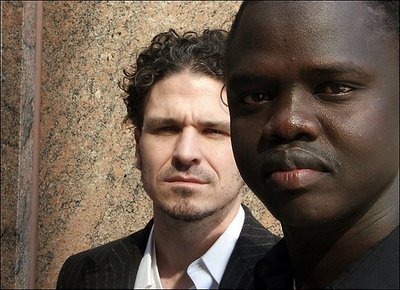
I am having a great time compiling my list of White People Who Tell Black Stories for Black History Month. Thanks to all of your thoughtful comments, I'm really thinking about things differently, asking myself questions I hadn't before. Most importantly, I'm wondering, does it really matter who is telling these stories? Isn't it more important that the stories are being told? Today's author is a great example.
Meet Dave Eggers. Famously known for his 2000 memoir, A Heartbreaking Work of Staggering Genius, the literary magazine, McSweeneys and other things literary and liberal, his career took a different turn in 2006 when he wrote, What is the What.
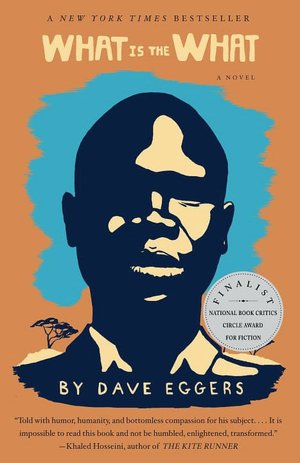
"What Is the What” is an extraordinary work of witness, and of art." The New York Times
"Hands down, Dave Eggers’ What Is the What stands as the single most thought-provoking, unusual and moving book I have read all year." USA TODAY
" With its perfect blend of epic sweep and small, intimate moments, it stands worthily alongside the best work of Chinua Achebe, Amos Tutuola and Ben Okri." Seattle Times
THE SUCESS: A New York Times Bestseller, What is the What also won the Prix Médicis in France. It has been selected as the summer reading book for incoming Freshman at universities across the country including this year's incoming class at Duke University. But here's the catch. All of the proceeds for the book went to support the Valentino Achak Deng Foundation.
GIVING BACK: Let's review. So Dave Eggers, a White man, who garnered much literary praise and success for his book about a Black man's life, made sure to compensate that Black man for sharing his life story. I don't know how "proceeds" were defined between Eggers, Deng and the publisher, but I also don't really care, because the proof is the continued success of the VAD foundation. Check out their website to see how much has been done and continues to be done. If Eggers hadn't lent his considerable talents and established name to getting Deng's story out there, would the Marial Bai Secondary School even exist? Would Americans be as aware of the struggles of the people in Sudan? Would they have a real face to put on a Lost Boy's story?
Is there a difference between collaboration and appropriation and just plain stealing? Who knows the rules?
I'm listening.
Peace!
Monday, February 06, 2012
White People, Black History: Naomi Benaron Revisits Rwanda's Genocide

Hi Meltingpot Readers,
I hope you know that every person who makes my special White People Telling Black History List isn't automatically suspect. Making the list doesn't make you a bad guy in my book. In fact, today's author, Naomi Benaron, gets my full respect. So without further ado, meet Naomi Benaron.
Naomi Benaron's debut novel, Running the Rift was just released last month by Algonquin Books. The book tells the harrowing story of young Tutsi boy in Rwanda who comes of age just as the rising tensions leading up to the 1994 genocide are ripping his country apart. Jean Patrick is a gifted runner with dreams of making the Olympics. He is also smart, wants to go to college, hang out with his friends and fall in love, but the cruel politics of being a Tutsi in Rwanda keep getting in the way of his dreams of a peaceful life.
Admittedly, when I got my hands on this book, I didn't want to read it. I just wasn't in the mood for a story about genocide. I mean, when are we ever in the mood to read about the senseless, violent deaths of an entire people? Still, I picked it up and started to read and immediately found myself drawn in to the story of Jean Patrick and his quest to be an Olympic runner, while watching his country fall apart around him. And that's what makes this book so wonderful. Benaron is able to tell the story of Rwanda's genocide through the eyes of a genuine, relateable character who, like us, just cannot believe things could really descend into the madness that eventually takes over that country. So, instead of reading a story about genocide, you're reading a lyrically-written, entirely engrossing story about a young man with hopes and dreams and family and friends, who is in this impossible situation but somehow manages to survive. The ancillary characters that are part of the story -- Jean Patrick's politically minded love interest, his hardened track coach, the somewhat clueless White American professor -- are equally well-developed and add depth and interesting plot twists to the novel. I thoroughly enjoyed this powerful and nuanced debut and recommend it to anyone who, like me, wants to understand what's going on in the world but doesn't always want to hear it through the evening news cycle.
Benaron's Success: First off, Benaron's book was published because it won the Bellwether Prize for Fiction, which is an award created by Barbara Kingsolver for unpublished novels that address issues of social justice. The prize comes with a cash award and a book contract. It's too early to know sales figures for the book, but it did receive starred reviews from all of the major book industry publications.
On Being a White Woman Writing about Black Africa: Benaron didn't grow up in Africa. She grew up in Boston. She's not married to a Rwandan, nor is she now living in Africa. Her connection to Rwanda comes from meeting Rwandan refugees in the United States, then traveling to Rwanda a few times, including a trip just for research for the book. She is very much aware of the paradox of her telling this story. And she responded this way when asked about it by Publisher's Weekly:
" It takes audacity for a writer to assume the perspective of another culture. Were you concerned about your role as an outsider?
Every day. There’s a wonderful tongue-in-cheek piece, Binyavanga Wainaina’s “How to Write about Africa,” about white people writing about Africa. I’ve kept that in the back of my mind as pitfalls to avoid. What has been important to me has been to present the culture with as much understanding, respect, and love as I could. My sister spent a year in Malawi. I started with a love of the continent from her."
So there you have it. Do you think Benaron has the "right" to tell this story? Is there a Black and/or African writer who has told this story already? I'm listening.
Peace!
Wednesday, December 14, 2011
International Adoption Can Make the Holidays Taste Sweeter
Hi Meltingpot Readers,
Here's a link to a story I wrote for today's Philadelphia Inquirer about how families with internationally adopted children incorporate their children's heritage into the holidays.
It was great fun doing all of the interviews and hearing how different families, like the Braydon-McCormicks, mesh all of the cultures represented in their multi-culti clans during the Christmas season. Of course, because this was a newspaper article, I didn't get to include half the information I wanted to, given the limited space. For one, I would have liked to include more details about just how thoughtful these different families are in their celebrations. It's not like they just hang up some extra ornaments on the tree and call it a day. I also would have liked to include some Jewish families with adopted children in the story as well. Maybe next time.
The main nugget of truth I walked away with after talking to all of these great people, was that an adopted child's heritage isn't just acknowledged on special occasions and holidays. It becomes the family's heritage. As one of the mother's I interviewed, Kate Rupertus, said. "Our family is now Irish, Italian and Ethiopian." And that was evidenced by the beautiful Ethiopian decorations in their home as well as the fact that on St. Patrick's day, all of the kids go green. In other words, the child isn't just adopted into the family, his culture is too.
Makes my heart sing. I love these meltingpot moments.
Peace!
Here's a link to a story I wrote for today's Philadelphia Inquirer about how families with internationally adopted children incorporate their children's heritage into the holidays.
It was great fun doing all of the interviews and hearing how different families, like the Braydon-McCormicks, mesh all of the cultures represented in their multi-culti clans during the Christmas season. Of course, because this was a newspaper article, I didn't get to include half the information I wanted to, given the limited space. For one, I would have liked to include more details about just how thoughtful these different families are in their celebrations. It's not like they just hang up some extra ornaments on the tree and call it a day. I also would have liked to include some Jewish families with adopted children in the story as well. Maybe next time.
The main nugget of truth I walked away with after talking to all of these great people, was that an adopted child's heritage isn't just acknowledged on special occasions and holidays. It becomes the family's heritage. As one of the mother's I interviewed, Kate Rupertus, said. "Our family is now Irish, Italian and Ethiopian." And that was evidenced by the beautiful Ethiopian decorations in their home as well as the fact that on St. Patrick's day, all of the kids go green. In other words, the child isn't just adopted into the family, his culture is too.
Makes my heart sing. I love these meltingpot moments.
Peace!
Monday, November 21, 2011
Meltingpot Movie Review: Desert Flower
Hi Meltingpot Readers,
How many of you know the name Waris Dirie? Do you know why she is famous? Admittedly, I didn't either until watching the movie, Desert Flower which is based on her life story.
To some, Dirie is the famous Somali supermodel, discovered mopping floors at a McDonald's in London, but her fame and influence go much deeper than that. While her rags to riches story from child of a nomadic clan in eastern Somalia to world-famous supermodel and actress is fascinating to behold, it's what she does with her fame and influence that is truly inspiring.
As a 'victim' of female genital circumcision, Dirie was plagued with illness and pain her entire life. (Dear Lord, I'm making it sound like she's dead. She's not. She's very much alive.) After achieving a level of fame and fortune in Europe and the United States, she used her platform to speak out against the practice and to bring worldwide attention to the plight of so many women around the world who suffer and die because of the belief that a woman is unclean with her lady parts intact. Dirie eventually became a UN Special Ambassador for the Elimination of Female Genital Mutilation and set up her own foundation, the Desert Flower Foundation.
Which brings me back to the movie, Desert Flower. Of course, I picked up the DVD at my local library, but the film had already been on my radar. It wasn't just the pretty yellow cover that caught my eye. Now that you know Dirie's story, you're probably intrigued about the film, but is it worth watching, you wonder? Yes! Waris is played by Ethiopian supermodel, Liya Kebede and she brings such an innocence and physical beauty to the role, I was enraptured at first sight of her on the screen.
Actually, the whole film is beautiful, from the first shots in "Somalia" (I'm not sure if they were actually filming in Somalia) to the brief glimpses of haute couture on the catwalk. And while you already know the "ending," there's still enough suspense and cliff hangers to keep this from being just another movie of the week. What's more, Dirie's 'happy ending' story is simply a wonderful catalyst to open the discussion about the role of women and their perpetual subjugation the world over.
All told, I really enjoyed the film and recommend it as both entertainment and education. If you want to know more about Dirie's life and work, visit her foundation website, Desert Flower and this website which details the many subsequent books, films and projects Dirie has been involved in over the years. It is impressive. For now, check out the trailer.
Peace.
How many of you know the name Waris Dirie? Do you know why she is famous? Admittedly, I didn't either until watching the movie, Desert Flower which is based on her life story.
To some, Dirie is the famous Somali supermodel, discovered mopping floors at a McDonald's in London, but her fame and influence go much deeper than that. While her rags to riches story from child of a nomadic clan in eastern Somalia to world-famous supermodel and actress is fascinating to behold, it's what she does with her fame and influence that is truly inspiring.
As a 'victim' of female genital circumcision, Dirie was plagued with illness and pain her entire life. (Dear Lord, I'm making it sound like she's dead. She's not. She's very much alive.) After achieving a level of fame and fortune in Europe and the United States, she used her platform to speak out against the practice and to bring worldwide attention to the plight of so many women around the world who suffer and die because of the belief that a woman is unclean with her lady parts intact. Dirie eventually became a UN Special Ambassador for the Elimination of Female Genital Mutilation and set up her own foundation, the Desert Flower Foundation.
Which brings me back to the movie, Desert Flower. Of course, I picked up the DVD at my local library, but the film had already been on my radar. It wasn't just the pretty yellow cover that caught my eye. Now that you know Dirie's story, you're probably intrigued about the film, but is it worth watching, you wonder? Yes! Waris is played by Ethiopian supermodel, Liya Kebede and she brings such an innocence and physical beauty to the role, I was enraptured at first sight of her on the screen.
Actually, the whole film is beautiful, from the first shots in "Somalia" (I'm not sure if they were actually filming in Somalia) to the brief glimpses of haute couture on the catwalk. And while you already know the "ending," there's still enough suspense and cliff hangers to keep this from being just another movie of the week. What's more, Dirie's 'happy ending' story is simply a wonderful catalyst to open the discussion about the role of women and their perpetual subjugation the world over.
All told, I really enjoyed the film and recommend it as both entertainment and education. If you want to know more about Dirie's life and work, visit her foundation website, Desert Flower and this website which details the many subsequent books, films and projects Dirie has been involved in over the years. It is impressive. For now, check out the trailer.
Peace.
Wednesday, October 19, 2011
One Last Lesson from Wangari Maathai
Hi Meltingpot Readers,
If you recall, I posted here when Wangari Maathai passed away. I noted that her goddaughter, N., is the godmother of my children. Well, N. just returned from Ms. Maathai's funeral and memorial service in Kenya and passed along this beautiful story that Maathai liked to use to inspire people.
I hope it inspires you too.
Peace!
If you recall, I posted here when Wangari Maathai passed away. I noted that her goddaughter, N., is the godmother of my children. Well, N. just returned from Ms. Maathai's funeral and memorial service in Kenya and passed along this beautiful story that Maathai liked to use to inspire people.
I hope it inspires you too.
Peace!
Monday, September 26, 2011
The Meltingpot Mourns a Hero: Wangari Maathai

Hi Meltingpot Readers,
Many of you regular readers know that I fiercely enjoy the meltingpot-ness of my life. The connections I have made through nature and nurture with people from all walks of life continue to amaze and inspire me. Case in point. I have two Kenyan friends. One I met in college. The other I met in New York City right after college. Let's call her N.
N. and I grew up together in our twenties, going to graduate school, falling in love, getting married, and deciding who we really wanted to be. We gave birth within months of one another and now we are the godparents of each other's kids. In other words, N. and I are family.

So, today we mourn because Wangari Maathai passed away today at age 71 from cancer. She will be truly missed. To read more about her remarkable life, you can read her obit in today's New York Times. Be inspired.
Peace!
Wednesday, September 14, 2011
Congrats Miss Angola!
Hi Meltingpot Readers,

I don't know about you, but when I was a little girl, I used to love to watch beauty competitions, like Miss America and Miss Universe. I guess it was the closest thing to princess envy I ever had. One year, Miss Wisconsin was someone I knew. She graduated from my high school and she rode my same school bus. I was always in awe in her presence. And the fact that she was an "other" like me in our very White world (she was Korean), gave me hope that the world might consider non-blondes to be beautiful.
So, these days I don't really follow the world of beauty pageants unless some scandal hits the news and I just have to tune in to see what's happened. Well, it wasn't a scandal, but the results of this year's Miss Universe competition made world headlines yesterday because it was Miss Angola, Leila Lopes, that took the title. And yes, people, she's Black. I make that distinction because even though there have been three other Miss Universe's from Africa, only one of those three were Black. Miss Angola is actually only the second Black African Miss Universe in the competition's 60-year history.
So, for all of the little girls like me who watch these shows hoping to see someone who looks like them be declared the most beautiful woman in the world, I'm so happy for you. Congratulations to us all. And I'm wondering, do any of you watch these shows? Did you used to as a child? Do you let your kids watch them today? Why or why not? You know I'm listening.
For more information about Lopes' win, check out the article and slide show on the Huffington Post.
Peace!

I don't know about you, but when I was a little girl, I used to love to watch beauty competitions, like Miss America and Miss Universe. I guess it was the closest thing to princess envy I ever had. One year, Miss Wisconsin was someone I knew. She graduated from my high school and she rode my same school bus. I was always in awe in her presence. And the fact that she was an "other" like me in our very White world (she was Korean), gave me hope that the world might consider non-blondes to be beautiful.
So, these days I don't really follow the world of beauty pageants unless some scandal hits the news and I just have to tune in to see what's happened. Well, it wasn't a scandal, but the results of this year's Miss Universe competition made world headlines yesterday because it was Miss Angola, Leila Lopes, that took the title. And yes, people, she's Black. I make that distinction because even though there have been three other Miss Universe's from Africa, only one of those three were Black. Miss Angola is actually only the second Black African Miss Universe in the competition's 60-year history.
So, for all of the little girls like me who watch these shows hoping to see someone who looks like them be declared the most beautiful woman in the world, I'm so happy for you. Congratulations to us all. And I'm wondering, do any of you watch these shows? Did you used to as a child? Do you let your kids watch them today? Why or why not? You know I'm listening.
For more information about Lopes' win, check out the article and slide show on the Huffington Post.
Peace!
Monday, August 29, 2011
Sympathizing with the Slave Owner? -- "Conquistadora" Made Me Do It

Hi Meltingpot Readers,
I think it is safe to say that if a novel can make a Black woman sympathetic to an unrepentant slave owner in 1845, then that's some good writing. Suffice it to say, Esmerelda Santiago's epic new novel, Conquistadora does just that.
According to all of the publicity material, Conquistadora is about a young Spanish woman, Ana, who feels stifled by her upper-class upbringing in colonial Spain and longs to live a life of adventure like her conquistador ancestors. So she marries and convinces her husband and his twin brother to move to Puerto Rico and stake their claim in the "new world." This is in 1845 and Puerto Rico is a growing but still untamed island colony belonging to Spain. It was where many Spaniards -- actually any White man from Europe -- from questionable backgrounds could reinvent themselves. It was part of the Spanish Wild West and Ana wanted in, no matter what the cost. Soon enough, Ana and her husband are running a sugar plantation in an isolated part of the island with the African slaves on the plantation the closest thing they have to neighbors.
Conquistadora follows Ana's travails from her marriage and arrival in Puerto Rico, through twenty years of drama. Births, deaths, slave revolts, cholera epidemics. You name it, it happened. But through it all she remains stoic in her determination to make a name for herself in this island nation. To create something from her own two hands instead of relying on her class and parents' wealth. Ana is a survivor and the reader wants her to achieve her goals. Or at least I did. But the problem is, Ana's dreams of making her sugar plantation a success requires the use and abuse of slave labor. There's no other way. Or at least there's no other way Ana and her sexy overseer, Severo Fuentes can think of to bring in the sugar cane and turn a profit. (By the way, Severo is one of those Spaniards from a "questionable background" who is in Puerto Rico seeking fame and fortune.) So, yes, I found myself sympathizing with the slave owner. I wanted Ana to be victorious. I cheered for her success.
So, we come back to Santiago's brilliant storytelling. In my mind, the main character of this tale isn't Ana, but rather, Puerto Rico itself. The island is a living breathing entity that enchants and mystifies. It causes men and women to renounce what they've known before and try to tame her. There are many characters in the book, Spaniards, Africans -- slaves and free --rich and poor, first generation native-born islanders, but it is the island that sits at center stage in this epic tale. After reading this book, one understands not just how Puerto Rico came to be, but why and at what cost. With lush descriptions and an eye for historical detail, Santiago has written a thrilling ode to her birthplace.
For anyone interested in historical fiction, you'll love this book. If you're like me and are fascinated by the intersection of African and Spanish lives and culture, you'll love this book. If you're eager to understand the truly diverse culture of Puerto Rico, you'll love this book. If you'd like an insight into slavery under a different colonial empire than the British (and then American), then you'll love this book. If you're interested in truly understanding the mindset of those who sought to tame new worlds, you'll love this book. As soon as I finished reading it, el esposo grabbed it and read it too. He loved it as much as I did. So, there you have it. Two Kinky Gazpacho thumbs up for Conquistadora.
Peace!
Thursday, June 09, 2011
Labor Pains

Hi Meltingpot Readers,
So I promise this blog won't dissolve into a pregnancy journal, but sometimes I'm just going to have to talk about this very life altering event that is about to happen to the Kinky Gazpacho family. New babies are a big deal. But honestly, I'm not even at the new baby part. I'm still just trying to wrap my mind around the fact that I'm going to have to go through labor one more time.
Dear readers, I'm going to be honest with you. During both of my previous labors I completely lost my ish. I screamed. I cried. I mooed like a cow. I gave up in the middle and tried to go home. I was in so much pain and agony, I swore I'd never get pregnant again. But, like sands through the hourglass, or some other cliche, here I am again, facing that same marathon of labor where the prize at the end is pushing a freaking watermelon out of a pinhole!
But, I'm older now and wiser. I know better. And I want to do better. I've been investigating hypnosis for birth and am trying very hard to believe in the concept of a pain-free birth. But I've been there, done that and can't imagine that all of that pain I experienced was all in my head and that with just the right relaxation techniques it will all melt away. And I know with that kind of skepticism, I'm not going to get very far. But here's the thing, in all of my reading about hypno-birthing and pain-free/drug free childbirth, there is this glorification of women in third-world countries -- mostly in Africa-- who don't fear labor and somehow give birth with hardly a second thought. Conversely, the idea is, that we pampered first-world women make labor a horrifying experience because we drank the collective Kool-Aid that brainwashed us into thinking labor must be painful and must be dealt with a massive dose of drugs.
Well, the last time I checked, many women in third-world countries die during childbirth. And the ish hurts as much there as it does here. I don't buy the glorifying poverty as an example to model. I just don't. But I do believe there must be some truth to the idea that getting rid of fear must make the birth experience more tolerable. And by the way, I've never used drugs during childbirth and don't plan on it.
What do you think Meltingpot readers? Do women in poorer countries know more about birthing babies in a pain-free way? Or is that just stereotype and heresy? Is a pain-free labor even possible? Is hypno-birthing worth the effort? I'd love to hear your thoughts on this one.
Peace!
(p.s. don't you love the photo?)
Wednesday, April 13, 2011
Death May Not Be Proud, But it Can Be Fun... in Ghana

Hey Meltingpot Readers,
I saw this article in the New York Times about the festive nature of Ghanaian funerals, now being celebrated more frequently in Ghanaian communities in New York City.
Please check out the story here and let me know what you think.
Rituals and beliefs about death are so fascinating to me and really makes you realize that there are so many different ways to view things in this world. Parenting, race, marriage and death. The things we feel so strongly about, when viewed through the lens of a different culture, can really rock one's faith and belief system. But that's a good thing, isn't it?
Do you have any special cultural/traditional rituals around death and grieving in your family? In my big, loud family, we don't have specific traditions, but when my crazy uncle -- and I mean crazy as in 'life of the family' crazy --died two years ago, rather than a wake, we had an outdoor dance party and picnic in his honor the night before the funeral. We celebrated his life instead of mourning his passing. It was great. The tears came the next day, but we laughed all night long.
So, tell us what you do when death takes a loved one away?
I'm listening.
Peace!
Wednesday, May 26, 2010
Courage to Make a Difference

Hi Meltingpot Readers,
First let me put it out there that I've been trying to decide how much of my adoption journey to share here on The Meltingpot. On the one hand, sharing this adventure with all of you makes me feel supported. I like sharing and benefiting from your collective wisdom. But I also fear I might say too much and the lives of my family members aren't meant for public scrutiny. Because of the potentially delicate nature of the entire adoption process and because of certain circumstances relating to the country we are adopting from, I'm going to remain somewhat cryptic so that I can freely share this incredible journey. So, please be okay with knowing that we are adopting a little girl from a country in Africa.
Okay, so that's out of the way, what I really wanted to talk about was courage. (I'll get back to the adoption thing in a minute). Last week while selecting my new stash of DVDs from the library, I finally picked up Hotel Rwanda. That movie came out in 2004 and it's taken me this long to finally pluck up the courage to watch it. (Note: I still haven't watched Amistad either.) I figured that if I'm adopting an orphan from Africa, the least I could do is try to understand more about the politics that have created the orphan crisis and not just assume poverty and AIDS are the biggest problems.
Wouldn't you know I still avoided watching the movie. It sat there on my self taunting me. So finally on Tuesday night, I sat down with two baskets of laundry and watched the film. Needless to say, I cried and seethed with anger throughout. And while I yearned to bring all of those children orphaned by the genocide into my home, that wasn't the greatest message I came away with from the film. My takeaway (besides understanding the roots of Rwanda's civil war/unrest) was that a single person can do great things when she has the courage to just take the first step.
So much of my life is governed by fear. And I don't mean that I live in a small box crippled by anxiety. I just mean that some of the things I dream about, like our adoption for example, come surrounded by fears of failure or worst case scenarios. I wonder what else I could be doing with my life if only I had more courage. Perhaps I should take a trip to see the Wizard. However, by reading a lot of adoption blogs and talking to a lot of people who have adopted internationally, I have pushed the majority of my fears aside and found the courage to move forward, but sometimes it creeps back in. That's why I loved Hotel Rwanda because it perfectly exemplifies this definition of courage by Dr. Robert Anthony: "Courage is simply the willingness to be afraid and act anyway."
So, Meltingpot readers, what's the most courageous thing you've done? It sure does help to gather inspiration from others. And it doesn't have to be on the level of Rwandan hotel manager Paul Rusesabagina. Every day acts of courage help too.
I'm listening.
And by the way, if, like me, you enjoyed the film Hotel Rwanda and want to read more about life in Rwanda after the genocide, you might like the novel, Baking Cakes in Kigali by Gaile Parkin. And you can find out what Mr. Rusesabagina is doing to continue to fight against genocide in his country and around the world at his foundation.
Peace!
Subscribe to:
Posts (Atom)