Hello Meltingpot Readers,
So, today is the last day of February, the last day of Black History Month and the last day of my ambitious project to bring attention to White people who tell Black stories. At the back of my mind, when conceiving this list, I was feeling kind of peeved about the fact that White authors can tell Black stories and become wildly successful doing so, yet Black authors telling the same stories are continuously marginalized. I also wanted to demonstrate, in this month dedicated to celebrating the contributions Black people have made to this country, that clearly Black achievement, Black history, Black culture and Black heroes and heroines don't belong to a collective Black community. They belong to everyone and anyone who wants to tell a good story. Unfortunately, these same heroes and heroines celebrated in the stories of White authors (and their White audiences), aren't so widely embraced off the page.
Of course, there's always a lesson to be learned when trying something new. While I'm still kind of peeved by the inherent inequality of praise given to White people telling Black stories compared to their Black counterparts, I also feel that in many cases, we should feel honored and thankful that any author feels so moved by the lives of Black people that they want to tell their stories. And as many of you dear readers pointed out, isn't it better that at least these stories are being told? If the author does their research and tells the story with respect and aims for authenticity, isn't that enough? In many cases, I say yes.If I love a story, I can't hate on the storyteller simply because she doesn't share the same racial background as her characters. That would be borderline racist and just plain dumb. And it would limit me from enjoying some really great books. As an example, today's offering, Run by Ann Patchett.
I reviewed Run on the Meltingpot a while back. You can read that review here. A story about a White father with two adopted African-American sons, Run is a true rumination on race, family and identity. It is extremely well written and after reading it, I was convinced Patchett must be married to a Black man or have some of her own Black kids. Something that would have given such incredible insight into these issues. But no, she's just a really good writer who likes to tell good stories and isn't afraid to tackle characters who have nothing to do with her own life. Needless to say, I was impressed by Run, as was the New York Times Bestsellers list.
So, dear readers, the month ends with lessons learned, new books discovered and old favorites remembered. I hope you enjoyed the ride. But before we go, what books do you think should have made my list? White People Telling Black Stories? Let's hear them.
I'm still listening.
Peace!
Showing posts with label Black History Month. Show all posts
Showing posts with label Black History Month. Show all posts
Wednesday, February 29, 2012


Monday, February 27, 2012
White People, Black Stories Goes To The Movies

Hello Meltingpot Readers,
In honor of the 84th Annual Academy Awards shown last night, I decided for my second to last post for Black History month, we'd head to the movies. So for today, let's talk about some of our favorite Black stories told by White people on the silver screen.
As I mentioned in my introductory post for this series, the film Red Tails was one of the reasons I was inspired to create this list. Red Tails executive producer, George Lucas hit the same brick wall many Black filmmakers do when trying to get their films out to the world. Because Red Tails, a film about the Tuskegee Airmen, basically had no White people in it, Lucas had many doors slammed in his face when he tried to get the film picked up by a major studio. Eventually he had to pony up his own money and resources to get the job done. Needless to say, the script for Red Tails was written by a Black man, the film was directed by a Black man and along with Lucas, included other Black producers. So, Red Tails clearly wouldn't have made it to the silver screen without Lucas, but I'd consider him the godfather of the project but not the storyteller. Let's look at some other examples:
The Color Purple: Alice Walker's award-winning novel about African-American life in the early 20th century, comes to the big screen in 1985 under the direction of Steven Spielberg. The film brought Whoopi Goldberg and Oprah Winfrey a whole new level of status, including Oscar nominations for them both. The film was well received by audiences both Black and White, but there was controversy over Spielberg, as a White man, being the one to direct such an important work in the cannon of African-American literature. What's more, many people believed racism was a factor in the film not being awarded an Oscar for best picture. Overall the film was nominated for 11 Academy Awards and won none of them.
And Speaking of Oprah Winfrey in the movies, we should do a brief mention of Beloved. Like Red Tails, it's not exactly a black and white issue. Beloved was written by Toni Morrison. She's Black. The film rights were acquired by Winfrey, she's Black. But the movie was directed by Jonathan Demme, he's White. So, this one kind of counts. Sadly, the film didn't do so well at the box office, in my opinion, because this book should never have been turned into a movie due to it's complex and somewhat disturbing storyline. Most American movie goers don't want to think that much while they're munching on their popcorn nor do they want to walk out of the cinema sobbing and depressed.
And not to beat a dead horse, but The Help, the movie, should make it on this list, as the book, screenplay director and producer are all White. And I think we can all agree that the film is about Black people. And maybe you think, duh, of course the book would be ushered on to the big screen by White people, but remember The Secret Life of Bees, a book written by a White person, was directed by a Black director and produced by Will Smith and Jada Pinkett-Smith. So, the same could have happened with The Help. But it didn't.
And finally, the 2006 movie version of Dreamgirls, staring Beyonce, Jennifer Hudson, Jamie Foxx and Eddie Murphy was clearly a Black story, but was directed by Bill Condon. Condon also wrote the screenplay for this version of the film. Condon's other credits include Chicago (the movie) and the Twilight movies. So, he's not exactly plugged into the world of Black people, but he obviously knows a good musical when he sees one.
Okay, Meltingpot readers. What have I missed? Clearly this is just the tip of the iceberg, but what films would you have included? I also thought about movies like Gone With the Wind, The Imitation of Life or even Guess Who's Coming to Dinner? Not exactly Black stories, but you kind of have to wonder how they would have been told differently had a Black person been behind the camera.
So what films would you add to my list?
I'm listening.
Peace!
Friday, February 24, 2012
White People Black Stories Goes Back in Time: Little Black Sambo, It's Your Turn

When I started this series for Black History Month, I really wanted to highlight a trend of White people who, for better or worse, have garnered fame by telling the stories of Black people. Why? I guess it was my attempt to show that the concept of Black History Month, a month to celebrate and acknowledge the accomplishments and contributions of Black Americans is not, or rather, should not be a 'Black thing.' Because clearly Black people's lives, legends and heroics are fair game for all people to witness and benefit from. We don't own our contributions. We don't even own our culture. But should we get credit it for it? Should we charge a fee when it's borrowed without acknowledgement? I don't know the answers to these questions, but that doesn't mean we shouldn't ask. Right?
So, back to my list. Today, we're talking about Helen Bannerman. Who? The Scottish author who will forever be known as the woman who wrote the book, Little Black Sambo. Even though Bannerman penned several other children's books, her 'greatest' legacy is Sambo. Now, it would be so easy to just post Bannerman's name, include a picture of the rather offensive cover of the original Sambo book and allow you to tsk tsk at Bannerman's obvious racist attitudes. But I can't do that. Because as with all things racial in nature, it's complicated.
First of all, Bannerman wrote Little Black Sambo while she was living in India and claimed the story is about a little Indian boy who outwits a band of hungry tigers. Indeed, there are nods to Indian culture and India itself in the text, but seriously, Sambo looks like a Negro. And she called him Little 'Black' Sambo, not Little Indian Sambo. What's more, by the time Bannerman wrote this book in 1899, the term Sambo was already considered a Black and/or slave name, so you kind of have to wonder about Bannerman's motives. She says she was writing a book to amuse her daughters and she probably was, but she might have thought using derogatory language and pictures was amusing.


And then of course Sambo took on a life of his own in the United States and around the world, gaining momentum as a racist little figure. But interestingly, many Black people remember hearing the story of Little Black Sambo and loving the fact finally there was a story about a smart little Black kid who becomes a hero at the end of the tale. Who cares that a White lady wrote the book in India?
What do you know about Little Black Sambo? Did you know anything about the author? What do you think of the story now?
Happy Friday!
Peace!
Wednesday, February 22, 2012
Wait, Ezra Jack Keats Was White?: White People, Black Stories Continues

Did you know Ezra Jack Keats -- the famous children's book author who wrote The Snowy Day, Whistle for Willie and dozens of other titles featuring Black and brown children -- was White? I only discovered the fact later in life when I started collecting his books for my own children. I just assumed he was Black.
Peace!
Friday, February 17, 2012
White People, Black Stories: James Patterson Channels a Black Detective

Hi Meltingpot Readers,
I have to admit, I've never, ever read anything written by the prolific, James Patterson. Not because I have anything against him or his work, he just doesn't write in a genre that I'm terribly interested in. But I have a lot of respect for him as an author who single handedly keeps the publishing industry afloat.
I do have a James Patterson story though. I remember being in the library a few years ago, and seeing an "Alex Cross" novel prominently displayed on the shelf. Because I am a voracious reader, as well as a book reviewer, I knew about Alex Cross. I knew he was a Black detective and the basis for a widely popular series, one that began with the book, Along Came a Spider. I picked up the book, thinking maybe I'd give it a try. Up until then, yes, I admit it, I assumed the author of Along Came A Spider, the creator of Alex Cross, HAD to be Black. Imagine my shock and surprise when I discovered James Patterson was White. I actually got into a fight with the librarian when she corrected my assumption. Okay it wasn't a fight, it was mostly me just going, 'No way! Are you sure?'
But, yes indeed, James Patterson is very White and very Rich. And not just because of Alex Cross. He's written so much more than that one series, but Alex Cross was crucial in building that fortune. In fact, the Alex Cross series has been tagged as the best-selling detective series in the United States in the last ten years. Not bad Mr. Patterson. Going Black obviously has its priveledges.
So, I'm of course wondering, what drove Patterson to create a Black main character? I'm curious what his connection to the Black community is, if at all.
Here's how Patterson answered that question from a reader in 2010:
"My grandparents had a small restaurant when I was a little kid, and there was an African-American woman who was a cook there. I spent tons of time with her and her family. I always kept them in the back of my head, and the aura of that household is part of what drove me to create the Cross family. So it's not just Alex."
Like I said, I've never read a James Patterson novel, so I cannot comment on how authentic his Black characters are, but this comment makes me a wee bit wary. Your grandparents' cook is your connection to the Black community? Really? But again, these books are a huge hit, so he's obviously doing something really well and race probably has nothing to do with it. I know plenty of Black people who are big fans of Patterson's and love the fact that Alex Cross is Black. It doesn't matter one bit that his creator is White.
So, I'm just curious. Did anybody else out there at one time think James Patterson was Black because of his Alex Cross series? Does anybody else think it's kind of weird that Tyler Perry has been cast to play the celebrated detective in the next Alex Cross movie? Yeah, me too.
Peace!
Wednesday, February 15, 2012
Back to White People Telling African Stories: Chris Cleave and Little Bee
Hi Meltingpot Readers,
I hesitated before adding Chris Cleave to my White People Who Tell Black Stories list for Black History Month. After all, his critically acclaimed novel, Little Bee, isn't only about the Nigerian orphan who calls herself Little Bee. It's also about a White British couple who 'meet up' with Little Bee. But then I figured, since my book Substitute Me features two White main characters and only one main Black character and it was routinely classified and categorized as an "African-American title," then Little Bee can join the Black book bandwagon.
About the Book: Little Bee debuted in 2009. It was one of those quiet sleeper hits. Without giving away too much of the kind of 'twist at the end' plot, Little Bee is about the ravages of war and immigration. It's also about Africa and post-colonial, White British guilt. It's about reparations in a way, and it's about doing the right thing, even if the right thing comes at a great personal sacrifice. And even though all of those issues sound dark and heavy and probably the last thing anyone would want to read outside of a college classroom, Cleave did an amazing job creating a immensely readable, touching, tender and yes, sometimes horrifying story that gives readers something to really think about.
About the Author: Let's just get it out there. Chris Cleave is White. He is not affiliated or connected to Black Nigerians in any way. He did however spend the early years of his childhood, living in Cameroon. When asked why he wrote this story about an African assylum seeker he said he was inspired by his brief stint working in a detention center in England. He called it a "prison ...full of people who haven't committed a crime." He said the conditions were "distressing," and he just knew he had to write about this "dirty little secret."
The Success: First released in the UK under the title, The Other Hand, the novel was snapped up by Nicole Kidman for film adaption. In the United States the book was New York Times Bestseller and made several Best Of lists.
I enjoyed Little Bee but only discovered it by accident. I thought it was very interesting that the book was marketed in the United States with very little mention of its African protagonist. I wonder why? Thoughts?
I'm listening.
Peace!
I hesitated before adding Chris Cleave to my White People Who Tell Black Stories list for Black History Month. After all, his critically acclaimed novel, Little Bee, isn't only about the Nigerian orphan who calls herself Little Bee. It's also about a White British couple who 'meet up' with Little Bee. But then I figured, since my book Substitute Me features two White main characters and only one main Black character and it was routinely classified and categorized as an "African-American title," then Little Bee can join the Black book bandwagon.
About the Book: Little Bee debuted in 2009. It was one of those quiet sleeper hits. Without giving away too much of the kind of 'twist at the end' plot, Little Bee is about the ravages of war and immigration. It's also about Africa and post-colonial, White British guilt. It's about reparations in a way, and it's about doing the right thing, even if the right thing comes at a great personal sacrifice. And even though all of those issues sound dark and heavy and probably the last thing anyone would want to read outside of a college classroom, Cleave did an amazing job creating a immensely readable, touching, tender and yes, sometimes horrifying story that gives readers something to really think about.
About the Author: Let's just get it out there. Chris Cleave is White. He is not affiliated or connected to Black Nigerians in any way. He did however spend the early years of his childhood, living in Cameroon. When asked why he wrote this story about an African assylum seeker he said he was inspired by his brief stint working in a detention center in England. He called it a "prison ...full of people who haven't committed a crime." He said the conditions were "distressing," and he just knew he had to write about this "dirty little secret."
The Success: First released in the UK under the title, The Other Hand, the novel was snapped up by Nicole Kidman for film adaption. In the United States the book was New York Times Bestseller and made several Best Of lists.
I enjoyed Little Bee but only discovered it by accident. I thought it was very interesting that the book was marketed in the United States with very little mention of its African protagonist. I wonder why? Thoughts?
I'm listening.
Peace!
Monday, February 13, 2012
White People Telling Black Stories: Sue Monk Kidd and The Secret Life of Bees

Hello Meltingpot Readers,
I'm having great fun compiling this list of White people who tell Black stories for Black History Month. And as I keep coming up with more and more candidates for my list, I wonder why nobody has done this before. I also wonder why White people have always felt Black History Month wasn't really "their" thing, when clearly many White people feel Black people's stories are 'theirs' for the telling. Makes you go hmm...doesn't it? Makes you kind of wonder really, why we live such segregated lives if we are comfortable enough to creatively inhabit one another's world, yet can't manage to find a way to connect in real life.
So, today we are talking about Sue Monk Kidd, author of the 2002 novel, The Secret Life of Bees. I loved this book about a young White girl who flees life with her tyrannical father and ends up moving in with three Black, bee-keeping sisters who become surrogate mother figures and teach Lily how to love herself.
One might argue that since the main protagonist of the book is the young White girl, this book shouldn't make my list, but once again, I'd argue that the three Black sisters, the Black maid, and the Black 'love interest' for Lily qualify this title to be a "Black story." The story would have been over on page 10 if Lily's saviors had simply been three White sisters.
THE SUCCESS: The Secret Life of Bees was a New York Times bestseller for 2.5 years, sold more than six million copies, was published in 35 countries and was nominated for the Orange Prize in England.
How many people read this book? Did you enjoy it? Did it give you pause knowing a White woman wrote it? And considering the Blacklash against The Help, why did Sue Monk Kidd get away with her version of the helpless young White girl being 'saved' by the trio of strong Black females? Thoughts?
I'm totally listening.
Peace!
Wednesday, February 08, 2012
And Speaking of White People Telling African Stories: Dave Eggers
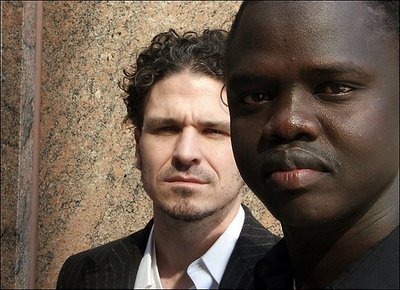
I am having a great time compiling my list of White People Who Tell Black Stories for Black History Month. Thanks to all of your thoughtful comments, I'm really thinking about things differently, asking myself questions I hadn't before. Most importantly, I'm wondering, does it really matter who is telling these stories? Isn't it more important that the stories are being told? Today's author is a great example.
Meet Dave Eggers. Famously known for his 2000 memoir, A Heartbreaking Work of Staggering Genius, the literary magazine, McSweeneys and other things literary and liberal, his career took a different turn in 2006 when he wrote, What is the What.
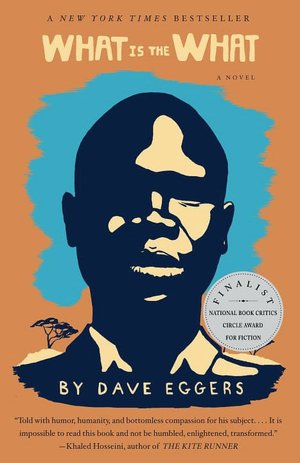
"What Is the What” is an extraordinary work of witness, and of art." The New York Times
"Hands down, Dave Eggers’ What Is the What stands as the single most thought-provoking, unusual and moving book I have read all year." USA TODAY
" With its perfect blend of epic sweep and small, intimate moments, it stands worthily alongside the best work of Chinua Achebe, Amos Tutuola and Ben Okri." Seattle Times
THE SUCESS: A New York Times Bestseller, What is the What also won the Prix Médicis in France. It has been selected as the summer reading book for incoming Freshman at universities across the country including this year's incoming class at Duke University. But here's the catch. All of the proceeds for the book went to support the Valentino Achak Deng Foundation.
GIVING BACK: Let's review. So Dave Eggers, a White man, who garnered much literary praise and success for his book about a Black man's life, made sure to compensate that Black man for sharing his life story. I don't know how "proceeds" were defined between Eggers, Deng and the publisher, but I also don't really care, because the proof is the continued success of the VAD foundation. Check out their website to see how much has been done and continues to be done. If Eggers hadn't lent his considerable talents and established name to getting Deng's story out there, would the Marial Bai Secondary School even exist? Would Americans be as aware of the struggles of the people in Sudan? Would they have a real face to put on a Lost Boy's story?
Is there a difference between collaboration and appropriation and just plain stealing? Who knows the rules?
I'm listening.
Peace!
Monday, February 06, 2012
White People, Black History: Naomi Benaron Revisits Rwanda's Genocide

Hi Meltingpot Readers,
I hope you know that every person who makes my special White People Telling Black History List isn't automatically suspect. Making the list doesn't make you a bad guy in my book. In fact, today's author, Naomi Benaron, gets my full respect. So without further ado, meet Naomi Benaron.
Naomi Benaron's debut novel, Running the Rift was just released last month by Algonquin Books. The book tells the harrowing story of young Tutsi boy in Rwanda who comes of age just as the rising tensions leading up to the 1994 genocide are ripping his country apart. Jean Patrick is a gifted runner with dreams of making the Olympics. He is also smart, wants to go to college, hang out with his friends and fall in love, but the cruel politics of being a Tutsi in Rwanda keep getting in the way of his dreams of a peaceful life.
Admittedly, when I got my hands on this book, I didn't want to read it. I just wasn't in the mood for a story about genocide. I mean, when are we ever in the mood to read about the senseless, violent deaths of an entire people? Still, I picked it up and started to read and immediately found myself drawn in to the story of Jean Patrick and his quest to be an Olympic runner, while watching his country fall apart around him. And that's what makes this book so wonderful. Benaron is able to tell the story of Rwanda's genocide through the eyes of a genuine, relateable character who, like us, just cannot believe things could really descend into the madness that eventually takes over that country. So, instead of reading a story about genocide, you're reading a lyrically-written, entirely engrossing story about a young man with hopes and dreams and family and friends, who is in this impossible situation but somehow manages to survive. The ancillary characters that are part of the story -- Jean Patrick's politically minded love interest, his hardened track coach, the somewhat clueless White American professor -- are equally well-developed and add depth and interesting plot twists to the novel. I thoroughly enjoyed this powerful and nuanced debut and recommend it to anyone who, like me, wants to understand what's going on in the world but doesn't always want to hear it through the evening news cycle.
Benaron's Success: First off, Benaron's book was published because it won the Bellwether Prize for Fiction, which is an award created by Barbara Kingsolver for unpublished novels that address issues of social justice. The prize comes with a cash award and a book contract. It's too early to know sales figures for the book, but it did receive starred reviews from all of the major book industry publications.
On Being a White Woman Writing about Black Africa: Benaron didn't grow up in Africa. She grew up in Boston. She's not married to a Rwandan, nor is she now living in Africa. Her connection to Rwanda comes from meeting Rwandan refugees in the United States, then traveling to Rwanda a few times, including a trip just for research for the book. She is very much aware of the paradox of her telling this story. And she responded this way when asked about it by Publisher's Weekly:
" It takes audacity for a writer to assume the perspective of another culture. Were you concerned about your role as an outsider?
Every day. There’s a wonderful tongue-in-cheek piece, Binyavanga Wainaina’s “How to Write about Africa,” about white people writing about Africa. I’ve kept that in the back of my mind as pitfalls to avoid. What has been important to me has been to present the culture with as much understanding, respect, and love as I could. My sister spent a year in Malawi. I started with a love of the continent from her."
So there you have it. Do you think Benaron has the "right" to tell this story? Is there a Black and/or African writer who has told this story already? I'm listening.
Peace!
Wednesday, November 02, 2011
Food For Thought: A Black Man Invented the Potato Chip?
Hi Meltingpot Readers,
Did you know the potato chip was invented by a Black man, named George Crum? My friend from Saratoga Springs is visiting and she brought me a box of Saratoga Chips. What's a Saratoga Chip? I bet you didn't know that before we called them potato chips, crispy fried potatoes were known as Saratoga chips. Seriously. Read this website and share the knowledge. And the next time you bite into a potato chip, remember George Crum.
And there you have your food for thought and your Black history moment, all rolled up in one.
Peace!

Did you know the potato chip was invented by a Black man, named George Crum? My friend from Saratoga Springs is visiting and she brought me a box of Saratoga Chips. What's a Saratoga Chip? I bet you didn't know that before we called them potato chips, crispy fried potatoes were known as Saratoga chips. Seriously. Read this website and share the knowledge. And the next time you bite into a potato chip, remember George Crum.
And there you have your food for thought and your Black history moment, all rolled up in one.
Peace!

Monday, February 28, 2011
Monday Musing-- An Untold Part of Black History Gets Told in a New Book
Meltingpot Readers,
Today is the last day of Black History Month. As you know, I'm not a huge fan of the concept, but I heard this story today on NPR'sTell Me More about a new book, The Dark End of the Street, documenting the pattern of sexual assault against Black women during the Civil Rights Movement. I was so disgusted and horrified I knew I needed to write about it here. Please listen to the story and get angry. And then shed some tears and then tell me, what do we do with this knowledge?
Happy Black History Month.
Peace.
Today is the last day of Black History Month. As you know, I'm not a huge fan of the concept, but I heard this story today on NPR'sTell Me More about a new book, The Dark End of the Street, documenting the pattern of sexual assault against Black women during the Civil Rights Movement. I was so disgusted and horrified I knew I needed to write about it here. Please listen to the story and get angry. And then shed some tears and then tell me, what do we do with this knowledge?
Happy Black History Month.
Peace.
Monday, February 09, 2009
A Sweet New Book About American Slavery
Okay, even though I just slammed the whole concept of Black History Month, I'm so excited about this new book that just came out, just in time for BHM.
The book is called Sugar of the Crop: My Journey to Find the Children of Slaves by Sana Butler. As the subtitle would suggest, the book details the author's ten-year journey to find the last living children of slaves, interview them and tell their story. I admit I'm only on page 12, but I'm loving the book already. It almost reads like a historical memoir because Butler doesn't remove herself from the story. In fact, she plays a central role explaining how people laughed at her when she admitted she was looking for living children of slaves, how this epic journey swallowed up a decade of her life with serious repercussions professionally and personally, and how watching her own father slowly dying as she made this quest, fueled her passion to complete the book.
What I like about this book, from a BHM perspective, is that it allows Black people to speak for themselves about the role they played in American history. What's more, by hearing first-hand accounts from people who survived and even thrived despite the cruelty of human bondage shows a far more nuanced and truthful depiction of the "Black experience." Not to say that slavery had its good parts, but Butler admits she's going on this journey to discover, "how slaves became husbands and wives; mothers and fathers and how they raised their children." And we need to hear those stories. We all need to hear those stories. So I'm going to keep reading, thanking Butler for this amazing book she has created.
To hear Butler talk about her experience writing the book on North Carolina public radio, click here.
Peace!
P.S. Our Opinion Poll Giveaway Winner is Nikeshia. Congrats! Send us an email to myamericanmeltingpot@gmail.com with a mailing address and you'll receive your copy of asha bandele's Something Like Beautiful. Thanks to everyone who responded. And I hope both Madonna and Angelina Jolie read The Meltingpot so they know how much support they have!
The book is called Sugar of the Crop: My Journey to Find the Children of Slaves by Sana Butler. As the subtitle would suggest, the book details the author's ten-year journey to find the last living children of slaves, interview them and tell their story. I admit I'm only on page 12, but I'm loving the book already. It almost reads like a historical memoir because Butler doesn't remove herself from the story. In fact, she plays a central role explaining how people laughed at her when she admitted she was looking for living children of slaves, how this epic journey swallowed up a decade of her life with serious repercussions professionally and personally, and how watching her own father slowly dying as she made this quest, fueled her passion to complete the book.
What I like about this book, from a BHM perspective, is that it allows Black people to speak for themselves about the role they played in American history. What's more, by hearing first-hand accounts from people who survived and even thrived despite the cruelty of human bondage shows a far more nuanced and truthful depiction of the "Black experience." Not to say that slavery had its good parts, but Butler admits she's going on this journey to discover, "how slaves became husbands and wives; mothers and fathers and how they raised their children." And we need to hear those stories. We all need to hear those stories. So I'm going to keep reading, thanking Butler for this amazing book she has created.
To hear Butler talk about her experience writing the book on North Carolina public radio, click here.
Peace!
P.S. Our Opinion Poll Giveaway Winner is Nikeshia. Congrats! Send us an email to myamericanmeltingpot@gmail.com with a mailing address and you'll receive your copy of asha bandele's Something Like Beautiful. Thanks to everyone who responded. And I hope both Madonna and Angelina Jolie read The Meltingpot so they know how much support they have!
Friday, February 06, 2009
My Love/Hate Relationship with BHM

I'm a big hypocrite when it comes to Black History Month. My capital-B, Black revolutionary self believes the very concept is offensive, for so many reasons. Mainly, because Black history shouldn't be segregated from the rest of American history. By doing so, it gives people a free pass to ignore the role Black people have played in shaping this country since setting foot on American soil. Black history, Hispanic history, it's all American history. What the heck is America except a country made up of a whole lot of foreigners anyway? Why should our contributions be singled out in February and not included in every other history book, text and educational curriculum? Why don't we talk about Bessie Coleman along side Amelia Earhart? Why isn't Zora Neale Hurston as important as Truman Capote?
But then there's me the author and speaker who happens to be Black and who happens to have a lot to say about Black people and their contributions to American culture. And guess what? My phone rings more in the month of February than ever before. Everybody wants a piece of me during February and I have a mortgage to pay and two very hungry boys to feed. So professionally, BHM is like my cash cow and boy do I know how to milk her. Of course I try to use my BHM speaking and writing engagements for good. I spread my message of multicultural history and hope to make people stop and think. Maybe get the rest of the country on board for integrating all of the colored people's history into the big book and celebrate all year long. But then of course, I'd have to find another cash cow.
So what do you think about Black History Month? Does it serve a purpose or does it do more harm than good? What do you do to celebrate or protest? Please share.
And don't forget to comment on our first opinion poll and get a chance to win a copy of asha bandele's, Something Like Beautiful.
And one more thing. If you're interested, Nadya Suleman, the mother of octuplets is spilling her story to NBC's Ann Curry. The link shows a clip from the interview but the full interview will air on Monday on the Today show.
Enjoy the weekend!
Subscribe to:
Posts (Atom)