Hello Meltingpot Readers,
Happy Memorial Day!
I was going to take the day off from writing today, since it is a national holiday, but then I came across this article penned by Jesse Washington of the Associate Press. The article is titled, "Who's an American Indian?" and it examines the claim by senate candidate Elizabeth Warren that she is part Native American.
It's a fascinating story that touches on the pervasive myth that we all have a Native American ancestor lurking in the branches of our family trees. I know for Black people, that mythical Indian ancestor is always linked to the relative with the 'good hair.' Like, "She has good hair because our great-grandmother was part Cherokee." Sometimes 'good hair' is just referred to, in the Black community, as "Indian hair."
But I digress. Elizabeth Warren is very much a White woman, so she's not interested in 'good hair.' Some people allege she's claiming Native ancestry to gain campaign votes. Read the story and see for yourself. I think a critical point that Washington makes in the report is that there is a difference between claiming Native ancestry (which many people may have) and calling yourself a Native American because your great-great-great grandmother on your daddy's side, was part Cherokee.
What do you think, dear readers? Should Warren have kept her mouth shut about her heritage? Do you think if you're going to claim Native ancestry you should have to do something to prove your allegiance to the tribe? I'm totally listening.
Peace!
Showing posts with label Cultural Appropriation. Show all posts
Showing posts with label Cultural Appropriation. Show all posts
Monday, May 28, 2012


Wednesday, February 29, 2012
White People, Black Stories Wraps Up with 'Run' by Ann Patchett
Hello Meltingpot Readers,
So, today is the last day of February, the last day of Black History Month and the last day of my ambitious project to bring attention to White people who tell Black stories. At the back of my mind, when conceiving this list, I was feeling kind of peeved about the fact that White authors can tell Black stories and become wildly successful doing so, yet Black authors telling the same stories are continuously marginalized. I also wanted to demonstrate, in this month dedicated to celebrating the contributions Black people have made to this country, that clearly Black achievement, Black history, Black culture and Black heroes and heroines don't belong to a collective Black community. They belong to everyone and anyone who wants to tell a good story. Unfortunately, these same heroes and heroines celebrated in the stories of White authors (and their White audiences), aren't so widely embraced off the page.
Of course, there's always a lesson to be learned when trying something new. While I'm still kind of peeved by the inherent inequality of praise given to White people telling Black stories compared to their Black counterparts, I also feel that in many cases, we should feel honored and thankful that any author feels so moved by the lives of Black people that they want to tell their stories. And as many of you dear readers pointed out, isn't it better that at least these stories are being told? If the author does their research and tells the story with respect and aims for authenticity, isn't that enough? In many cases, I say yes.If I love a story, I can't hate on the storyteller simply because she doesn't share the same racial background as her characters. That would be borderline racist and just plain dumb. And it would limit me from enjoying some really great books. As an example, today's offering, Run by Ann Patchett.
I reviewed Run on the Meltingpot a while back. You can read that review here. A story about a White father with two adopted African-American sons, Run is a true rumination on race, family and identity. It is extremely well written and after reading it, I was convinced Patchett must be married to a Black man or have some of her own Black kids. Something that would have given such incredible insight into these issues. But no, she's just a really good writer who likes to tell good stories and isn't afraid to tackle characters who have nothing to do with her own life. Needless to say, I was impressed by Run, as was the New York Times Bestsellers list.
So, dear readers, the month ends with lessons learned, new books discovered and old favorites remembered. I hope you enjoyed the ride. But before we go, what books do you think should have made my list? White People Telling Black Stories? Let's hear them.
I'm still listening.
Peace!
So, today is the last day of February, the last day of Black History Month and the last day of my ambitious project to bring attention to White people who tell Black stories. At the back of my mind, when conceiving this list, I was feeling kind of peeved about the fact that White authors can tell Black stories and become wildly successful doing so, yet Black authors telling the same stories are continuously marginalized. I also wanted to demonstrate, in this month dedicated to celebrating the contributions Black people have made to this country, that clearly Black achievement, Black history, Black culture and Black heroes and heroines don't belong to a collective Black community. They belong to everyone and anyone who wants to tell a good story. Unfortunately, these same heroes and heroines celebrated in the stories of White authors (and their White audiences), aren't so widely embraced off the page.
Of course, there's always a lesson to be learned when trying something new. While I'm still kind of peeved by the inherent inequality of praise given to White people telling Black stories compared to their Black counterparts, I also feel that in many cases, we should feel honored and thankful that any author feels so moved by the lives of Black people that they want to tell their stories. And as many of you dear readers pointed out, isn't it better that at least these stories are being told? If the author does their research and tells the story with respect and aims for authenticity, isn't that enough? In many cases, I say yes.If I love a story, I can't hate on the storyteller simply because she doesn't share the same racial background as her characters. That would be borderline racist and just plain dumb. And it would limit me from enjoying some really great books. As an example, today's offering, Run by Ann Patchett.
I reviewed Run on the Meltingpot a while back. You can read that review here. A story about a White father with two adopted African-American sons, Run is a true rumination on race, family and identity. It is extremely well written and after reading it, I was convinced Patchett must be married to a Black man or have some of her own Black kids. Something that would have given such incredible insight into these issues. But no, she's just a really good writer who likes to tell good stories and isn't afraid to tackle characters who have nothing to do with her own life. Needless to say, I was impressed by Run, as was the New York Times Bestsellers list.
So, dear readers, the month ends with lessons learned, new books discovered and old favorites remembered. I hope you enjoyed the ride. But before we go, what books do you think should have made my list? White People Telling Black Stories? Let's hear them.
I'm still listening.
Peace!
Monday, February 27, 2012
White People, Black Stories Goes To The Movies

Hello Meltingpot Readers,
In honor of the 84th Annual Academy Awards shown last night, I decided for my second to last post for Black History month, we'd head to the movies. So for today, let's talk about some of our favorite Black stories told by White people on the silver screen.
As I mentioned in my introductory post for this series, the film Red Tails was one of the reasons I was inspired to create this list. Red Tails executive producer, George Lucas hit the same brick wall many Black filmmakers do when trying to get their films out to the world. Because Red Tails, a film about the Tuskegee Airmen, basically had no White people in it, Lucas had many doors slammed in his face when he tried to get the film picked up by a major studio. Eventually he had to pony up his own money and resources to get the job done. Needless to say, the script for Red Tails was written by a Black man, the film was directed by a Black man and along with Lucas, included other Black producers. So, Red Tails clearly wouldn't have made it to the silver screen without Lucas, but I'd consider him the godfather of the project but not the storyteller. Let's look at some other examples:
The Color Purple: Alice Walker's award-winning novel about African-American life in the early 20th century, comes to the big screen in 1985 under the direction of Steven Spielberg. The film brought Whoopi Goldberg and Oprah Winfrey a whole new level of status, including Oscar nominations for them both. The film was well received by audiences both Black and White, but there was controversy over Spielberg, as a White man, being the one to direct such an important work in the cannon of African-American literature. What's more, many people believed racism was a factor in the film not being awarded an Oscar for best picture. Overall the film was nominated for 11 Academy Awards and won none of them.
And Speaking of Oprah Winfrey in the movies, we should do a brief mention of Beloved. Like Red Tails, it's not exactly a black and white issue. Beloved was written by Toni Morrison. She's Black. The film rights were acquired by Winfrey, she's Black. But the movie was directed by Jonathan Demme, he's White. So, this one kind of counts. Sadly, the film didn't do so well at the box office, in my opinion, because this book should never have been turned into a movie due to it's complex and somewhat disturbing storyline. Most American movie goers don't want to think that much while they're munching on their popcorn nor do they want to walk out of the cinema sobbing and depressed.
And not to beat a dead horse, but The Help, the movie, should make it on this list, as the book, screenplay director and producer are all White. And I think we can all agree that the film is about Black people. And maybe you think, duh, of course the book would be ushered on to the big screen by White people, but remember The Secret Life of Bees, a book written by a White person, was directed by a Black director and produced by Will Smith and Jada Pinkett-Smith. So, the same could have happened with The Help. But it didn't.
And finally, the 2006 movie version of Dreamgirls, staring Beyonce, Jennifer Hudson, Jamie Foxx and Eddie Murphy was clearly a Black story, but was directed by Bill Condon. Condon also wrote the screenplay for this version of the film. Condon's other credits include Chicago (the movie) and the Twilight movies. So, he's not exactly plugged into the world of Black people, but he obviously knows a good musical when he sees one.
Okay, Meltingpot readers. What have I missed? Clearly this is just the tip of the iceberg, but what films would you have included? I also thought about movies like Gone With the Wind, The Imitation of Life or even Guess Who's Coming to Dinner? Not exactly Black stories, but you kind of have to wonder how they would have been told differently had a Black person been behind the camera.
So what films would you add to my list?
I'm listening.
Peace!
Friday, February 24, 2012
White People Black Stories Goes Back in Time: Little Black Sambo, It's Your Turn

When I started this series for Black History Month, I really wanted to highlight a trend of White people who, for better or worse, have garnered fame by telling the stories of Black people. Why? I guess it was my attempt to show that the concept of Black History Month, a month to celebrate and acknowledge the accomplishments and contributions of Black Americans is not, or rather, should not be a 'Black thing.' Because clearly Black people's lives, legends and heroics are fair game for all people to witness and benefit from. We don't own our contributions. We don't even own our culture. But should we get credit it for it? Should we charge a fee when it's borrowed without acknowledgement? I don't know the answers to these questions, but that doesn't mean we shouldn't ask. Right?
So, back to my list. Today, we're talking about Helen Bannerman. Who? The Scottish author who will forever be known as the woman who wrote the book, Little Black Sambo. Even though Bannerman penned several other children's books, her 'greatest' legacy is Sambo. Now, it would be so easy to just post Bannerman's name, include a picture of the rather offensive cover of the original Sambo book and allow you to tsk tsk at Bannerman's obvious racist attitudes. But I can't do that. Because as with all things racial in nature, it's complicated.
First of all, Bannerman wrote Little Black Sambo while she was living in India and claimed the story is about a little Indian boy who outwits a band of hungry tigers. Indeed, there are nods to Indian culture and India itself in the text, but seriously, Sambo looks like a Negro. And she called him Little 'Black' Sambo, not Little Indian Sambo. What's more, by the time Bannerman wrote this book in 1899, the term Sambo was already considered a Black and/or slave name, so you kind of have to wonder about Bannerman's motives. She says she was writing a book to amuse her daughters and she probably was, but she might have thought using derogatory language and pictures was amusing.


And then of course Sambo took on a life of his own in the United States and around the world, gaining momentum as a racist little figure. But interestingly, many Black people remember hearing the story of Little Black Sambo and loving the fact finally there was a story about a smart little Black kid who becomes a hero at the end of the tale. Who cares that a White lady wrote the book in India?
What do you know about Little Black Sambo? Did you know anything about the author? What do you think of the story now?
Happy Friday!
Peace!
Monday, February 13, 2012
White People Telling Black Stories: Sue Monk Kidd and The Secret Life of Bees

Hello Meltingpot Readers,
I'm having great fun compiling this list of White people who tell Black stories for Black History Month. And as I keep coming up with more and more candidates for my list, I wonder why nobody has done this before. I also wonder why White people have always felt Black History Month wasn't really "their" thing, when clearly many White people feel Black people's stories are 'theirs' for the telling. Makes you go hmm...doesn't it? Makes you kind of wonder really, why we live such segregated lives if we are comfortable enough to creatively inhabit one another's world, yet can't manage to find a way to connect in real life.
So, today we are talking about Sue Monk Kidd, author of the 2002 novel, The Secret Life of Bees. I loved this book about a young White girl who flees life with her tyrannical father and ends up moving in with three Black, bee-keeping sisters who become surrogate mother figures and teach Lily how to love herself.
One might argue that since the main protagonist of the book is the young White girl, this book shouldn't make my list, but once again, I'd argue that the three Black sisters, the Black maid, and the Black 'love interest' for Lily qualify this title to be a "Black story." The story would have been over on page 10 if Lily's saviors had simply been three White sisters.
THE SUCCESS: The Secret Life of Bees was a New York Times bestseller for 2.5 years, sold more than six million copies, was published in 35 countries and was nominated for the Orange Prize in England.
How many people read this book? Did you enjoy it? Did it give you pause knowing a White woman wrote it? And considering the Blacklash against The Help, why did Sue Monk Kidd get away with her version of the helpless young White girl being 'saved' by the trio of strong Black females? Thoughts?
I'm totally listening.
Peace!
Wednesday, February 08, 2012
And Speaking of White People Telling African Stories: Dave Eggers
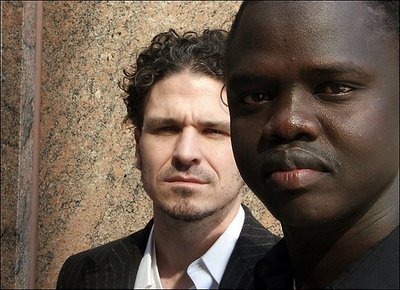
I am having a great time compiling my list of White People Who Tell Black Stories for Black History Month. Thanks to all of your thoughtful comments, I'm really thinking about things differently, asking myself questions I hadn't before. Most importantly, I'm wondering, does it really matter who is telling these stories? Isn't it more important that the stories are being told? Today's author is a great example.
Meet Dave Eggers. Famously known for his 2000 memoir, A Heartbreaking Work of Staggering Genius, the literary magazine, McSweeneys and other things literary and liberal, his career took a different turn in 2006 when he wrote, What is the What.
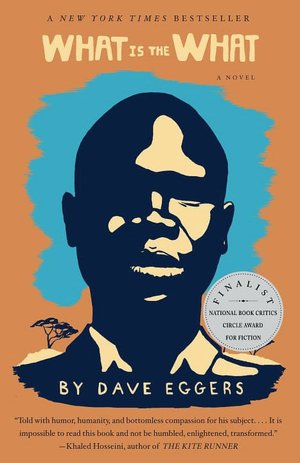
"What Is the What” is an extraordinary work of witness, and of art." The New York Times
"Hands down, Dave Eggers’ What Is the What stands as the single most thought-provoking, unusual and moving book I have read all year." USA TODAY
" With its perfect blend of epic sweep and small, intimate moments, it stands worthily alongside the best work of Chinua Achebe, Amos Tutuola and Ben Okri." Seattle Times
THE SUCESS: A New York Times Bestseller, What is the What also won the Prix Médicis in France. It has been selected as the summer reading book for incoming Freshman at universities across the country including this year's incoming class at Duke University. But here's the catch. All of the proceeds for the book went to support the Valentino Achak Deng Foundation.
GIVING BACK: Let's review. So Dave Eggers, a White man, who garnered much literary praise and success for his book about a Black man's life, made sure to compensate that Black man for sharing his life story. I don't know how "proceeds" were defined between Eggers, Deng and the publisher, but I also don't really care, because the proof is the continued success of the VAD foundation. Check out their website to see how much has been done and continues to be done. If Eggers hadn't lent his considerable talents and established name to getting Deng's story out there, would the Marial Bai Secondary School even exist? Would Americans be as aware of the struggles of the people in Sudan? Would they have a real face to put on a Lost Boy's story?
Is there a difference between collaboration and appropriation and just plain stealing? Who knows the rules?
I'm listening.
Peace!
Wednesday, February 01, 2012
In Honor of Black History Month: White People Who Write About Black People
Hi Meltingpot Readers,
You know I'm not a huge fan of Black history month. For all the standard reasons; Black history shouldn't be segregated, Black people's contributions to this country require more than 29 days to discuss, blah blah blah. But since the month exists, despite my and other people's exasperation, we might as well use the opportunity for good not evil. Right?
So in my infinite wisdom and since this is my blog and since I'm all about culture clashes, I thought I'd do something a little different this year for Black History Month. I'm going to use my posts for the month of February to highlight all of the White people who've gotten famous, made a name for themselves or otherwise have benefited by telling Black people's stories. In some ways this may sound jaded or even a little snarky. It is! A little. In light of the recent success of The Help, as well as the drama surrounding getting Red Tails on the screen, I figure, let's take a really good look at the White folks who tell Black folks' stories. Why do they do it? What is the public's response? How come some meet with success and other's meet with scathing criticism? Does their literary and/or cinematic output help or hinder the mainstreaming of the Black experience?
Please note, my goal is not to court controversy. I'm really hoping to highlight an interesting pop culture trend (a trend that pretty much began in the 15th century when this country was first integrated). Will I ruffle some feathers? Probably. But that's okay. If you have some suggestions as to whom I should profile during the month of February, let me know. I'm listening.
Peace!
You know I'm not a huge fan of Black history month. For all the standard reasons; Black history shouldn't be segregated, Black people's contributions to this country require more than 29 days to discuss, blah blah blah. But since the month exists, despite my and other people's exasperation, we might as well use the opportunity for good not evil. Right?
So in my infinite wisdom and since this is my blog and since I'm all about culture clashes, I thought I'd do something a little different this year for Black History Month. I'm going to use my posts for the month of February to highlight all of the White people who've gotten famous, made a name for themselves or otherwise have benefited by telling Black people's stories. In some ways this may sound jaded or even a little snarky. It is! A little. In light of the recent success of The Help, as well as the drama surrounding getting Red Tails on the screen, I figure, let's take a really good look at the White folks who tell Black folks' stories. Why do they do it? What is the public's response? How come some meet with success and other's meet with scathing criticism? Does their literary and/or cinematic output help or hinder the mainstreaming of the Black experience?
Please note, my goal is not to court controversy. I'm really hoping to highlight an interesting pop culture trend (a trend that pretty much began in the 15th century when this country was first integrated). Will I ruffle some feathers? Probably. But that's okay. If you have some suggestions as to whom I should profile during the month of February, let me know. I'm listening.
Peace!
Friday, November 18, 2011
"Jafaicans" Making Reggae Music?
Hi Meltingpot Readers,
I was in my car the other day, listening to NPR when this very interesting segment came on about non-Jamaican artists dominating the reggae music scene. In fact, according to this story, European and Hawaiian reggae bands are more popular worldwide these days than Jamaican acts. And make no mistake, these are not transplanted West Indians living abroad, these are native Europeans and Hawaiians(Americans), aka, they're White. And therein lies the rub. Dubbed "Jafaicans" by some, the popularity and commercial success of these artists is making some people cry cultural appropriation.
So, can a group of White guys from Germany or Italy really sing reggae music? Do they have the right to? And is it fair? Does anyone actually own the right to reggae? Would Bob Marley approve? Well, his record label apparently does, as Italian reggae super star, Alborosie is represented by Marley's Tuff Gong label.
I am not a reggae expert by any means. I enjoy listening to reggae music, especially live when sitting on a beach in Jamaica with a fruity drink in my hand, but that's about the extent of my involvement. Still, it must be noted that though reggae music has its roots in Jamaica, it wasn't created out of a Black power or spiritual movement. The music came first and then it was adapted and adopted for protest and consciousness raising over social and political issues. But reggae songs can be about any thing, so one could say it can be sung and appreciated by any body. Right?
Here's a link to the story as it ran on NPR. Please take a listen. It's a fascinating piece. Let me know what you think?
And to take you into the weekend, enjoy this video by Italian-born, Alborosie.
One Love.
Peace!
I was in my car the other day, listening to NPR when this very interesting segment came on about non-Jamaican artists dominating the reggae music scene. In fact, according to this story, European and Hawaiian reggae bands are more popular worldwide these days than Jamaican acts. And make no mistake, these are not transplanted West Indians living abroad, these are native Europeans and Hawaiians(Americans), aka, they're White. And therein lies the rub. Dubbed "Jafaicans" by some, the popularity and commercial success of these artists is making some people cry cultural appropriation.
So, can a group of White guys from Germany or Italy really sing reggae music? Do they have the right to? And is it fair? Does anyone actually own the right to reggae? Would Bob Marley approve? Well, his record label apparently does, as Italian reggae super star, Alborosie is represented by Marley's Tuff Gong label.
I am not a reggae expert by any means. I enjoy listening to reggae music, especially live when sitting on a beach in Jamaica with a fruity drink in my hand, but that's about the extent of my involvement. Still, it must be noted that though reggae music has its roots in Jamaica, it wasn't created out of a Black power or spiritual movement. The music came first and then it was adapted and adopted for protest and consciousness raising over social and political issues. But reggae songs can be about any thing, so one could say it can be sung and appreciated by any body. Right?
Here's a link to the story as it ran on NPR. Please take a listen. It's a fascinating piece. Let me know what you think?
And to take you into the weekend, enjoy this video by Italian-born, Alborosie.
One Love.
Peace!
Monday, October 24, 2011
Food for Thought: Meltingpot Meals on the Menu
Hi Meltingpot Readers,
Happy Monday. I'm so excited because in a couple of weeks I get to speak on a panel about three of my great passions; food, parenting and ethnic diversity. Where? You ask. How? Tell us more, you say. But of course.
Our local NPR station, WHYY is sponsoring a monthly parenting series with different pre-arranged topics every month. The November topic is nutrition and I was asked to speak on the panel, bringing my own opinions and experience about 'ethnic eating' to the table. No pun intended. Okay, it was kind of intended, but I digress.
What I'm going to talk about is how I take inspiration from other cultures to prepare nutritious and delicious meals, as well as teach my kids about different cultures at the dinner table. This is my modus operandi in the kitchen and it's been working pretty well all these years. But it's not just about the kids.
Personally, I love buying cookbooks from other cultures, eating at ethnic restaurants and shopping at ethnic grocery stores. And then I bring what I've sampled and tasted, read about and learned into my own kitchen. Even if it's just a new spice that I'm trying, like the dried oregano I purchased from a Mexican food stall sprinkled in last night's pot of beans, I feel like I'm experiencing a different culture and of course, my kids are too. Obviously we can't fly to Mexico or Morocco at a moment's notice, so sampling from their cuisine is a good second best.
And unlike certain schools of thought that think it's a good idea to 'hide' healthy food for your kids -- spinach in the lasagna, sweet potatoes in the brownies -- I think it's a better idea to 'hide' healthy eating habits in a world cultures lesson. For example, if you want your kids to eat fruit for dessert instead of say cookies or cake, don't just give them an apple or an orange and expect them to jump for joy. Instead, tell the kids you're having a dessert from Jamaica or Haiti and then serve a sweet, juicy mango. And be sure to serve the fruit on a pretty plate with presentation in mind. I learned that trick from my Spanish in-laws and my host family in Morocco. I'll never forget how good a bunch of green grapes tasted in Morocco because they were served on a gorgeous silver platter.
So, that's one of my tricks. What about yours? Do any of you co-opt other culture's culinary habits to entice your kids to eat 'better.' Within your own culture do you have any great foods or eating habits that your kids love? Wanna share? I'm listening.
Peace.
P.S. If you'd like more information on the panel and/or if you live in the Philadelphia area and would like to attend, follow this link for more information.
Happy Monday. I'm so excited because in a couple of weeks I get to speak on a panel about three of my great passions; food, parenting and ethnic diversity. Where? You ask. How? Tell us more, you say. But of course.
Our local NPR station, WHYY is sponsoring a monthly parenting series with different pre-arranged topics every month. The November topic is nutrition and I was asked to speak on the panel, bringing my own opinions and experience about 'ethnic eating' to the table. No pun intended. Okay, it was kind of intended, but I digress.
What I'm going to talk about is how I take inspiration from other cultures to prepare nutritious and delicious meals, as well as teach my kids about different cultures at the dinner table. This is my modus operandi in the kitchen and it's been working pretty well all these years. But it's not just about the kids.
Personally, I love buying cookbooks from other cultures, eating at ethnic restaurants and shopping at ethnic grocery stores. And then I bring what I've sampled and tasted, read about and learned into my own kitchen. Even if it's just a new spice that I'm trying, like the dried oregano I purchased from a Mexican food stall sprinkled in last night's pot of beans, I feel like I'm experiencing a different culture and of course, my kids are too. Obviously we can't fly to Mexico or Morocco at a moment's notice, so sampling from their cuisine is a good second best.
And unlike certain schools of thought that think it's a good idea to 'hide' healthy food for your kids -- spinach in the lasagna, sweet potatoes in the brownies -- I think it's a better idea to 'hide' healthy eating habits in a world cultures lesson. For example, if you want your kids to eat fruit for dessert instead of say cookies or cake, don't just give them an apple or an orange and expect them to jump for joy. Instead, tell the kids you're having a dessert from Jamaica or Haiti and then serve a sweet, juicy mango. And be sure to serve the fruit on a pretty plate with presentation in mind. I learned that trick from my Spanish in-laws and my host family in Morocco. I'll never forget how good a bunch of green grapes tasted in Morocco because they were served on a gorgeous silver platter.
So, that's one of my tricks. What about yours? Do any of you co-opt other culture's culinary habits to entice your kids to eat 'better.' Within your own culture do you have any great foods or eating habits that your kids love? Wanna share? I'm listening.
Peace.
P.S. If you'd like more information on the panel and/or if you live in the Philadelphia area and would like to attend, follow this link for more information.
Monday, October 10, 2011
Boycotting Columbus Day: A Native American Perspective

Hi Meltingpot Readers,
You know my life is all about learning about the other. I truly enjoy reading, writing and researching about other cultures and ethnicities and seeing how we are similar and at the same time honoring the differences. It's not always easy to honor those difference but we have to try. That's why I am always interested in meeting people who come from ethnic and/or cultural groups different from my own. And I always ask a lot of questions.
Last year, I taught a class at Temple called Race and Racism in the News. During the course of the class, I invited many guest speakers from different ethnic groups around Philadelphia to come speak. One of my speakers was a Native American man, who was also an activist and educator. (He also happens to be my accountant but that's another story.)
He talked about reservation life, Native American traditions being co-opted as cool and a host of other issues facing modern day Native Americans. But one thing he said stuck in my mind and always will. Not surprisingly, he said he not only ignores Columbus Day, he boycotts it. Why? In his mind, and many others in the Native American community, Christopher Columbus is likened to Hitler. Yes, he said Hitler. They see him as a man responsible for the utter destruction and decimation of Native people in the Americas. And not for nothing, they also find it highly disturbing that streets are named after Columbus in almost every major city. "Can you imagine a Hitler street?" he asked my class. Ouch.
So, on this Columbus Day, I'm thinking about the Native American community and how they must be feeling on a day honoring a man they consider pure evil. I'm not heading out to join any protests, but I'm definitely sympathetic. This is how we learn, people. This is how we learn.
What do you do on Columbus Day? Do you celebrate, sympathize, protest, or just enjoy a day off work?
I'm listening.
Peace!
Monday, March 07, 2011
Music Monday- Adele and Her "Dark, Bluesy, Gospel, Disco," Sound
Meltingpot Readers,
I'm officially in love with Adele, otherwise known as the latest British Blue-eyed-soul singer to take the music world by storm. I realize I'm a little late on the discovery, but I still needed to share. El esposo just received her new album, 21, for his birthday and I have officially claimed it for my own. It is phenomenal. Adele's voice seriously grabbed my heart and soul from the first note out of her mouth.
After hearing this song, Rolling in the Deep, I was convinced this British singer had to have some significant Black influence in her life and I was pleasantly surprised to find out that she didn't. One of her earliest influences? The Spice Girls! I love it when people refuse to fall into our own preconceived notions. Forces you to expand your own limited imagination and ideas. I know I did.
Anybody else an Adele fan? What's your favorite song?
I'm listening.
Peace.
Friday, February 25, 2011
WTF? Friday: An Offensive Guide to Interracial Dating

Meltingpot Readers,
I had another post all ready to go today, but I got word of a new book -- I Got the Fever: Love: What's Race Got to Do With It? -- that purports to teach women the secrets of how to date outside of their race. Although, because it is written by a White American woman who refers to her own cultural background as Poor White Trash, it kind of slants towards teaching White women how to get with a man of color.
Here's how the copy reads on the authors' website:
"Are you sick of believing all the good men are either married or gay? Then it’s time to catch the fever—for intercultural dating, that is. The fact is, soulmates come in every color—and I Got the Fever can help you find yours. Injected with pants-wetting anecdotes, eyebrow-raising commentary, and plenty of juicy details, I Got the Fever offers a practical course of treatment for dating within five unique cultures: Latino, Asian, Black, Indian, and Jewish. Plus, author J.C. Davies delivers the low down on every question you ever had about dating men of other races but were too PC to ask:
• Do Asian men like their women submissive?
• Are Jewish men really cheap?
• Are all Indian men well versed in the Kama Sutra?
• Do Latin lovers live up to their reputation?
• Do Black men actually have big, er, uh, equipment?
Whether you’re already in an interracial relationship, contemplating one or just want to be entertained by JC’s conversational style and hilarious anecdotes, I Got the Fever is the perfect prescription for dating in a new and diverse world."
I'm still left scratching my head. Is this woman for real? (She obviously takes herself and her mission very seriously.) Does she really think because she has dated many men of many different cultural backgrounds she is qualified to dole out such advice? But even more importantly, should anybody be approaching their romantic life with such racially codified motivations? Somebody help me understand this woman. And then help me understand the people who are actually buying it. Should we be afraid? Very afraid? And last but not least, why are all the men on the front cover shiny and hairless?
I'm listening.
Happy Weekend!
Peace.
Wednesday, February 23, 2011
What's In A Name? That Depends If You Have the Blackest Name in America
Hi Meltingpot Readers,
Quick, don't think too hard. What do you think is the Blackest surname in America? I guessed Johnson, but I was wrong. Turns out it's Washington. As in George, or my writer friend at the Associated Press, Jesse Washington (who is actually Mixed) who penned this fascinating article on the origins and reasons why 90 percent of the Washingtons in America are Black. In addition, he takes a look at the relatively small minority of White Washingtons to find out what it's like to live with a very Black name. Here's a juicy nugget from the story:
"The story of how Washington became the "blackest name" begins with slavery and takes a sharp turn after the Civil War, when all blacks were allowed the dignity of a surname.
Even before Emancipation, many enslaved black people chose their own surnames to establish their identities. Afterward, some historians theorize, large numbers of blacks chose the name Washington in the process of asserting their freedom."
I urge you to read the rest of the story as it is a fascinating read. It really does make one think about what their name says about them (which I already wrote about here on the Meltingpot), but it also makes one consider the act of naming. What would you call yourself if you had the chance to choose your own name? Even though I don't exactly look to Beyonce as a role model, I kind of admire her choice of an alter ego/ stage name( Sasha Fierce) to channel her "wild side" during performance. I don't plan on changing my real name any time soon, but I guess I could work on an alter ego name for those times when I need to get out of my comfort zone as a writer, mother, and everyday Black girl. I think that name would be, Ruby Blu. What do you think? Do you have a name for your alter ego? You know I want to hear it.
Peace!
Quick, don't think too hard. What do you think is the Blackest surname in America? I guessed Johnson, but I was wrong. Turns out it's Washington. As in George, or my writer friend at the Associated Press, Jesse Washington (who is actually Mixed) who penned this fascinating article on the origins and reasons why 90 percent of the Washingtons in America are Black. In addition, he takes a look at the relatively small minority of White Washingtons to find out what it's like to live with a very Black name. Here's a juicy nugget from the story:
"The story of how Washington became the "blackest name" begins with slavery and takes a sharp turn after the Civil War, when all blacks were allowed the dignity of a surname.
Even before Emancipation, many enslaved black people chose their own surnames to establish their identities. Afterward, some historians theorize, large numbers of blacks chose the name Washington in the process of asserting their freedom."
I urge you to read the rest of the story as it is a fascinating read. It really does make one think about what their name says about them (which I already wrote about here on the Meltingpot), but it also makes one consider the act of naming. What would you call yourself if you had the chance to choose your own name? Even though I don't exactly look to Beyonce as a role model, I kind of admire her choice of an alter ego/ stage name( Sasha Fierce) to channel her "wild side" during performance. I don't plan on changing my real name any time soon, but I guess I could work on an alter ego name for those times when I need to get out of my comfort zone as a writer, mother, and everyday Black girl. I think that name would be, Ruby Blu. What do you think? Do you have a name for your alter ego? You know I want to hear it.
Peace!
Monday, January 24, 2011
What Would Tiger Mama (Amy Chua) Do?

Hi there Meltingpot Readers,
Have you heard about the new parenting memoir called, Battle Hymn of the Tiger Mother by Amy Chua? The book and its author have received a lot of media ink recently because of the reportedly controversial parenting style Chua writes about in her book.
The short and overly simplified take on the book is that Battle Hymn is a parenting primer promoting the inherent superiority of Chinese parenting over Western/American parenting. And strict Chinese parenting, the kind Chua used to raise her two daughters, meant no sleepovers, no play dates and endless hours of music practice and studying. It also meant being ferociously honest with her kids about their achievements or lack thereof. There is one part of the story that is quoted ad nauseum where Chua tells her seven year-old daughter that her hand-made birthday card was garbage and gave it back saying she wanted something better.
Full disclosure, I haven't read Battle Hymn of the Tiger Mother yet, but I want to. I'm intrigued by the controversy but I also just enjoy reading memoirs by people of different ethnic heritages. That's kind of what we're all about here on the Meltingpot. But I am really appalled at the way people have attacked Chua and want to demonize her for daring to share her way of parenting. Besides the fact that Chua recognizes that her system backfired even with her own children, she doesn't imply that her way should be adopted by American parents everywhere. It is a memoir, remember.
And here's the key point. If people would stop their knee-jerk criticisms (Meredith Viera, I'm talking to you), I wonder if they might actually find some useful tips and/or ideas in Chua's words. I know I have, just from listening to her on all of the radio and/or television interviews I've heard her on in the last few weeks. Most importantly she has said that one of the main points of her book is to dispel the myth that somehow Asians are intellectually superior. Race has nothing to do with it, she says. Instead, Chinese (and many other Asian and immigrant parents in general) parents instill such a strong sense of self-discipline in their children they are essentially programmed to achieve, not hard-wired. That means almost any parent --who is willing to put in the time and effort -- can raise high achieving children. To me that has a lot of implications for educators, parents and politicians who try to align achievement to race and ethnicity. Instead of heralding the 'model minority' we should be heralding the model minority parenting style and trying to replicate it across the board. Obviously not everything should be copied, just the good parts. But that's the American way anyway. Pick and choose the best parts of all our immigrant heritages and create a superpower. It's about time we used that model for parenting.
So, I'm going to read the book and then tell you more of what I think. Have any of you read this book yet? Have any opinions on the controversy? I'm listening.
Peace!
Wednesday, January 19, 2011
(Blog)Roll Call!

Hey Meltingpot Readers,
It's a new year, which makes me feel like it's time for change and updating. In two days I'll be changing my hairstyle...anyone care to guess what my new look is going to be? I'm also thinking --for the first time ever as I get closer to 40 -- about updating my style. I seriously need a wardrobe update that reflects my personal style and mission. Right now my look says, 'mommy throws on the same clothes she's been wearing since 1995' but now I'm ready to step it up and go for ethnic chic (see images above, discovered after googling 'ethnic chic' go figure!) crossed with comfy and not too expensive. If anyone has any suggestions that will help me achieve this look without having to throw out everything in my closest and start over again, I'm listening.
But it's not just my look that needs updating, my blog does too. And here's where you can help. I've been updating my blogroll over there on the right, but I'd love to get your suggestions of blogs that I should be reading for my daily dose of meltingpot news, views and reviews. If you know a blog or website that should be on my radar, please send me a link in the comments section. I do appreciate it.
Peace.
Friday, December 17, 2010
Who Brings Better Gifts? Santa or The Three Wise Men?
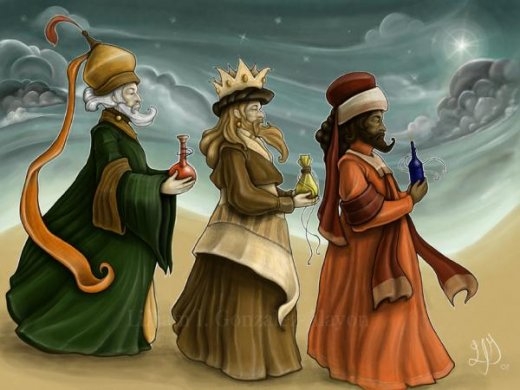
Meltingpot readers,
If you live in a multiculti household like I do, where language, culture and customs are varied, holidays pose a special challenge. Christmas is no exception. In the Kinky Gazpacho household, since we live in the United States, we pretty much rely on Santa Claus to bring the gifts to our children, but now that el esposo's sister is here with us, we are trying to incorporate more of the Spanish Christmas traditions into our celebrations.
So, of course my clever children think it all boils down to this: Who brings better gifts? Santa or the Three Wise Men? In Spain, Santa Claus is growing in popularity, but traditionally gifts were given by the Three Wise Men on January 6. In my opinion, it makes far more sense that the we'd get presents on Jesus' birthday by the same three dudes who brought Jesus his presents back in the manger, instead of some random Dutch guy in red suit who keeps company with domesticated deer and mini-people. I wonder why we in America fixated on Santa instead of The Three Wise Men? If anyone knows why, please enlighten the rest of us.
And in the meantime, how do you all who live in multicultural households combine traditions at holiday time?
I'm listening.
Peace!
Friday, December 10, 2010
About Avatar

Hi Meltingpot Readers,
So, I finally watched Avatar the other night. Yes, I got a copy from the library, so, no I didn't pay for it. For some reason, I'm proud of not being part of the hype. That being said, because I had very low expectations for the movie (I mean no 3-D glasses and watching on my non HDTV. ), I was pleasantly surprised. I didn't love the film, but I was thoroughly entertained throughout the entire 180-minute spectacle. First, I can pretty much watch Sigourney Weaver read a grocery list and be enthralled, and the inner-geek in me loved the other worldliness of the planet Pandora and the faux science behind becoming one with one's avatar. That was pretty cool.
But what I enjoyed even more was trying to figure out why everyone kept saying the Na'vi people were obviously stand-ins for Native Americans, when all I saw were Africans painted blue? From the braided hairstyles (with beads no less) to the Masaai like costumes worn by many of the higher ranking Na'vi (see photo above), not to mention the long limbs and facial features of some of the actors, I kept getting a very East African vibe from the Na'vi. Many critics and commentators suggested that the Na'vi's connection to the earth is very Native American, but it's also very African. Isn't it? Many, if not most African cultures have deep spiritual connections to nature and the earth. Maybe it's because the Na'vi shot arrows and that's why people assumed they must be Native Americans? Do I have to point out that many Africans do too?
Of course it doesn't matter who the Na'vi were really patterned after. I have read that director James Cameron just wanted them to look "ethnic." And I guess if you're a White male, anybody with color is ethnic. The point wasn't to make the Na'vi one specific culture, it was to create a noble savage that we could all cheer for. And I'm glad the White guy decided to cross over permanently and live with the natives, but I wonder, if he hadn't been a paraplegic as a human, would he have embraced the Na'vi lifestyle and chosen to stay? That's the question I'm asking. Meaning, was being blue and able to walk better than being White and confined to a wheelchair? I'm just saying.
Here's a clever critique of the whole film.
I'm curious what you all thought of Avatar? Sorry this is so late, maybe you don't remember. But if you do, tell me your thoughts.
Peace.
Friday, July 30, 2010
Snooki as a Poster Child for Successful Adoption?
Hi Meltingpot Readers,
Do all of you know who Snooki is? If you're like me and don't have cable, nor do you have teenagers in the house who might be attracted to over-hyped reality shows on MTV like the Jersey Shore, then you might not. I still have never seen The Jersey Shore and I still don't have cable, but I know who Snooki is. She's the big-haired, short limbed, big mouthed, nicely tanned and somewhat crude young woman on the Jersey Shore who somehow has become a pop-culture phenom.
I've hardly paid her any mind and her popularity has barely registered in my circle of friends, but Snooki was the front page story of the Style section of the New York Times last Sunday so I decided I should educate myself and find out what was so amazing about this woman who seemed to gain all of her fame for being a walking stereotype of an Italian-American "guidette."
The article in the Times only served to reinforce my original idea that Snooki is a walking stereotype and the reporter seemed just as clueless by the end of the article as to why she has captured the hearts and minds of the American public. But there was one line in the story, a parenthetical at that, that suddenly made Snooki a fascinating character study to me. Snooki was adopted at six months of age from Chile.
So suddenly, this girl who has almost single-handedly redefined Italian-American youth culture (in South Jersey) becomes an interesting example of a child who wholeheartedly adopted the culture and subculture of her adoptive parents, to the point of extreme. As countless adoptive parents struggle with this notion of how much of a child's original culture should be preserved vs how much should the child be encouraged to take on their adoptive family's culture, can Snooki be a case study?
Again, since I barely know anything about Snooki, I don't know if she's ever talked about being adopted or if it's even something most of her fans know. I did a google search and the information is definitely out there, but her getting drunk or changing her name to Snickers seems far more interesting to her adoring public.Do you think Snooki should use her platform to talk about adoption or is this nobody's business and should we just let her enjoy her 15-minutes of fame?
Hmmm?
I'm listening.
Do all of you know who Snooki is? If you're like me and don't have cable, nor do you have teenagers in the house who might be attracted to over-hyped reality shows on MTV like the Jersey Shore, then you might not. I still have never seen The Jersey Shore and I still don't have cable, but I know who Snooki is. She's the big-haired, short limbed, big mouthed, nicely tanned and somewhat crude young woman on the Jersey Shore who somehow has become a pop-culture phenom.
I've hardly paid her any mind and her popularity has barely registered in my circle of friends, but Snooki was the front page story of the Style section of the New York Times last Sunday so I decided I should educate myself and find out what was so amazing about this woman who seemed to gain all of her fame for being a walking stereotype of an Italian-American "guidette."
The article in the Times only served to reinforce my original idea that Snooki is a walking stereotype and the reporter seemed just as clueless by the end of the article as to why she has captured the hearts and minds of the American public. But there was one line in the story, a parenthetical at that, that suddenly made Snooki a fascinating character study to me. Snooki was adopted at six months of age from Chile.
So suddenly, this girl who has almost single-handedly redefined Italian-American youth culture (in South Jersey) becomes an interesting example of a child who wholeheartedly adopted the culture and subculture of her adoptive parents, to the point of extreme. As countless adoptive parents struggle with this notion of how much of a child's original culture should be preserved vs how much should the child be encouraged to take on their adoptive family's culture, can Snooki be a case study?
Again, since I barely know anything about Snooki, I don't know if she's ever talked about being adopted or if it's even something most of her fans know. I did a google search and the information is definitely out there, but her getting drunk or changing her name to Snickers seems far more interesting to her adoring public.Do you think Snooki should use her platform to talk about adoption or is this nobody's business and should we just let her enjoy her 15-minutes of fame?
Hmmm?
I'm listening.
Wednesday, May 05, 2010
Cinco de Mayo isn't Really About Mexico
Hola Meltingpot Readers,
Happy Cinco de Mayo. Do you know why we celebrate this day? Hint, it's not about Mexican independence, that day is actually celebrated in September. It's actually a day to commemorate the battle of Puebla when the Mexican army fought against the French.
So why all the sombreros, tacos and tequila contests on this day Stateside? I heard on NPR this morning that the holiday has been co-opted by Americans to sell beer and tequila. From ABC News:
" For the average Mexican, today is just another Wednesday, wrote Oscar Casares, a professor at the University of Texas-Austin.
'The holiday, which has never really been much of one in Mexico, crossed over to this side of the border in the 1950s and 1960s, as civil rights activists were attempting to build harmony between the two countries and cultures,' Casares wrote.'" The article goes on, " "The date gained more attention in the 1980s when marketers, particularly beer companies, saw this as a perfect opportunity to capitalize on the celebratory nature of the holiday."
You can read the full story here.
So, my kids were told in honor of Cinco De Mayo they could wear a silly hat today to school. Hot lunch is enchiladas. There's a tequila festival at the local bowling alley. Is there anything wrong with this commercialization of a holiday? Especially when most people probably don't even know why they're celebrating?
What do you think? Are you doing anything to celebrate? My Mexican friends, do you celebrate on Cinco de Mayo? If so, how so?
I'm listening.
Peace.
Happy Cinco de Mayo. Do you know why we celebrate this day? Hint, it's not about Mexican independence, that day is actually celebrated in September. It's actually a day to commemorate the battle of Puebla when the Mexican army fought against the French.
So why all the sombreros, tacos and tequila contests on this day Stateside? I heard on NPR this morning that the holiday has been co-opted by Americans to sell beer and tequila. From ABC News:
" For the average Mexican, today is just another Wednesday, wrote Oscar Casares, a professor at the University of Texas-Austin.
'The holiday, which has never really been much of one in Mexico, crossed over to this side of the border in the 1950s and 1960s, as civil rights activists were attempting to build harmony between the two countries and cultures,' Casares wrote.'" The article goes on, " "The date gained more attention in the 1980s when marketers, particularly beer companies, saw this as a perfect opportunity to capitalize on the celebratory nature of the holiday."
You can read the full story here.
So, my kids were told in honor of Cinco De Mayo they could wear a silly hat today to school. Hot lunch is enchiladas. There's a tequila festival at the local bowling alley. Is there anything wrong with this commercialization of a holiday? Especially when most people probably don't even know why they're celebrating?
What do you think? Are you doing anything to celebrate? My Mexican friends, do you celebrate on Cinco de Mayo? If so, how so?
I'm listening.
Peace.
Friday, February 12, 2010
Culturally Appropriate or Just Plain Lazy?
Why is it that every time I take a nap, I feel guilty? I know why. It's because in this country we are supposed to be busy every minute of the day. After all, an idle mind is the devil's workshop. And the busy bird catches the worm. And if I'm not mistaken, somewhere in the bible, laziness is listed as a sin. Right next to not bathing. And let me just put it out there. As a Black American, always conscious of the fact that to much of the world I am a walking stereotype, "shiftless and lazy" are two words I never want to embody.
And don't get me wrong, I don't walk around always forcing myself to do more. I'm just naturally energetic. I'm always doing a million things at the same time, because I like to and want to. But there are moments I might catch myself with free time and my immediate impulse is to find something 'worthwhile' to fill the void. And then I met, El Esposo. Go figure, the love of my life is from a country where the siesta was invented and is still observed.
Two words, people. Culture clash.
Common fight in our house. He says after lunch, "let's take a nap." I roll my eyes and start to list the gazillion, million, trillion things that need to get done before we take time for a nap in the middle of the day. Usually, I win. And we do those gazillion things. And we collapse at the end of the day.
But today, maybe because it's the third consecutive snow day we've had and the whole world seems to be taking a siesta, I agreed to a little nap on the couch after lunch. I was really tired. And the couch looked really cozy. And the kids were quietly reading. And guess what? It felt really gooooooood.
So does this mean I have simply figured out how to adapt to my husband's cultural traditions? Or am I just lazy?
What do you think?
Enjoy the weekend. And take a nap if you can.
Peace!
And don't get me wrong, I don't walk around always forcing myself to do more. I'm just naturally energetic. I'm always doing a million things at the same time, because I like to and want to. But there are moments I might catch myself with free time and my immediate impulse is to find something 'worthwhile' to fill the void. And then I met, El Esposo. Go figure, the love of my life is from a country where the siesta was invented and is still observed.
Two words, people. Culture clash.
Common fight in our house. He says after lunch, "let's take a nap." I roll my eyes and start to list the gazillion, million, trillion things that need to get done before we take time for a nap in the middle of the day. Usually, I win. And we do those gazillion things. And we collapse at the end of the day.
But today, maybe because it's the third consecutive snow day we've had and the whole world seems to be taking a siesta, I agreed to a little nap on the couch after lunch. I was really tired. And the couch looked really cozy. And the kids were quietly reading. And guess what? It felt really gooooooood.
So does this mean I have simply figured out how to adapt to my husband's cultural traditions? Or am I just lazy?
What do you think?
Enjoy the weekend. And take a nap if you can.
Peace!
Subscribe to:
Posts (Atom)