Keeping Track of Where Cultures Collide, Co-Mingle and Cozy-Up From My Little Slice of the World
Showing posts with label Children's Education. Show all posts
Wednesday, June 06, 2012
Meet Bino and Fino: They're Cute, They're Animated, They're African
Hello Meltingpot Readers,
I think you'll recall that a while back I wrote about this great new global African style and culture magazine called Arise. I just picked up the latest issue and read a small article about a new African cartoon series called Bino and Fino.
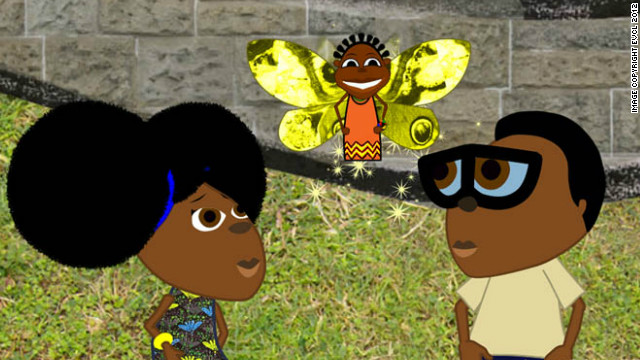
I admit, I was drawn into the story because of the picture of the adorable Black girl butterfly character, but after doing some more digging about the series, I got even more excited about the show. Bino and Fino is the creation of Nigerian architect turned animator, Adamu Waziri who lamented the fact that African youth don't have cartoons that feature modern African children in positive settings. He said in an interview that when Disney 'does Africa' they show lions and talking animals in the jungle. You never see people in a modern urban setting. And so the show -- targeted to three to five year olds -- Bino and Fino was born. The show is now being seen in the UK and in various countries in Africa. Three cheers to Waziri for making a difference.
Here's a clip of Waziri talking about the origins of the show and why it's so important for Bino and Fino to exist. And not for nothing, don't you just love Fino's Afro puffs?
Enjoy.
Peace!
Labels:
Africa,
Black Culture,
Children's Education,
Meltingpot TV,
Parenting,
Pop Culture
Wednesday, February 22, 2012
Wait, Ezra Jack Keats Was White?: White People, Black Stories Continues
Hi Meltingpot Readers,
Did you know Ezra Jack Keats -- the famous children's book author who wrote The Snowy Day, Whistle for Willie and dozens of other titles featuring Black and brown children -- was White? I only discovered the fact later in life when I started collecting his books for my own children. I just assumed he was Black.
Apparently, lots of people continue to make that same assumption. I found the following You Tube Video that talks about Keats'Jewish heritage and what inspired him to depict children of color in most of his work. You can also check out the Keats Foundation website for more information about this fascinating and prolific storyteller and artist.
Peace!
Did you know Ezra Jack Keats -- the famous children's book author who wrote The Snowy Day, Whistle for Willie and dozens of other titles featuring Black and brown children -- was White? I only discovered the fact later in life when I started collecting his books for my own children. I just assumed he was Black.
Peace!
Friday, September 24, 2010
Katy Perry, Elmo and Boobies
Happy Friday Meltingpot Readers,
Have you heard about the uproar over Katy Perry's appearance on Sesame Street? Apparently, Perry has some mommies up in arms over the 'costume' she wore on the show. Having heard about the controversy first, I assumed the woman who sings the song "I kissed a girl and I liked it," had probably shown up wearing something a little too risque to play with muppetts. From the comments, it sounded like she'd come dolled up in stripper gear or something.
But then I watched the clip, available on You Tube and I found myself scratching my head. Is it just me or does anyone else think maybe folks are making much ado about nothing? Yes, you can see some cleavage, but the boobie factor is far from offensive or even that big (sorry Katy).
See for yourselves.
So why is this a Meltingpot issue? Well, one because I'm a mom who still enjoys watching Sesame Street, but also because I'm so shocked that other moms were so shocked. Are these moms coming from such a different cultural experience / moral code that we can look at the same skit and see totally different things? I mean, I've watched the video twice and cannot for the life of me see anything shameful or gross. I was tapping my toes to the music and listening to the cute lyrics and forgot all about her chest.
Please Meltingpot readers, tell me what you think. Would you let your toddlers and young kids watch this skit? Or is it x-rated? And if you don't have a problem with it, why do you think so many others did. And mind you, the outraged mommies won this battle because the higher ups at Sesame Street issued a statement promising not to air the skit on television.
I'm listening.
Peace!
Have you heard about the uproar over Katy Perry's appearance on Sesame Street? Apparently, Perry has some mommies up in arms over the 'costume' she wore on the show. Having heard about the controversy first, I assumed the woman who sings the song "I kissed a girl and I liked it," had probably shown up wearing something a little too risque to play with muppetts. From the comments, it sounded like she'd come dolled up in stripper gear or something.
But then I watched the clip, available on You Tube and I found myself scratching my head. Is it just me or does anyone else think maybe folks are making much ado about nothing? Yes, you can see some cleavage, but the boobie factor is far from offensive or even that big (sorry Katy).
See for yourselves.
So why is this a Meltingpot issue? Well, one because I'm a mom who still enjoys watching Sesame Street, but also because I'm so shocked that other moms were so shocked. Are these moms coming from such a different cultural experience / moral code that we can look at the same skit and see totally different things? I mean, I've watched the video twice and cannot for the life of me see anything shameful or gross. I was tapping my toes to the music and listening to the cute lyrics and forgot all about her chest.
Please Meltingpot readers, tell me what you think. Would you let your toddlers and young kids watch this skit? Or is it x-rated? And if you don't have a problem with it, why do you think so many others did. And mind you, the outraged mommies won this battle because the higher ups at Sesame Street issued a statement promising not to air the skit on television.
I'm listening.
Peace!
Monday, July 19, 2010
Same Family Different Colors
Hi Meltingpot Readers,
I'm coming to you for your advice and opinion. My nine-year old son seems to be mildly obsessed with skin color these days. Okay, obsessed is too strong a word, but he does like to point things out about different people's pigmentation. As in, this weekend our dear family friends came to visit. Mom's Black, Dad's White, kids are mixies like mine. My son announced to me, in the midst of their visit, "Isn't it perfect, that you and N. are the same color, Papi and M. are the same color, me and C. are the same color and the two little ones are the same color too."
My girlfriend heard this and commented, "I think you talk about race too much."
Yikes! First I denied it and then el esposo raised his eyes at me and said, "You talk about race all the time." I still tried to deny it, but then I realized, 'damn skippy' I talk about race all the time. I write about it, talk about it and think about it a whole lot. And as I came to terms with that, I realized that that is exactly what I didn't have growing up, a conversation about race with my parents or other trusted adults. And because of that, I always felt very uncomfortable whenever anyone else brought up race either. I thought it was a taboo subject and being a person of color, I kind of translated that to mean, "I" am a taboo subject.
I don't want that for my kids.
I don't have a racial agenda to teach my children. And to be honest, I don't even know if I'm feeding them the right mix of racial/ethnic pride so that they will feel comfortable in the skin their in. What I do know is that I am trying to make sure that they know that talking about color and ethnic origins is okay. I think it is a grave disservice to teach your children to be colorblind because they're not. They see the difference and if we don't give them the appropriate language to describe what they see, then we're perpetuating the culture we live in today where grown men and women cannot dialogue about race effectively.
My son came home from school one day this past spring and told me, "Mom, this one girl said all the Black kids in the other class talk too much. And then all the other kids said she was racist. Is that true?" So kids notice. Kids make assumptions. Kids talk about this stuff whether we talk about it at home or not. So I think I'm just going to keep on doing what I'm doing and making sure my kids know they can talk to me about it, with the appropriate language, of course.
What do you guys think? Do you tone down your language in front of your kids when it comes to racial issues? Do you reprimand them for describing someone as "Black, or White or Asian," when they're telling a story? Do you think that by talking about race, you predispose your kids to be overly concerned about being a child of color?
I'd love to hear your thoughts and experiences.
Peace.
I'm coming to you for your advice and opinion. My nine-year old son seems to be mildly obsessed with skin color these days. Okay, obsessed is too strong a word, but he does like to point things out about different people's pigmentation. As in, this weekend our dear family friends came to visit. Mom's Black, Dad's White, kids are mixies like mine. My son announced to me, in the midst of their visit, "Isn't it perfect, that you and N. are the same color, Papi and M. are the same color, me and C. are the same color and the two little ones are the same color too."
My girlfriend heard this and commented, "I think you talk about race too much."
Yikes! First I denied it and then el esposo raised his eyes at me and said, "You talk about race all the time." I still tried to deny it, but then I realized, 'damn skippy' I talk about race all the time. I write about it, talk about it and think about it a whole lot. And as I came to terms with that, I realized that that is exactly what I didn't have growing up, a conversation about race with my parents or other trusted adults. And because of that, I always felt very uncomfortable whenever anyone else brought up race either. I thought it was a taboo subject and being a person of color, I kind of translated that to mean, "I" am a taboo subject.
I don't want that for my kids.
I don't have a racial agenda to teach my children. And to be honest, I don't even know if I'm feeding them the right mix of racial/ethnic pride so that they will feel comfortable in the skin their in. What I do know is that I am trying to make sure that they know that talking about color and ethnic origins is okay. I think it is a grave disservice to teach your children to be colorblind because they're not. They see the difference and if we don't give them the appropriate language to describe what they see, then we're perpetuating the culture we live in today where grown men and women cannot dialogue about race effectively.
My son came home from school one day this past spring and told me, "Mom, this one girl said all the Black kids in the other class talk too much. And then all the other kids said she was racist. Is that true?" So kids notice. Kids make assumptions. Kids talk about this stuff whether we talk about it at home or not. So I think I'm just going to keep on doing what I'm doing and making sure my kids know they can talk to me about it, with the appropriate language, of course.
What do you guys think? Do you tone down your language in front of your kids when it comes to racial issues? Do you reprimand them for describing someone as "Black, or White or Asian," when they're telling a story? Do you think that by talking about race, you predispose your kids to be overly concerned about being a child of color?
I'd love to hear your thoughts and experiences.
Peace.
Monday, May 10, 2010
Food for Thought, Literally
Last Friday I was listening to a fascinating segment on international adoption on Radio Times. If you listen to the entire hour, you'll hear me asking a question at the end of the show about the long-term effects on malnutrition. Apparently, many children adopted from Ghana suffer from malnutrition and it can vary from mild to severe. Severe malnutrition, often referred to as kwashiorkor, can have long term effects on height, weight, cognitive development, and organ function.
If I'm not mistaken, based on the answer given by the expert on the show, the long-term effects of malnutrition greatly depend on how long a child goes without proper nutrition. For example, a friend of mine who adopted her daughter from Guatemala, says her daughter was so malnourished upon arrival, she could barely speak, eat or move at 12 months. Today, that little girl has hit all of her milestones and loves to eat! This gives me great hope. On the other hand, a woman who is part of the online discussion group for families who have adopted from Ghana, says her children whom she adopted at ages seven and nine, suffer greatly with cognitive function due to their early years without enough to eat. Low IQ scores, ADHD, short-term memory issues... the list seems endless.
But before you go thinking, those poor kids in Ghana, I learned something else about malnutrition and cognitive function. El esposo says he was dealing with kids with those very same issues when he taught in the New York City public schools. "They were given blue Kool-Aid in their baby bottles and then moved on to McDonald's," he said. "They were as difficult to teach as the kids who were born with crack in their systems."
I guess I've always known a healthy diet was important, but when you connect all the dots and see why, it is mind-blowing. What's more, you can't always see malnutrition on the outside of a child. Even in Ghana, sometimes the kids have enough food to fill their bellies but they lack vital proteins. And here in the United States, kids are eating, but what they're eating may be destroying any chance for them to be able to learn.
I don't have any answers on this issue, I just wanted to bring it to you all to chew on. If you are in a position to help children get the nutrition they need, in any way, or even to educate parents on why this is so important, please take the opportunity. And that is today's food for thought.
Peace.
Wednesday, April 21, 2010
Babies All Over the World and on the Big Screen

Meltingpot readers, have you heard about this new movie, simply titled, Babies?
It's a simple concept; an almost dialogue-free documentary following four babies -- from birth to age one -- in four different countries. Those countries are Mongolia, the United States, Namibia, and Japan. Scheduled for a Mother's Day release date, the film is already generating a lot of buzz.
I watched the trailer on the Focus Features Website and almost peed my pants laughing. I suggest you watch only after emptying your bladder.
I'm really excited to watch the whole film as I think we can all learn something in watching how other cultures parent. A friend of mine who actually has seen the whole film already -- and who happens to be a first-time mom -- felt an immense amount of relief about not cleaning up the dog and cat hair in her house after witnessing some of the parenting practices in Mongolia. "Her kid was playing with a goat, so I'm not really going to worry about dog hair so much," my friend laughed. And it's true. Perspective can be a really useful tool.
Let me know what you think. Will you be going to see this film? Why or why not?
************************************************************************************
P.S. Sorry I forgot to make this announcement. The winner of the first-edition autographed copy of Kinky Gazpacho is Erin Michelle. Erin, send us an email with a mailing address and we'll send your copy out right away. Send it to myamericanmeltingpot@gmail.com. Congrats!
Labels:
Children's Education,
Family,
Meltingpot Movies
Friday, December 04, 2009
Growing Up Global: Homa Sabet Tavangar Will Now Take Your Questions (And a Giveaway Too)
When I first met Homa Sabet Tavangar, I had just moved to Philadelphia. Homa was about to leave the city. Temporarily. She said she was about to take her three young daughters and move to Africa, to The Gambia specifically. Why? Because she wanted them to experience the "oneness of humanity."
Soon after, Homa left the United States with her girls in tow, to live out her principles. Her oldest daughter should have been in her last year of middle school, her youngest was only three-and-a-half. Once there, Homa did not search out an expat community or try to find an exclusive private international school for her girls. She enrolled them all in private local schools with some of the same families they were living amongst as well as some other international kids. She chronicled her journey in a fantastic blog for the Philadelphia Inquirer.
Personally, I loved reading about her adventures on the blog, but Homa's gone one better. She's written a fascinating and useful book called, Growing Up Global: Raising Children to be at Home in the World. In the book she talks about her motivations to take the trip to Africa but the majority of the tome is a parenting primer, offering wonderful tips and activities to raise real global citizens. With chapter titles like "Be A Friend," "Go to School" and "Celebrate with the World," the book is chock full of ways (from learning a new language to attending an international children's film festival) to make our children (and ourselves too!) understand their place in this big wide world. I love it! And one of you will too.
Homa has given me a copy of Growing Up Global to give to one of my Meltingpot Readers. AND she's offered to answer any of your questions about raising a global citizen. So post a question here for Homa in the comments section and you'll be entered to win the book. We'll post the winner and answers from Homa next Friday so get your questions in by Monday at midnight.
For more information about Homa and her own fascinating background, check out her beautiful Growing Up Global website.
Peace!
Wednesday, September 23, 2009
Tibetan Nannies are Hot!
MSNBC is reporting that nannies from Tibet are "all the rage" for New Yorkers hiring child-care workers. According to the article, Tibetan women are "very balanced and Zen," and can aid in the "spiritual development" of their young charges.
When I left New York City five years ago for the greener pastures of Philadelphia, nannies from the Philippines were all the rage, but I guess times they are a changing.
On the surface, this story doesn't surprise me. It almost sounds humorous, imagining how people cling to misguided stereotypes about people and/or cultures to select a nanny. But the thoughts and mindsets fueling these trends are quite alarming and ignorant. Shouldn't you pick the person who is most qualified for the position instead of the one who fits your Maria from the Sound of Music/Big Mama/subservient Asian/loving Latina/Caribbean queen image in your head? I'll never forget the story I read in the New York Times a couple of years ago, about a woman who hired a "proper English nanny" only to find out later she was a convicted murderer in her own country. But she was blind to seeing the woman's true character (even after her own kids complained) because she was fooled by the Mary Poppins accent. And lest we not forget Louise Woodward.
Is there ever a time when looking for a nanny of a specific racial background is okay? I think so. I for one wanted to find a "nanny" (FYI, I hate that word as it connotes a certain elitism that doesn't sit well with me.) that speaks Spanish to watch my son so he would have more opportunities to learn the language. My Korean friend who works 1 billion hours a week specifically looked for a Korean nanny who did not speak English so her son would be forced to learn Korean and would eat Korean food, etc. This was especially important to her as her own parents, the keepers of their family culture, live in another state.
Turns out, I hired a woman from the island of Grenada who spoke not a speck of Spanish to watch my son because I liked her the best. And I committed myself to reading more books in Spanish to my son.
What do you think about this trend? Is it okay to select a nanny/baby sitter based on her ethnic heritage? What has your experience been in this arena? I personally think about this stuff a lot. It's actually what inspired my new novel, Substitute Me, coming soon to a bookstore near you.
Peace.
When I left New York City five years ago for the greener pastures of Philadelphia, nannies from the Philippines were all the rage, but I guess times they are a changing.
On the surface, this story doesn't surprise me. It almost sounds humorous, imagining how people cling to misguided stereotypes about people and/or cultures to select a nanny. But the thoughts and mindsets fueling these trends are quite alarming and ignorant. Shouldn't you pick the person who is most qualified for the position instead of the one who fits your Maria from the Sound of Music/Big Mama/subservient Asian/loving Latina/Caribbean queen image in your head? I'll never forget the story I read in the New York Times a couple of years ago, about a woman who hired a "proper English nanny" only to find out later she was a convicted murderer in her own country. But she was blind to seeing the woman's true character (even after her own kids complained) because she was fooled by the Mary Poppins accent. And lest we not forget Louise Woodward.
Is there ever a time when looking for a nanny of a specific racial background is okay? I think so. I for one wanted to find a "nanny" (FYI, I hate that word as it connotes a certain elitism that doesn't sit well with me.) that speaks Spanish to watch my son so he would have more opportunities to learn the language. My Korean friend who works 1 billion hours a week specifically looked for a Korean nanny who did not speak English so her son would be forced to learn Korean and would eat Korean food, etc. This was especially important to her as her own parents, the keepers of their family culture, live in another state.
Turns out, I hired a woman from the island of Grenada who spoke not a speck of Spanish to watch my son because I liked her the best. And I committed myself to reading more books in Spanish to my son.
What do you think about this trend? Is it okay to select a nanny/baby sitter based on her ethnic heritage? What has your experience been in this arena? I personally think about this stuff a lot. It's actually what inspired my new novel, Substitute Me, coming soon to a bookstore near you.
Peace.
Labels:
Children's Education,
Meltingpot Lives,
Trends
Wednesday, September 16, 2009
Teaching Children Heritage without the Baggage
Yesterday I was in my car, listening to my new favorite NPR radio show, Tell Me More, when this excellent segment came on about how parents can teach their children about their cultural heritage without passing along the pain, sorrow, shame and sadness that often comes with history.
Tell Me More hostess Michele Martin, assembled a panel of mothers; An African-American mother, A Native-American mother and a Jewish mother who was the child of a holocaust survivor, to talk about the issue. It was a riveting discussion and while I didn't come away with a clear step-by-step guide for talking to my kids about slavery and the Spanish inquisition, I was given some quality food for thought. And I appreciated hearing the topic being given airtime. I think I was most impressed with the Jewish woman's comment when she said, her mother, the holocaust survivor, imbued her kids with a sense of their own strength. She always told them (and I'm paraphrasing) "Look, if Hitler didn't get me, nobody can." In a certain way, that has to play better than being a victim. It gives children a sense of pride. Imagine a kid saying, "My mother bested one of the baddest bad men around!"
If you'd like to hear the interview click on this link and then scroll down to where you see the headline, "Teaching Children a Painful History." I'd like to hear what you think.
I'd also like to hear how you approach this topic with your own family.
Peace!
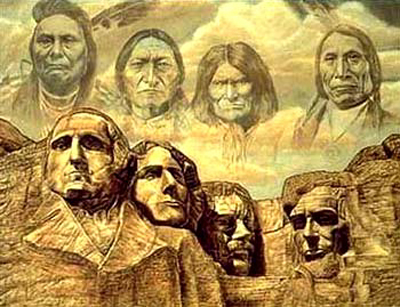
p.s (Photo is of artwork by David Behrens.)
Monday, June 11, 2007
What Age Do You Introduce Race?
Not so long ago I was having a conversation with an Asian friend of mine about when and how we should start talking about Race with our children. We didn’t want to “burden” them with this heavy concept, yet we didn’t want them to get their information from outside sources in a way that might make them feel embarrassed or ashamed of their ethnic background either. We finished the conversation when one of our kids poured a bowl of cheerios on their head, promising to get back to the discussion at a later date.
That later date happened for me last week.
I was lurking around the hallways at my son’s adorable Quaker School when I heard there was some presentation going on in the first grade classes. Since my son is going to be in first grade next year, I decided to go take a peek. Turns out it was a Race, Ethnicity and Identity extravaganza presented by the first and second graders.
Using a carefully selected collection of picture books (Let’s Talk About Race by Julius Lester, The Color of Us by Karen Katz) as their launch pad, the faculty created a curriculum to have the children explore the concept of identity. Rather than teaching the children about static racial categories, they gave the children the tools to define their own identity and share their personal true-life stories with their classmates. As the headmaster said to me as he witnessed parents, teachers and students gushing over the tremendous work these young people had created, “We’ve made it so the children want to learn about diversity because it’s fun, not because they’re supposed to.”
The kids made self-portraits, mixed paint colors to match their skin tones, wrote mini-biographies and of course had many enlightening discussions. Best of all was the aura of celebration and excitement around this theme instead of the weariness and dread usually associated with race-based curricula. I applaud the teaching team at Greene Street Friends School for taking the time and energy to infuse “diversity awareness education” with so much positive energy and excitement.
And I learned that if the story begins with a celebration of identity instead of a history lesson of oppression and other people’s perceptions, it’s never too early to begin the discussion of “race.”
Peace.
Subscribe to:
Posts (Atom)