Showing posts with label International Adoption. Show all posts

Friday, July 06, 2012

Stumbled Upon: YA Novel, Kimchi & Calamari

Hello Meltingpot Readers,

So, all of my loyal readers know that I practically live at the library. In the summer it's no different, except I usually haul my kids with me on my visits. They love the library too. When we go, they immediately run off to read graphic novels and other things I usually won't buy for them. And they're perfectly cool with me picking out their books for the week. I don't know how long this is going to last but for now it works for me.

So, this summer I've been trying to get my sci-fi loving 11-year-old to read more realistic fiction. I still try to find stories that I think will speak to him as a 11-year-old boy who likes sci-fi and fantasy. So, for example, last week he read The Orphan of Ellis Island, about an orphaned Italian-American boy who falls through a time portal and goes back in time and meets his Italian ancestors. He loved it. Yes! Yesterday, I stumbled upon a book called Kimchi & Calamari. You know with just that title, I was intrigued.

Sure enough, the book is about a Korean boy adopted by an Italian-American family. The boy in the story is 14 years old and dealing with typical teen boy stuff, plus he's dealing with identity issues and a search for a birth parent. Here's a link to a review (cuz I haven't read it yet.) And here's how the author, Rose Kent sells, Kimchi & Calamari:

Kimchi and calamari is a quirky food fusion — and exactly how fourteen-year-old Joseph Calderaro feels about himself. Why wouldn’t an adopted Korean drummer feel like a combo platter given
  1. his face in the mirror and
  2. his proud Italian family?
Now Joseph has to write an ancestry essay for school. But all he knows is that his birth family put his diapered butt on a plane to the USA.
What Joseph does leads to a catastrophe messier than a table of shattered dishes — and self-discovery that he never could have imagined."
Sounds good right? It'll be next on the list for my son. And I'll tell you how it goes.
Has anybody else read Kimchi and Calamari? Any thoughts? Any other realistic fiction suggestions for an 11-year old boy with Ms. Meltingpot for a mom? I'm listening.
Peace!

Wednesday, December 14, 2011

International Adoption Can Make the Holidays Taste Sweeter

Hi Meltingpot Readers,

Here's a link to a story I wrote for today's Philadelphia Inquirer about how families with internationally adopted children incorporate their children's heritage into the holidays.

It was great fun doing all of the interviews and hearing how different families, like the Braydon-McCormicks, mesh all of the cultures represented in their multi-culti clans during the Christmas season. Of course, because this was a newspaper article, I didn't get to include half the information I wanted to, given the limited space. For one, I would have liked to include more details about just how thoughtful these different families are in their celebrations. It's not like they just hang up some extra ornaments on the tree and call it a day. I also would have liked to include some Jewish families with adopted children in the story as well. Maybe next time.

The main nugget of truth I walked away with after talking to all of these great people, was that an adopted child's heritage isn't just acknowledged on special occasions and holidays. It becomes the family's heritage. As one of the mother's I interviewed, Kate Rupertus, said. "Our family is now Irish, Italian and Ethiopian." And that was evidenced by the beautiful Ethiopian decorations in their home as well as the fact that on St. Patrick's day, all of the kids go green. In other words, the child isn't just adopted into the family, his culture is too.

Makes my heart sing. I love these meltingpot moments.

Peace!

Friday, October 22, 2010

November Issue of Redbook Tackles Adoption

Meltingpot Readers,

Not too long ago, I didn't want to admit that I'd outgrown Glamour magazine and now found myself drawn to Redbook for my fix of glossy pictures, fluffy reading and the occasional useful article to help me organize/spruce up/ pare down my hectic lifestyle.

But I'm here to tell you, after grabbing the November issue of Redbook off the shelf yesterday, I am officially declaring my conversion. Yes, I've grown up and Redbook is my new glossy of choice. It's probably no coincidence that the new Editor in Chief of Redbook is a former Glamour editor, so Redbook looks a lot more hip and trendy, fun and classy. It doesn't feel like that older lady's magazine it used to. But it's more than that. There are articles in there that I actually wanted to read, about issues that I care about. And I'm not just talking about the sex secrets of married women article either (although that was really useful.)

I actually picked up the magazine because the cover model is actress Katherine Heigl. I'm not a huge Heigl fan, but the cover line promised the story behind her adoption. Well, not only do we get that story -- as well as photos of Heigl's Korean daughter -- but the magazine also includes a three-page spread on adoption in support of National Adoption month. I'd love to hear what other people in the adoption world think about this "mainstream" coverage. I was impressed as adoption in women's mags is usually only discussed as it relates to celebrities or horror stories.

Another thing I appreciated about the new and improved Redbook were the images of women of color. There was a decent variation of skin color and hair textures throughout, in both the ads and in editorial. In that realm we can always do better, but I was pleasantly surprised by the amount of diversity.

Good for you Redbook. Anybody else been reading Redbook lately? What do you think? Do you have a glossy guilty pleasure? Let's hear it.

Peace!

Friday, July 30, 2010

Snooki as a Poster Child for Successful Adoption?

Hi Meltingpot Readers,

Do all of you know who Snooki is? If you're like me and don't have cable, nor do you have teenagers in the house who might be attracted to over-hyped reality shows on MTV like the Jersey Shore, then you might not. I still have never seen The Jersey Shore and I still don't have cable, but I know who Snooki is. She's the big-haired, short limbed, big mouthed, nicely tanned and somewhat crude young woman on the Jersey Shore who somehow has become a pop-culture phenom.

I've hardly paid her any mind and her popularity has barely registered in my circle of friends, but Snooki was the front page story of the Style section of the New York Times last Sunday so I decided I should educate myself and find out what was so amazing about this woman who seemed to gain all of her fame for being a walking stereotype of an Italian-American "guidette."

The article in the Times only served to reinforce my original idea that Snooki is a walking stereotype and the reporter seemed just as clueless by the end of the article as to why she has captured the hearts and minds of the American public. But there was one line in the story, a parenthetical at that, that suddenly made Snooki a fascinating character study to me. Snooki was adopted at six months of age from Chile.

So suddenly, this girl who has almost single-handedly redefined Italian-American youth culture (in South Jersey) becomes an interesting example of a child who wholeheartedly adopted the culture and subculture of her adoptive parents, to the point of extreme. As countless adoptive parents struggle with this notion of how much of a child's original culture should be preserved vs how much should the child be encouraged to take on their adoptive family's culture, can Snooki be a case study?

Again, since I barely know anything about Snooki, I don't know if she's ever talked about being adopted or if it's even something most of her fans know. I did a google search and the information is definitely out there, but her getting drunk or changing her name to Snickers seems far more interesting to her adoring public.Do you think Snooki should use her platform to talk about adoption or is this nobody's business and should we just let her enjoy her 15-minutes of fame?

Hmmm?

I'm listening.

Wednesday, May 26, 2010

Courage to Make a Difference


Hi Meltingpot Readers,

First let me put it out there that I've been trying to decide how much of my adoption journey to share here on The Meltingpot. On the one hand, sharing this adventure with all of you makes me feel supported. I like sharing and benefiting from your collective wisdom. But I also fear I might say too much and the lives of my family members aren't meant for public scrutiny. Because of the potentially delicate nature of the entire adoption process and because of certain circumstances relating to the country we are adopting from, I'm going to remain somewhat cryptic so that I can freely share this incredible journey. So, please be okay with knowing that we are adopting a little girl from a country in Africa.

Okay, so that's out of the way, what I really wanted to talk about was courage. (I'll get back to the adoption thing in a minute). Last week while selecting my new stash of DVDs from the library, I finally picked up Hotel Rwanda. That movie came out in 2004 and it's taken me this long to finally pluck up the courage to watch it. (Note: I still haven't watched Amistad either.) I figured that if I'm adopting an orphan from Africa, the least I could do is try to understand more about the politics that have created the orphan crisis and not just assume poverty and AIDS are the biggest problems.

Wouldn't you know I still avoided watching the movie. It sat there on my self taunting me. So finally on Tuesday night, I sat down with two baskets of laundry and watched the film. Needless to say, I cried and seethed with anger throughout. And while I yearned to bring all of those children orphaned by the genocide into my home, that wasn't the greatest message I came away with from the film. My takeaway (besides understanding the roots of Rwanda's civil war/unrest) was that a single person can do great things when she has the courage to just take the first step.

So much of my life is governed by fear. And I don't mean that I live in a small box crippled by anxiety. I just mean that some of the things I dream about, like our adoption for example, come surrounded by fears of failure or worst case scenarios. I wonder what else I could be doing with my life if only I had more courage. Perhaps I should take a trip to see the Wizard. However, by reading a lot of adoption blogs and talking to a lot of people who have adopted internationally, I have pushed the majority of my fears aside and found the courage to move forward, but sometimes it creeps back in. That's why I loved Hotel Rwanda because it perfectly exemplifies this definition of courage by Dr. Robert Anthony: "Courage is simply the willingness to be afraid and act anyway."

So, Meltingpot readers, what's the most courageous thing you've done? It sure does help to gather inspiration from others. And it doesn't have to be on the level of Rwandan hotel manager Paul Rusesabagina. Every day acts of courage help too.

I'm listening.

And by the way, if, like me, you enjoyed the film Hotel Rwanda and want to read more about life in Rwanda after the genocide, you might like the novel, Baking Cakes in Kigali by Gaile Parkin. And you can find out what Mr. Rusesabagina is doing to continue to fight against genocide in his country and around the world at his foundation.

Peace!

Friday, May 21, 2010

Saying Goodbye to Ghana...An Adoption Update

Meltingpot Readers,

I promised not to turn this blog into a play by play of my adoption journey, but I will keep you updated on major events in the process. So far, we're still doing the paper chase and submitting ourselves to a total invasion of our private life by a trained social worker (who in our case is awesome and a graduate of my alma mater, Smith College!) for our home study.

The home study is almost complete so then we can start moving on to the next phase of chasing documents down for our international agency to start compiling our dossier, which would then be forwarded to Ghana.

But we're not adopting from Ghana anymore. We have decided to change countries. Not because we weren't absolutely excited about adding a Ghanaian child to our Kinky Gazpacho mix, but because the country we've decided on seems to be a better fit for our family. More on that in a later post.

I'm not trying to be cryptic here, but I'm not ready to announce the new country yet. I'm still mourning my darling Ghanaian daughter whom I will now never meet. It might seem callous and shallow to hop around from country to country to find your next child and it almost seems that way to me. I don't want people to think we've made this decision lightly. Indeed, I am finding myself needing to take the time to mourn, shift my loyalties, and just place my Ghanaian fantasies in a sweet, special memory box. I will not equate this "change" with a miscarriage, but it still feels like an intimate loss nonetheless.

So, I'm taking my time to say goodbye to Ghana before I celebrate the joy that will surely come.

Peace.

Monday, May 10, 2010

Food for Thought, Literally


Last Friday I was listening to a fascinating segment on international adoption on Radio Times. If you listen to the entire hour, you'll hear me asking a question at the end of the show about the long-term effects on malnutrition. Apparently, many children adopted from Ghana suffer from malnutrition and it can vary from mild to severe. Severe malnutrition, often referred to as kwashiorkor, can have long term effects on height, weight, cognitive development, and organ function.

If I'm not mistaken, based on the answer given by the expert on the show, the long-term effects of malnutrition greatly depend on how long a child goes without proper nutrition. For example, a friend of mine who adopted her daughter from Guatemala, says her daughter was so malnourished upon arrival, she could barely speak, eat or move at 12 months. Today, that little girl has hit all of her milestones and loves to eat! This gives me great hope. On the other hand, a woman who is part of the online discussion group for families who have adopted from Ghana, says her children whom she adopted at ages seven and nine, suffer greatly with cognitive function due to their early years without enough to eat. Low IQ scores, ADHD, short-term memory issues... the list seems endless.

But before you go thinking, those poor kids in Ghana, I learned something else about malnutrition and cognitive function. El esposo says he was dealing with kids with those very same issues when he taught in the New York City public schools. "They were given blue Kool-Aid in their baby bottles and then moved on to McDonald's," he said. "They were as difficult to teach as the kids who were born with crack in their systems."

I guess I've always known a healthy diet was important, but when you connect all the dots and see why, it is mind-blowing. What's more, you can't always see malnutrition on the outside of a child. Even in Ghana, sometimes the kids have enough food to fill their bellies but they lack vital proteins. And here in the United States, kids are eating, but what they're eating may be destroying any chance for them to be able to learn.

I don't have any answers on this issue, I just wanted to bring it to you all to chew on. If you are in a position to help children get the nutrition they need, in any way, or even to educate parents on why this is so important, please take the opportunity. And that is today's food for thought.

Peace.

Monday, April 19, 2010

A Tiny Rant About Adoption Give-Backs

So, of course since we're now officially part of the adoption world, I have an opinion on the recent brouhaha involving the mother who decided to give her adopted son back to the country from where he was born. If you perhaps have been trapped under a rock and have not heard about this horrific incident, you can catch up on the details here.

In a nutshell, after approximately eight months of parenting this seven-year-old child, adoptive mother Torry Hansen realized he had too many psychological problems for her to handle, so she packed his things and sent him back to Russia -- alone -- with a note explaining why she was returning her damaged goods.

First let me say that just because we are now in the process of adopting, I have not drunk the Kool-Aid. I don't believe every adoption goes smoothly. I know love isn't enough to cure a horrible case of reactive attachment disorder or fetal alcohol syndrome, or to reverse the effects of systematic abuse. I also know that many adoptive parents are woefully under-prepared for adopting children, that the process is probably failing many of them. And I also know that Torry Hansen clearly needed help with her new son.

But here's the thing, this should not be a story about the failings of adoption, which the media has deemed it to be. This is a story, in my mind, of child abandonment, plain and simple. I don't think analyzing how the child entered the family is relevant. Would the woman's actions be less horrific (or more) if she put a child she gave birth to on an airplane bound for somewhere else or left him on a doorstep in a different city? What if it were her step-child? Would that matter? Essentially, by allowing this story to be about adoption, then we are tacitly agreeing that our adopted children aren't our real children. Then we are admitting that we don't, in fact, really love our adopted children as much as our real children, or worse, that our adopted children are somehow worth less. Isn't that what's going on here, by the simple fact that we are discussing just how horrible "those children" from Russian orphanages really are? That while Hansen's behavior was heinous, we kind of understand why she did it.

Wrong!

If Torry Hansen couldn't figure out how to handle her son's behavior, then like all parents with troubled kids, she should have gone for help. Where? To her adoption agency. To social services. To a therapist. To an in-house facility for troubled kids. Worse case scenario, she could have surrendered her parental rights, temporarily or permanently, and put him into foster care. She could have even dropped him off at a local fire station, knowing he'd be taken care of and not have his life risked by putting him on a trans-Atlantic flight with no guarantee that he'd be taken care of upon arrival. Obviously I was not living with Hansen, so it may be easy for me to offer up all of these wonderful solutions, but the fact of the matter is, being a mother comes with a buttload of responsibility. And I would posit, that if Hansen's son wasn't adopted, but was having similar issues, she'd have figured something out.

Let me put it another way. I would say that if Torry Hansen was a poor woman of color who'd left her child in a gas station bathroom, she'd probably be demonized by the press as the worst mother possible. The story would be about the mother, not the system. Why is Torry Hansen any different? Oh, right, because her son, wasn't really her REAL son. He was adopted.

At the end of the day I'm thinking like a lawyer. Legally, this little boy belonged to Hansen. If she's not prosecuted for child abandonment and endangerment, then she's created a precedent for all mothers, for when our children are too much to handle, we can revert to a favorite childhood trick, and just call Give Backs! Or maybe that's just for adoptive parents. If we don't like the kids we're given, then we can package them back up and return to sender.

What do you think?

Friday, April 16, 2010

Why Ghana?

So the most popular and obvious question people have about our adoption plans is why Ghana? I'm going to skip over all of the why not domestic US and/or foster care questions and just try to explain how we decided to travel to Africa to find our daughter.

Honestly, we've been considering adoption for a long time. It's been at least two years since the idea began tickling our imaginations. I started reading every adoption blog I could find and seemed to hover around families with adopted children, trying to glean the essence of their success. It just so happens that on my former block, three different families included internationally adopted children. None of these were from Ghana though. In fact, I didn't even know Ghana allowed international adoptions until recently.

Once we made the decision to adopt internationally (which basically happened after our brief flirtation with a Haitian adoption), we had to choose a country. Initially we looked at countries where they spoke Spanish and where there was an African presence. You know, we were looking for another Kinky/Gazpacho baby to join our tribe. We investigated the Dominican Republic, Puerto Rico, Cuba (Yeah Right!), and even Brazil, but found too many obstacles in the way. After that, we turned towards Africa and considered Ethiopia and Rwanda and to be perfectly honest, I nixed those two countries for the simple reason that I HATE to fly. I panic on airplanes. It takes me weeks to psych myself up to get on an airplane. Now I love to travel so I do what it takes, but knowing that I would be responsible for taking my daughter back to her home country so she can stay in touch with her culture made me so 'no way.' (I think the flight to Ethiopia is like a billion hours long. From Atlanta Ghana is a mere eight hours) I'd be like, 'mommy bought you a nice book about Ethiopia,' and hope she wouldn't hate me. Knowing I couldn't commit to keeping a connection to her home country made me say no.

So then we found out Ghana was an option and it was like a light bulb went off. Looking around my house, I realized how many beautiful statues and art from Ghana we have on display. We have a close friend from Ghana. And I've been dreaming about going to this writer's festival in Ghana. I started reading everything I could about Ghana and fell in love with the pictures of Ghanaian children (many who looked like me!!). And, while I don't know if my ancestors came from Ghana, there is a strong possibility that they did, which makes me feel connected to the culture and to my new daughter. And hopefully she will feel that connection to me and my family. We still have a lot to learn about Ghanaian culture but that's the exciting part. And that's probably why international adoption also appealed to our family. We love learning about different cultures and traditions. This adoption gives us reason and cause to dive deep into a new, yet familiar place.


And what about el esposo? How does he feel about adopting an African child? Surely his daughter won't look like him. And when he walks down the street with her, people will know she is adopted...or something like that. I asked him about that before we made this momentous decision. "Will you be okay having a Black child?" And he looked at me like I was crazy. "Have you looked at your older son recently?" he said. Oh right. Whenever el esposo is out with just my older son, even though I think they look very much alike, many people just see a White guy holding a little Black child's hand. He's been asked if his son was adopted. He's been stared at and questioned. In a nutshell he's used to it already. "It won't be anything new for me," he said. "She will be another beautiful child to love."

I am happy to report that el esposo is just as excited as I am..although he doesn't get all emotional about it like I do. And the kids? Totally excited about having a little sister, who currently is known as "baby sister." Apparently the little one informed his entire kindergarten class yesterday that the mail man was delivering his baby sister from Africa any day now. I'm happy they know so many kids who are adopted from other countries because it has normalized the experience for them.

So there you have it. I'm sure I've left things out, but since this entire process will probably take several long months, we have time to talk some more.

Thanks for all of your well-wishes and support.

Peace.

Friday, March 12, 2010

Guess What? You Adopted an African Princess!!


The other day, I was sitting in my doctor's office flipping through magazines when I came across the most amazing story in an old copy of Glamour.

Titled, "The Real Princess Diaries," it is the story of Sarah Culberson, a young Mixed woman adopted by White parents in West Virginia. Turns out, Culberson discovered that her birth father -- who is still alive -- came from a long line of chiefs in Sierra Leone, making her a princess. Apparently, her adoptive parents had no idea that the one-month old baby girl they were adopting came from African royalty. Even if they did, do you think they would have raised her any differently?

You can watch the video above to hear Culberson herself tell her story and then if you want more information about the foundation she started to help the people in her father's war-ravaged village in Sierra Leone, visit the website at Bumperfund.org.

How's that for a feel-good, fascinating, Friday story? If you still want more details, Culberson has penned a memoir called A Princess Found: An American Family, an African Chiefdom, and the Daughter Who Connected Them All. It sounds like my kind of book as it tells not only her story of searching for her birth parents and her eventual reunification with her dad (mom passed away from cancer) but it also is a racial-identity coming of age story. I think a lot of people could find something of interest in her story. What about you? Are you interested? Have you heard about Sarah Culberson already?

I'm listening.

Peace.

Peace!

Wednesday, March 11, 2009

Should These People Be Allowed to Adopt from Ethiopia?


I know, I know, before I even open this can of worms, someone is going to remind me that I didn't have to pass any tests or prove my worth before I became a mother. And it's true, the burden of proof imposed upon adopting parents is high, but sometimes, just sometimes you have to wonder if some people really should be allowed to raise someone else's children.

Case in point, recently Sports Illustrated magazine ran a cover story on "The Fabulous New Life" of Phillies pitcher Cole Hamels. Included in this fabulous life of fame, wealth, and a lovely wife who is a former contestant on Survivor, a one-time Playboy model and a publicity whore (and I mean that in a technical way. I used to be a PR whore when I worked as a publicist in NYC. It's not a job I enjoyed and felt dirty every day.), is a plan to adopt a child from Ethiopia. And not just any a child, but an "AIDS orphan." Why? According to Hamel's wife Heidi, it's "the right thing to do." She elaborated on their plans in the article.

"We're in the process of adopting an AIDS orphan from Ethiopia," she said. "Maybe two. I'm so pumped. I'd adopt six if I could. When I was five years old—I grew up in a very rural town in Missouri, and I had never even seen a black person—they asked us to draw a picture of ourselves in the future, and I drew myself holding hands with a line of tiny black stick figures. I've always wanted this." She and Cole are also preparing, under the auspices of the fledgling Hamels Foundation, to build a girls' school in Malawi. Heidi has made a couple of monthlong research trips there. "We're not just doing it because it's the Brad and Angelina plan, but because we're in the position to do it and it's the right thing to do," she said.

For some reason, that just creeps me out. How could anyone use the word "pumped" in relation to children who have been orphaned because of a horrible disease? What's more, is a woman who admits she never knew any Black people growing up, but liked to draw black stick figures, really ready to face the challenges of rearing a child of color in the United States? Shouldn't somebody call Ethiopia or something and warn them of this impending disaster? Or am I being too harsh? I don't think Hamels and his wife are bad people, and I think it's amazing that they are committed to trying to help those most in need, but maybe they should concentrate their efforts on building that school, instead of adopting 6 orphans. Or maybe they could spend some of their money sponsoring a child in Ethiopia, instead of bringing them to Philadelphia. Not everyone has to adopt a child to show they care. There are so many ways to make a difference.

In situations like these, you want to say their hearts are in the right place, but Lord knows, that is not nearly enough to deal with a child of another race, from a different culture, with a potentially fatal disease that comes with its own set of stigmas. It really just isn't enough. Thoughts? Would you sign off on this couple adopting an Ethiopian child with AIDS?

Peace!

p.s. If you'd like to read the entire SI article, you can read it here.

Monday, September 22, 2008

The Angelina Effect Outside of Adoption?


I just heard from an International Adoption agency worker that there are now more than 75 agencies in Ethiopia trying to get in on the "orphan business." Not so long ago, there were only two agencies. Wait times for children between 0-2 years old are now ranging between 18-24 months, meaning for those people hoping to adopt a child from Ethiopia, they can expect to wait for almost two years before they would be able to complete (or for some people start) their family. That would be like gestating twice!

This particular worker sighed when she said, "This is the Angelina Jolie effect." She was frustrated because she still has many orphans over age 5 in Ethiopia and Uganda that she's trying to find homes for and yet she understands folks' desires for an infant.

So here's my question. Now I love me some Angelina Jolie, but I can't wrap my mind around the idea that a movie star has this much power to influence. I know that there are Black people adopting from Ethiopia, but the vast majority of American adoptive parents are White. So I'm wondering, how is it possible that a country whose citizens cannot vote for a man who has an African parent, can be full of eager adoptive parents who want to raise African children? The question I am raising is, has Angelina Jolie (and Madonna I suppose too) shifted racial attitudes so much that people who formerly would only consider adopting a White child or maybe an Asian one in a pinch, are now okay with a Black child? And if so, why? Because Black is hip now? Something to no longer fear? I'm skeptical that this is the case but wondering how far does this acceptance and "love" for Black children extend in other parts of life. Do you see where I'm going with this? What does this Jolie-influenced shift in attitude towards Black babies mean for the racial (r)evolution of this nation?

It seems that if so many people are on the verge of transforming their families from "monoracial" to multiracial, we ought to feel that Angelina Jolie effect in places outside the world of adoption. Anybody felt it yet? Please let us know.


Peace!

Monday, December 10, 2007

Translating International Adoption


As many of my readers know, I have a mild obsession/fascination with Spain. Lived there for a year. Married a Spaniard I met along the way. Wrote a book about my journey, (Kinky Gazpacho: Life. Love & Spain(Atria, 2008). Hablo Espanol...

In addition, my latest obsession/interest is international adoption. How does it work? How are cultures preserved or lost when a child is transferred to a different country to start life anew? Will Brad and Angelina stay together long enough for their rainbow coalition to really thrive and prove the naysayers wrong?

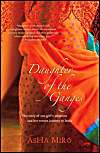
So imagine my great joy when I discovered the book, Daughter of the Ganges by Asha Miro, an Indian woman adopted by a Catalan family in Barcelona, Spain in the early 1970s. The book details the author's journey back to India to search for her past. The writing in the book is kind of bland (perhaps due to the fact that it is a translation from the original Spanish) but the story in and of itself is fascinating. Miro provides a new face and perspective on the nature vs nurture question and also just gives us a different version of international adoption to admire.

Even better, once Miro started this incredible odyssey, she decided to dedicate herself to adoption work, including penning a comic strip called Asha about, you guessed it, a little Indian girl who is adopted. The strip is published throughout Europe. Check out Asha Miro and all of her good work at her website.

Peace!

Monday, April 30, 2007

A Brother of Another Color?

What with all of this talk of international adoption being the new black --it's hip and cool -- you can expect a backlash any minute now.

A journalist friend of mine isn't tired of the media hype yet, but he did want to find out if there's another aspect of the story that we haven't hashed to death. I mentioned in an earlier post that there didn't seem to be a whole lot of Black people adopting internationally and I guessed it was because of the price tag attached. Well my friend decided to find those Black people, and any other people of color, who decided to not only adopt internationally, but adopt a child of another race.

The discussion over whether White people should raise colored children may never be resolved. But does anybody care if a nice Black family is raising a Chinese daughter? Does it matter if the Latino couple has adopted Russian twins? Does the discussion remain the same? Are people of color exempt from the public scrutiny or do they receive more? Speak up if this applies to you or if you know someone in this situation? What are the issues involved? When my friend's story comes out in a few weeks I'll post it here.

In the meantime check out: Anne Tyler's latest novel, Digging to America which involves an Iranian couple who adopts a Korean child. Or if you can get your hands on it, watch Fakin da Funk about a Black family who adopts a Chinese son. It's full of crass sterotypes but it's good for a laugh and Margaret Cho is in it.


Peace.

(Photo courtesy of interracial.meetup.com)

Monday, March 26, 2007

The Price of a Child

My next-door neighbors are adopting a child from Ethiopia. The people across the street are about to bring home a new daughter from Columbia. And then there's Angelina, Madonna, and Meg Ryan. It seems like everybody's doing it. You know, adopting third-world orphans.

I am not angry or indignant that these well-meaning people are adopting internationally as opposed to saving the poor kids in our own over-crowded foster care system. In fact, I even went online myself and investigated the possibility of adopting a child after seeing my fifth article/Oprah episode/PBS special on AIDS orphans in Africa. I'd convinced myself that it was my duty and obligation to save a child from the horrors of such a life. I even got my husband to consider the possibility...Until I saw the price tag attached to saving such a life.

Almost every website I checked out estimated the cost of an international adoption to be between $15,000-$22,000! I know the price tag on human life should be in the multi-millions, but how in the world can a person with good intentions but empty pockets be expected to come up with that kind of money? On one website, they actually addressed that issue and suggested such possibilities as "Ask friends or family for a loan." And " Take a second mortgage out on your house." Gee thanks. And then what? Bring your new child home to live in First World poverty because you just spent your whole life savings just to get them in the country? Some websites offer suggestions for coming up with the cash, but the underlying message is that if you want a child badly enough, you will come up with some way to pay for it and ultimately the sacrifice is worth it.

I might be the only person though who thinks that the cost of international adoption is insane. Indeed the number of international adoptions in Ethiopia is skyrocketing, so much so that some agencies are warning of an increased wait time to be assigned a child because of the demand. But who is doing the adopting? Even though Ethiopian social servants claim to prefer placing their orphans with Black families, the number of Black families looking to adopt is small. Is that because of the financial burden or are Black people just not as interested in international adoptions? I'm going to hazard a guess and assume that money has something to do with it. But maybe not.

I'd love to hear from someone who has some experience with international adoptions. How do people pay for a child? Should there be financial aid for colored folks to adopt colored babies? Would that be like Affirmative Action? Let's hear it?

Peace!