Monday, August 31, 2009

Is a Mohawk an Acceptable Black Hairstyle?


Okay, besides Mr. T. can you think of another Black man who rocks a Mohawk...well?

My sons are both currently sporting Mohawks, or maybe we might blur the lines a bit and call them "Fro-hawks," as they are right now in serious need of cutting and shaping. But the point is, after witnessing many of their friends both at school and in the neighborhood getting Mohawks, children of varying ethnic backgrounds mind you, they wanted in on the fun too. So I took them to the barber at the beginning of the summer and let him turn my previously adorable, bordering on cherubic children, into mini-warriors.

Seriously, with their new Mohawks, my sons looked fierce. And I mean that in a kind of good way. They didn't look bad (although their grandmother would seriously disagree) although it took some time getting used to on my part. And it's just hair, right? I knew if it looked horrible we could cut it off and start all over again. But then, just as I started to admire the boldness of the look, and enjoy the bad-ass effect it gave my boys, I started noticing some backlash. I read on a blog that Black kids looked ridiculous in Mohawks (this from a Black man). I also read that Mohawks meant something culturally to Native Americans and by wearing the style we, non Native Americans, were misappropriating a style.

What do you think? Can a Black or Mixed child with curly/kinky hair rock a Mohawk if he wants to? Is there some meaning behind the style? I'd like to know. Hit me back if you have some hairstorical information to share on this newly ubiquitous style.

Peace.

Friday, August 28, 2009

Meltingpot Links for You

It's Friday. Time to sign off for the weekend. I hope everyone has plans to enjoy this second to last weekend of the summer. Perhaps you might be heading to Brooklyn, to participate in the Spike Lee sponsored Birthday Bash for Michael Jackson who would be turning 51 on Saturday. The party is free and open to the public at Prospect Park and only about 10,000 people are expected to show up, so it might be a good time.

If a DJ spinning all Michael, all the time isn't your idea of fun, then perhaps you'd like to check out the following links in the privacy of your own home instead.

- If you'd like to read about other parents raising biracial and/or multiracial children, check out the new blog Honeysmoke. There's even some great hair care tips there that I'm going to try on my own little honeysmokes.

- If you'd like to get a taste of a new documentary (with an unfortunate title if you ask me.) about being biracial, check out the preview of I'm biracial...not Black, Damn it! on You Tube. It actually looks pretty interesting.

- And finally, if you'd like to be inspired to do something to make this world a better place, please visit my friend Homa's new website, Growing Up Global. She has written a fabulous new book to help young people become global citizens. Homa herself has a fascinating life story to tell and you'll be hearing from her here on the Meltingpot soon. But check out the website in the meantime and be prepared to want to run off and so something meaningful in the world.

Whatever you choose to do, make it count.

Peace.

Wednesday, August 26, 2009

Colored People in Outer Space!

Ok, so on the plane ride home from Spain, I finally got a chance to watch all of the sci-fi flicks I'd been meaning to see but never got around to, like Wolverine and Star Trek. I watched both of these films, back to back and enjoyed each one for different reasons. But my big takeaway from both films was, 'Wow, there sure were a lot of colored folks in the mix.' And when I say "a lot," that should be taken with the understanding that two is "a lot" in terms of colored people on the big screen when we're talking about Hollywood blockbusters.

So it got me to thinking. Why is it easier for Hollywood to cast actors of color in science fiction films?And not just cast them, but cast them in roles that stretch beyond stereotypes. I posted a similar question on my Facebook page the other day and several people voiced their opinions. My favorite being, because all of these movies take place in the future and in the future, race really won't matter. It will be inconsequential. What do you think? Is that why Tyler Perry got his cameo role in Star Trek, and why Billy Dee Williams brought the sexy to Star Wars? And it's not just Black actors I'm talking about. Asian actors like John Cho (Star Trek) and Daniel Henney (Wolverine) also get to play against type in science fiction fantasies. And let's not forget about the entire multi-culti cast of Lost, I think the entire United Nations is represented on that show, right?

So, what does this mean? If you want some color in your movie experience, turn to sci-fi? If you're one of the gazillion actors of color looking for a role in Hollywood, brush up on your comic book characters? I'm not sure if there is a real lesson to be learned, though I am happy to see the diversity of actors in these films and TV shows, but I can't help but think, if colored people are good enough to play aliens, mutants and futuristic action heroes, why can't they play moms, and dads, and sexy hot bartenders too?

Peace.

Monday, August 24, 2009

Hired Help


While visiting el esposo's aunt when we were in Spain, my older son asked if the woman who lived with Tia Maria was also our family.
"Not really," I answered. "She actually works for Papi's tia. She's kind of like the maid." In truth, this almost 80-year old woman has been employed by el esposo's family for more than 60 years, having raised three generations of their clan. And for that reason, my husband immediately corrected me.
"Pepa is not an employee," he insisted, "she's family!" And the truth is she does seem like family. She dotes on my children, loves my husband like one of her own children and is truly one of the sweetest women I've ever met. But that doesn't take away from the fact that when we visit, her apron is on, she prepares and serves us our food on trays, does the cleaning and shopping for el esposo's aunt and sleeps in a small room off the kitchen. (Don't get me wrong, it's not a tiny closet or anything, but it is clearly a servant's room.) And of course for all of this, she receives a paycheck.

I didn't want to diminish my husband's love for this woman, but I was curious how the boundaries and definitions were drawn when speaking of "hired help." There is a woman who performs the same tasks in el esposo's home, she cleans, cooks, etc, and has been doing so for more than 10 years, yet she's not considered part of the family. She is the help, even though she gave us a wedding present when we got married and we also greet her with kisses and hugs, as we do with the rest of the family.

Unlike the United States, the "help" in Spain is not differentiated by race. The woman cleaning the toilets generally will have the same white skin and copper highlights in their hair as the woman who pays her. Maybe this is what makes it easier to become part of the family. But I would hazard a guess that class issues work as equally large barriers to overcome. But at the end of the day, having hired help in Spain, as it is in many other countries, is part of the cultural norm, and without race to muddy the waters, seems to be a lot less of a contentious situation.

I often joke that I wish I could have a woman come to my home, like the woman who works for my husband's family. She would clean the house, iron the clothes, leave a delicious dinner prepared, and be considered like almost part of the family. Kind of like Mr. Belvedere, Mrs. Garrett from Different Strokes or Tony Danza on Who's the Boss?. But here, I don't know what you would call that person except housekeeper...or slave and for various reasons, both of those titles make me a little queasy. What do you think? Would you like to have a housekeeper? Is that what you would call her/him? Why do you think in other countries employing domestics seems to be a cultural norm and easier to do? Is it our history of slavery that adds a layer of guilt to the mix? What do you think? I'm listening.

Peace.

Friday, August 21, 2009

A Little Bit About My 'Hood...One of the Most Integrated Neighborhoods in America


Hello People,

Please take the time to read about these amazing twin sisters who almost singlehandedly managed to make West Mt. Airy - the Philadelphia neighborhood where I live - one of the most integrated neighborhoods in the United States.

From the Philadelphia Inquirer:

When twin sisters Doris Polsky and Shirley Melvin launched a real estate company in 1965, they had a vision for West Mount Airy, the Northwest Philadelphia community where they lived.

They envisioned a neighborhood where whites and blacks, gays and straights, could live in harmony.

"What we wanted was an integrated community," Polsky said. "We had wonderful neighbors who were right with us."

Their dream has blossomed into a national model.


Sadly, this article was written because one of the twins recently passed, but it is a wonderful retelling of their life's work. And it shows how the actions of a single human being can make a world of difference.

What really strikes me is that these two women, using little more than common sense, compassion, a sense of justice, and a few good potluck dinners, were able to accomplish what arguably the rest of the United States with laws, protests, riots and violence could not and still can not. Why is that do you suppose?

I hope you are inspired by this story, enough to push forward with your own agenda for living in harmony. Me? I'm thinking this would make a very good book...what do you think?

Enjoy the weekend.

Peace!

(photo of twin sisters, Shirley Melvin and Doris Polsky with a dance teacher they hired )

Wednesday, August 19, 2009

Disculpas!

Hello Meltingpot Readers,

Pardon my absence on Monday, but I was 135,000 feet up in the air for most of the day and am still getting readjusted to staggering levels of humidity, Eastern Standard Time, not having all of my meals prepared by hired help, and a seriously neglected house overrun by spiderwebs and dust. Oh the joys of returning to reality.

Thanks for all of the great comments on my last post about the Virgen de Regla, I will get back to you all, but right now I must plead overwhelming-ness. But of course I will not leave you without something to ponder.

A friend of mine, who is a wonderful poet, writer and mom, has up and left her regular life in the suburbs of Philadelphia to move to Brazil...with a newborn son, a toddler and a 5-year old! And she's decided to blog about her adventures at The Golden Papaya. Please check it out and give her lots of support as she's in for a wild ride.

I'm looking forward to see how things turn out for her as I still fantasize about doing something like that. But I doubt. Do I have the cojones to just try on another culture, language and country? With my family in tow? Would you? I guess there's still time.

Until Friday.

Peace!

Friday, August 14, 2009

So The Virgin is Black...


Meltingpot readers, I found the Virgen de Regla in Chipiona. Yesterday we drove to the lovely town of Chipiona, about 30 km away from el esposo's parents' home. As I mentioned before, Chipiona is considered an "undiscovered gem" for foreign tourists, but is full of Spaniards enjoying the miles of clean, calm Atlantic beaches and walkable boardwalk dotted with restaurants and cafes. Of course I couldn't help but chuckle at the restaurant that was offering both "paella y menudo." For the uninitiated, menudo is Spanish for pig intestines, or as we Black people call them, chitlins. Winning combination, right? Almost as good as Kinky Gazpacho.

And speaking of Black people, the reason we traveled to Chipiona was to find the Virgen de Regla, a very popular Virgin, known for healing and protecting ships. On September 8th she is brought out of the church and paraded around the city in a grand parade/festival. All of this we learned on the internet, but we wanted to see her in the "flesh" because we wanted to find out how and why the patron saint of this beach town is Black.

It wasn't hard to find the church on the Avenida Sevilla where the Virgin lives. The church is like the focal point of the town, situated right at the end of the beach. In fact, some people were coming in to the church still brushing off sand and dripping sea water. The church, as expected, was a gorgeous display of Catholic-ness with the altar dedicated completely to the Virgen de Regla, not Jesus. Jesus was up there, but in miniature form, under the Virgin. I was surprised by this. And the Virgin was beautiful. But I wanted to know why she looked more like me and less like the throngs of Spaniards pouring in to the church to get a look at her.

Luckily there was a nice man sitting in the back of the church who seemed to be there for the sole purpose of answering questions for tourists like me. I asked him some warm up questions, like what the Virgin was famous for, and he reiterated the healing and protector of ships information. He told some fantastic stories of people who claimed they were healed from horrible diseases, shipwrecks and the like by the Virgin. In a burst of inspiration, he ran in the back and brought out a bottle of holy water "from the Virgin" for me. He admitted with a smile that it was just tap water, but the tap came from the church so if I drank it with a healthy dose of faith, it might heal whatever ails me. So I'm going to keep that water, just in case.

But back to the Black thing. So, finally I asked him, why the Virgin was Black and he just shrugged as if that wasn't such a big deal. He said nobody knows for sure why she is Black. Some say that the figure was carved out of dark wood and that's why she's black. Some say, because she was hidden in a well for hundreds of years (hidden from the invading Moors by the Augustine monks) she darkened up during those years underground. It wasn't like the guy didn't really care, it was more like it didn't really matter. The people of Chipiona recognize that their Virgin is Black, but that doesn't change how much they love and worship her. In fact, he told me, there are a lot of Black Virgins in Spain and nobody considers them second-class Virgins or God forbid, discriminates against them.

Isn't that interesting Meltingpot Readers? Maybe I'm making too much out of finding Virgins that look like me. But maybe I'm not? Once again I cannot wrap my mind around a people who worship Black Virgins, but still dress up like Mammy for Carnaval. What do you think? Do White people worship Black virgins in the United States? Why or why not?

In the meantime, I still think it is fascinating to find out more about the Black Virgins in Spain. El esposo found this great websitethat lists all the Black Virgins in Spain, and gives some fascinating information about them, including which Virgins started out White but became Black. Those that started out Black and became White and everything in between. Sorry, it's in Spanish, but there's probably a way to translate the page. Enjoy.

Peace.

(photo by El Esposo)

Wednesday, August 12, 2009

The Meltingpot Book Review -- The Gifted Gabaldon Sisters by Lorraine Lopez


The Meltingpot has been stricken by an unpleasant stomach bug and her hunting trip for Black Virgins postponed. I hope to still visit Chipiona before we have to head back to the United States and I will definitely keep you posted on what we find.

But that doesn't mean I don't have something to share today. Seeing as how I spent almost 24 hours in bed yesterday waiting for my stomach to stop trying to stage a revolution, I took advantage of the quiet and read, The Gifted Gabaldon Sisters by Lorraine Lopez. And it was so good, I almost didn't mind the stomach pains.

I picked this book off the shelf at the bookstore before I left without knowing anything about the author. As you know, I'm pretty much a sucker for any novel that features non-White characters. It's my soft spot. So based on the title alone and the flap copy I decided to take a risk on this book that sounded like it would be a cross between, Like Water for Chocolate and Little Women.

The story spans almost 20 years in the lives of four Hispanic sisters whose mother has died at the beginning of the story. In alternating chapters we hear from each sister who narrates the family history. Woven between the sisters' sometimes heartbreaking and often hilarious tales, is the story of the Hopi woman who was the family servant, but treated like a treasured member of the family. And in the spirit of Like Water for Chocolate, there's something mystical about the Hopi woman, an otherworldly mystery that all four girls need to unravel to find peace in their own lives.

I loved this book because the characters were so unique (each sister is named after a famous film star, i.e. Sophia Loren Gabaldon and Bette Davis Gabaldon) and well developed. What's more, the story of a contemporary Hispanic family (the story takes place from the 1960s - 1980s) that isn't about being Hispanic as much as it is about being a family -- marriage, divorce, children, annoying relatives, incest, drug abuse, etc -- feels rare. Anybody, regardless of their ethnicity, who is part of a large family will recognize the drama and sympathize with the characters, especially if they have sisters.

After reading The Gifted Gabaldon Sisters, I will definitely be adding Lorraine Lopez to my list of favorite authors. She has a short story collection coming out in the fall and has already written a YA novel and another short story collection. Has anybody else read this book, or any other by Lopez? What did you think? And based on my review, can you recommend any other books like this you think I or other Meltingpot Readers might like? I'm listening.

Peace!

Monday, August 10, 2009

Hunting for Black Virgins--In Spain


Tomorrow, el esposo and I are traveling about one hour from his home to the town of Chipiona in search of the Virgin de Regla, the Patron saint of Chipiona. She is a Black Virgin with roots in North Africa, according to legend.

The town of Chipiona, described in my guidebook as a "hidden gem" of a beach town, actually dates back to the 4th century, was built by the Tartessus, was a battle sight between Moors and Christians, and they faithfully worship a Black Virgin. It all sounds very exciting to me.

I'll report back what we find in this hidden gem of a town.

Peace.

Friday, August 07, 2009

The Only Chocolate Chip in the (Spanish) Cookie--Part II

Of course there is another side of this story. Being the only chocolate chip in a sea of (Spanish) vanilla can be liberating in a way. Liberating in the sense that as one of a select few, you are free to be different. There's no way to hide your skin color, so you might as way go all out with NOT blending in, which is kind of fun.

I already know people are going to stare at me, so sometimes I wear really loud colors and lots of jewelery -- things I like but wouldn't dare to wear at home -- because it's like, folks are going to stare at me anyway, let's really give them something to look at. I wear my hair differently, I take more risks on how I put myself together in terms of dress, and I find myself displaying a little bit more attitude than I would in the United States because I can. There aren't any Black girl rules here for me to follow or break. I make my own.

And then there's always the hip factor. In an admittedly overly generalized way, I can say Black Americans are thought to be pretty cool. The other night, my brother, my husband, sister-in-law and my kids went out here in Spain. We stopped for a bite to eat at a little outdoor cafe and were treated really well by the wait staff. Come to find out, the waiter thought my brother was Will.i.am! Last night after eating dinner at an upscale pizza restaurant here, he was invited to a private party by the restaurant owner. I think my brother is a cutie, but that never happens at home.

So, yeah, being the only chocolate chip in this cookie has its annoying/irritating side, but it has its advantages too. I try to focus on the positive seeing as I don't have to live here all year round and life is too short to worry about things you can't really do much to change.

When you travel do you stand out? Why? and How do you handle it?

Peace!

Wednesday, August 05, 2009

The Only Chocolate Chip in the (Spanish) Cookie

"There aren't a lot of Black people in Spain are there?"

This is the realization my eight-year-old son made after two weeks here in Spain. My answer? "You're right. There aren't a lot of Black people." And then I was at a loss for words. I felt the need to explain something. To explain why there weren't a lot of Black people. To ask if they felt strange being the only Black people around. But I didn't say anything. I'm not sure why.

What should I have said? Any suggestions?

By the way, both of my boys have already now started going, "Look! There's a Black person," every time they see somebody with a bit of color around here.

So Meltingpot readers. What would you say?

Peace!

Monday, August 03, 2009

Time & Serenity in Spain

Yesterday was a perfect day.

10:15am Woke up to a day of glorious sunshine.

11:00am Breakfast with my family.

12:00 noon Splashing in the waves of the Atlantic Ocean with my sons, husband, and brother (he flew in this weekend).


4:00 Lunch of Fresh chilled Gazpacho (made by el esposo of course), solomillo de cerdo, arroz a la cubana, un huevo duro y for dessert, the most fragrant peach I've ever tasted.

5:00pm Read a chapter of Harry Potter to the kids on the patio

6:00pm Curled up with el esposo to take a blissful afternoon siesta

7-10:00pm I don't know exactly what happened during these hours but I looked at the clock and three hours had passed!

10:15pm Late Night Walk around el barrio with el esposo and the boys turns into running races to see who can run the fastest in this Kinky Gazpacho family. In case you're wondering, I can still beat the 8 year old, but not by much.

11:00pm. Dinner in the kitchen with my sons.

1:15pm Reading in bed. Falling asleep to the sounds of the Spanish countryside.

This must be what heaven feels like. Spain is so good for contemplating self, tasting time and savoring life. I feel truly blessed.

Hasta Luego.

Peace!

Friday, July 31, 2009

The Meltingpot Book Review -- Run by Ann Patchett


Here's a book that I might have never picked up if a good friend hadn't suggested it. In fact, even after reading the flap copy I really didn't want to read it at all as it sounded like a book about an old White politician in Boston and his attempts at keeping his family together no matter what the cost. Not exactly the Meltingpot's cup of tea. And even the cover left me limp, with its sterile white writing and nebulous blue background.

But boy was I wrong. About everything. Even the cover. In Run, Ann Patchett, the award-winning author of Bel Canto, has crafted a marvelous novel about an interracial family formed through adoption that is neither about race nor adoption but still gets at the nuances of these very complicated subjects.

The main characters, Tip and Teddy, are African-American brothers adopted as infants by a traditional, well-to-do Irish Catholic family in Boston. The story really begins when the boys are college students, chafing against their father's dreams for them to enter the political arena. Tip wants to be a scientist and Teddy feels called to the priesthood. When a horrible accident happens, everyone has to rethink their own desires.

Patchett is not Black and she hasn't broken any new ground in terms of getting inside the head of an African-American male, but she has crafted an honest and believable story with characters who will seem familiar yet wholly unique. Stereotypes play no part in this book. What's more, Patchett weaves a touch of Irish folklore and a whisper of the supernatural to make the book that much more compelling and will have readers flipping through the pages to find out what happens to this special family.

My only Meltingpot commentary is about the packaging of the book. I wonder how many more people would pick the book up if the cover and/or the flap copy gave some indication as to the multi-cultural nature of the story, i.e. there are Black people involved. Or maybe that was the point. Obscure cover, bland flap copy, best-selling author, her fans will pick it up and that's all we have to worry about.

Why publishing industry? Why? (sigh)

Anyway, despite the whitewashed packaging, I still give it two very big thumbs up and recommend it to anyone who enjoys a well-written, contemporary drama that touches on issues of race, class, politics and a hint of mysticism.

Has anyone else read this book or anything else by Ann Patchett? Does she always incorporate race into her novels? What do you think about her work? What other books of hers did you enjoy? Please share.

Peace!

Wednesday, July 29, 2009

It's Not What You Say, It's How You Say It...(In English or Spanish)

When I met el esposo, I was living in Spain, trying to perfect my Spanish. I was taking classes at the famed Universidad de Salamanca, situated in a region of Spain known for its absolutely perfect Castillian Spanish. When my Spanish classmates found out I had befriended this guy from the South of Spain they warned me that he would be a bad influence. "Why?" I wondered. And they all responded that they don't speak properly in the south of Spain. They made it sound like southern Spaniards weren't very educated and had a horrible grasp of proper Spanish.

Obviously I didn't pay attention to the warnings because I married my Southern Spanish friend and have allowed him to help me with my Spanish for the last 15 years, but it is an interesting situation. El esposo always bristles when people from the north of Spain (and elsewhere outside of Spain as well) imply that southern Spaniards don't know how to speak proper Spanish. He claims that grammatically, they speak correctly but their accents, and the way they pronounce certain words and the speed at which they talk (really fast) makes them targets for the rest of Spain to mock. Kind of like southerners in the United States.

I mean who doesn't hear a Southern accent and almost automatically some stereotype jumps to mind. Either of Scarlett O' Hara, or the KKK, or at the very least, someone who sits on a porch and sips sweet tea from time to time. Of course these are stereotypes, but I would feel safe to say that many people with strong southern accents in the United States, if they go North for a job or schooling, may feel the need to tone it down in order to be taken seriously. My husband says it is the same here in Spain.

When el esposo went North to go to college, he claims that for the first month the other guys in his dorm, as well as his teachers, just kind of stared at him with confused looks on their faces whenever he opened his mouth. They couldn't understand a word he said. So very quickly he learned to drop his accent and spoke more slowly and got rid of some of the southern slang he'd used all of his life. And he was fine. And of course whenever he comes home he slides right back into his comfortable southern speech. I have asked that when he speaks with our children that he speaks a kind of neutral Spanish as well so they don't have to learn to code switch as they pass in and out of different Spanish speaking situations. And he's okay with that. He loves his language, his southern Spanish language, but he understands the reality our children are living in as well.

So, I'm wondering...The rest of you, do you code switch with your language? Do you speak one way at home and another in public? Is it based on region, culture, comfort? Let's hear it. I'm listening.

Peace!

Monday, July 27, 2009

Down South


Last night I shared my bedroom with a lizard (actually it was a salamander, el esposo assured me, as if that made it any better). Yesterday afternoon in 100 degree weather, I hung my clean clothes out on the line, knowing the blazing hot sun would have them dry in minutes. And right around dusk yesterday evening, my brother-in-law brought over three ripe watermelons picked fresh from his wife's family garden. Without a doubt, I'm down south.

Funny that I'm in Spain and yet the cultural norms of being down South mimic my own summers spent with my grandparents in Maryland. (Some wouldn't call Baltimore south, but I do, especially when your grandparents are transplants from North Carolina.) Summers with my grandmother meant tagging along while she hung all of our clean laundry on the line in her backyard, then collecting the fresh vegetables she had growing in her garden. Every day my great-grandfather, Papa Carter, stopped by to drop off a huge watermelon and a pack of chewing gum for his favorite granddaughters. And heaven was baking lemon cakes with my grandmother and then decorating them with wild raspberries plucked straight from the vine. For the rest of the day my older sister and I mostly entertained ourselves, playing jacks on the porch and collecting lightning bugs in grape jelly jars at night.

My parents on the other hand, though originally from Mississippi and North Carolina, now live in a two-bedroom condo in Milwaukee, Wisconsin. There is no sending my kids south to visit. Or so I thought until now. Being here in the south of Spain this summer with my boys at an age where they notice differences and can participate fully in daily life, I am thrilled to see them taking part in a way of life that I associated only with my southern Black roots. But clearly the Black is inconsequential in a way.

My sons are learning here how good food tastes when it comes right from the farmers' stall at the market and they are learning to appreciate a nice rest after a good meal. (Unlike home where I'm met with only moans and groans if the words 'nap' or 'rest time' should escape from my lips.) They now know that clothes pins are actually for hanging up clothes and not just for art projects at school. My older son, who takes after his mother when it comes to creepy, crawly things (meaning he shrieks like a girl whenever a bug comes near him) was thrilled to tell me he found a dead lizard this morning in the back garden! And maybe most importantly, both of my sons are learning how to just slow down. I love it.

At the end of the day, this southern Spanish experience doesn't really surprise me. It serves only to remind me that when I picked el esposo to be my partner, even though on the outside we seemed to come from different worlds, I could tell he was a kindred spirit. I could tell our life views were shaped by similar forces, mainly a strong bond to family, where both families come from down south.
***************************

Coming up next, the connections between a southern Spanish lisp and an American southern drawl.

Peace!

Thursday, July 23, 2009

MaƱana, Siesta, No pasa nada...I´m in Spain

Hola Meltingpot Readers,

I´ve been in Spain for only three days and already I´ve fallen prey to the southern Spanish lifestyle. I eat, sleep, swim, read and repeat. I cannot for the life of me summon the energy to do much more than that. My children are in heaven because I say things like, "If you´re not too tired, after dinner (at 10pm) you can watch TV a little bit before bed." Who have I become?

It´s funny, I used to resist this descent into sheer laziness everytime I came to the south of Spain, but now I try to embrace it as I very rarely have the freedom to do so at any other time of my life. What´s more, ten days after I return to the United States, I begin my first full time job after seven years of freelancing. I will be teaching at Temple University in the journalism department with a real title of assistant professor, instead of adjunct. Cool, right? But with that title, comes pressure, and deadlines and homework and everything else I don´t have to deal with in this little piece of paradise. So...I´m giving myself permission to slack off. To read the five fantastic books I brought along with me during the day instead of in snatches before bed and in the bathroom. I am going to be satisfied if the most strenuous thing I do is take a long walk on the beach with my children. And I will not allow myself to feel guilty about it. This is a blessing and I am working on feeling gratitude.

The only "work" I must do is finish the final revisions on my novel. And given my current circumstances, where I am at peace and have so much time on my hands, working on my novel doesn´t feel like work. It is pure pleasure.

So, dear readers, thanks for checking in, and please continue to do so as I keep you posted on just how lazy I can be and what´s going on in my little world.

Peace!

Friday, July 17, 2009

My Kinky Gazpacho Life Can be Yours for a Price


Hi Meltingpot readers,

As I mentioned in an earlier post, I'll be off to the Iberian peninsula in just a couple of days and I will be posting from Spain for the next few weeks. Look for my first post on Tuesday July 21. I'll try to bring you all of the Meltingpot news from the South of Spain and of course anything interesting with our little Kinky Gazpacho family. You know we always cause a stir when we go down there.

And in the meantime, for those of you who may want to plan your own little excursion to the South of Spain, perhaps inspired by all of my tales told here, not only can you visit some of the places I write about in my book, Kinky Gazpacho, you can stay in the former home of my in-laws. The house where I first met el esposo's family. Have they opened their home to American tourists, you wonder? No. They sold their home and it is now a hotel!

Yes, dear readers, some of my most treasured and intimate memories can now be experienced by you, the rest of the world, at Hotel Nuro in Barbate, Cadiz. Talk about the surreal life. It's more of a super nice hostel than hotel, but they do promise air condition and a TV in every room, so you can't go wrong. I met the couple that owns the hotel and they seem very nice.

Besides reliving my life, the only other reason one might go to Barbate is to study washed-up fishing towns, or to go to the beach, so I highly doubt the Hotel Nuro is going to be on your must-see lists, but if you do manage to go, tell the owners that La Americana Morena says "Hola" and you may get a discount.

Hasta Pronto.

(p.s. The picture is a street shot of the Hotel Nuro. And the door to the left is where el esposo's aunt still lives.)

Wednesday, July 15, 2009

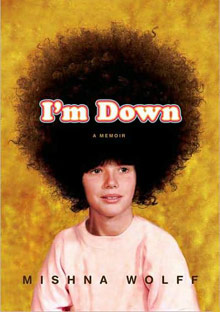
The Meltingpot Book Review -- I'm Down by Mishna Wolff


From the jacket copy: "Mishna Wolff grew up in a poor Black neighborhood with her single father...Unfortunately, Mishna didn't quite fit in with the neighborhood kids: she couldn't dance, she couldn't sing, she couldn't double Dutch, and she was the worst player on her all-Black basketball team. She was shy and uncool... And yet when she was suddenly sent to a rich White school, she found she was too 'Black' to fit in..."

Doesn't this premise sound like a familiar story of many popular memoirs of Black kids growing up and feeling alienated in their Black surroundings because of their quest for an education and their just plain "un-coolness?" Starting with Black Ice, Project Girl, White Bucks and Black Eyed Peas, I could rattle off a dozen of such stories, so what makes Mishna Wolf's I'm Down different? Wolff isn't Black. She's a pure bred White girl.

"I am White. My parents, both white. My sister had the same mother and father as me --all of us completely white. White Americans of European ancestry. White, white, white, white, white..."

And so begins Wolff's hysterical yet poignant memoir of growing up with a White father who truly seemed to want to not just BE Black, but wanted himself and his daughters to be accepted as authentic in their urban, Black neighborhood in Seattle.

I admit I wasn't sure what to expect from this book. I feared Wolff might just resort to relating "funny" anecdotes of her father and herself trying on gross stereotypes of Black behavior. But she doesn't. Instead she describes a very peculiar childhood, one that is often sad and dysfunctional, that strangely enough seems to hinge on a father who probably should have been seeking professional help for his delusional and sometimes dangerous behavior. That being the case, Wolff clearly has a talent for seeing the absurd in her past and tells her story with a comic's talent. Even while I was feeling sorry for the little girl who ached to fit in, I was laughing my ass off at the same time.

I'm Down is a great summer read. I read it one day (Granted, I was recovering from wisdom teeth surgery and had an excuse to stay in bed all day). You'll really enjoy the story and you'll come away with yet another example of why this thing we call race, these definitions of Black and White, are only skin deep.

I look forward to more work from Mishna Wolff.

Peace!

Monday, July 13, 2009

Death be Not Proud...and Other Stuff


Hello Meltingpot Readers,

Thank you so much for your kind thoughts and patience. I really do appreciate it. I was kind of surprised myself as to how much the death of my uncle unraveled me. My uncle was the one boy in a family of 10 girls and was legendary in the family. With all of those sisters he kind of had to be.

Going home for the funeral included a healthy helping of drama. Big surprise, right? Why is it people have to act a fool when a loved one dies? In our family the drama erupted over the type of funeral my uncle would have. Coincidentally, my uncle's wife of 17 years is White and she belongs to a church that is "different" than the majority of the rest of my Black family. And that just didn't sit well with some of my aunties. At the end of the day, everything was worked out, with a few ruffled feathers and some "no she didn'ts." From my perspective, the biggest difference between the "White" funeral my uncle's wife planned, and the typical ones I've attended in Black churches, was the absence of weeping and wailing and a whole lot of carrying on over the dearly departed's dead body.

Now don't get me wrong. I'm a big fan of weeping and wailing at funerals. I feel like it serves a purpose. In fact, one of the reasons I feel like I had to grieve some more at home is because I feel like I didn't have a chance to get the bulk of my sadness out during the funeral. Does that sound crazy? I actually missed the shared expression of crying our eyes out together. Even though it's horrifically painful to see your mother and other elders who you look up to for guidance, wracked by grief, there's something about going through it together. What about you dear readers? How do the people in your family and/or culture deal with death? What are your rituals and do they help you process your grief? I'd like to hear your stories. Thank you.

Peace!

********************************

And P.S.

If anyone is going to be in New York City tomorrow, July 14, I will be at the NACCP Author Pavilion as part of the 100th Annual Convention. The Author Pavilion is at the Hilton Hotel at 1335 Avenue of the Americas, New York, New York, United States 10019

I will be there all day, but signing from 12-2pm. There are going to be some great authors there, and the entire Author Pavilion is free and open to the public today, tomorrow and Wednesday (July 13-15). Yeah Colored People!

********************************

And P.P.S.

The Meltingpot is heading to Spain next week and will be posting from her in-laws lovely seaside home for an entire month. Any questions you want to ask about Spain, things you'd like for me to investigate, post them here and I'll try to look into it.

Monday, July 06, 2009

Obstacles in My Way

Hi Meltingpot Readers,

First the internet died and then a dear family member. I'm away on grief leave but will return soon.

Please keep checking in.

Thank you for your patience.

Peace!